
If you are trying to understand why 1967 classic rock albums are still treated as a turning point, start with the records that changed how people listened: full albums, not just hit singles. The best route is to mix the obvious landmarks with a few stranger or less polished records, because 1967 was not one sound. It was psychedelic pop, heavier blues rock, sharp folk rock, bold debuts, and bands suddenly treating the studio like part of the instrument.
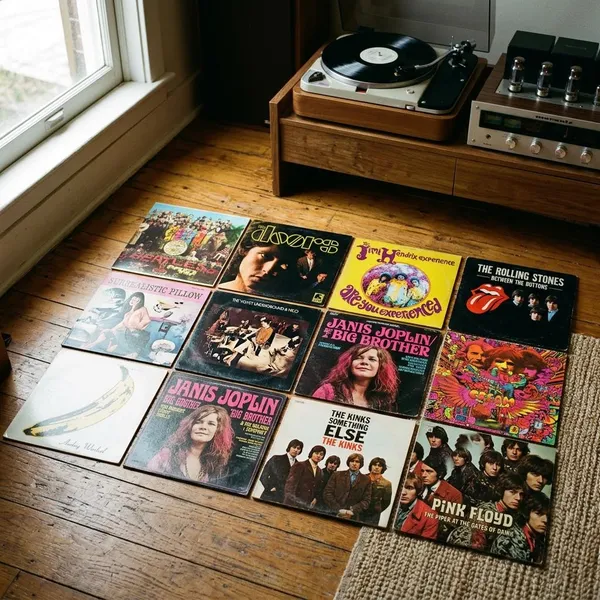
The 10 essential 1967 classic rock albums
A useful 1967 listening shelf should do two things: give you the famous records that shaped rock history, and show how different those records actually were. If you are new to the year, begin with the albums that still feel immediate, then move toward the ones that need a slower front-to-back listen.
The Doors by The Doors
The Doors is one of the easiest 1967 albums to recommend first because it has both atmosphere and instantly memorable songs. "Break On Through," "Light My Fire," and "The End" make the band's world clear right away: bluesy, theatrical, seductive, and a little dangerous.
For a beginner, this is a strong first stop because the hooks are obvious. For a deeper listener, the appeal is the mood: Ray Manzarek's organ, Jim Morrison's voice, and the band's tense pacing make the album feel like a late-night room you have stepped into rather than a simple collection of tracks.
Surrealistic Pillow by Jefferson Airplane
Surrealistic Pillow is the friendly doorway into San Francisco psychedelia. "Somebody to Love" and "White Rabbit" carry the album's reputation, but the full record works because it keeps folk-rock melody close even when the mood turns hazy.
If you are curious about psychedelic rock but do not want to start with the most chaotic records, this is a sensible pick. It is colorful without becoming shapeless, and Grace Slick's vocals give the album a sharper edge than many of its softer folk-rock moments suggest.
Forever Changes by Love
Forever Changes is not the loudest or most obvious choice, but it may be the one that grows the most after repeated plays. The arrangements are elegant, with acoustic guitars, brass, and strings used carefully, while Arthur Lee's writing keeps a strange tension under the beauty.
This is the album to choose when you want 1967 at its most uneasy and refined. It is less about big riffs or studio spectacle and more about atmosphere, detail, and songs that seem calm until you really listen to what is happening underneath.
The Piper at the Gates of Dawn by Pink Floyd
Pink Floyd's debut belongs to the Syd Barrett era, so it should not be approached as a smaller version of later Pink Floyd. The Piper at the Gates of Dawn is playful, odd, very British, and often closer to a psychedelic storybook than to arena rock.
- Best for: listeners who enjoy strange textures and whimsical songwriting.
- Possible hurdle: it can feel loose if you expect polished classic-rock structure.
- Why it matters: it shows how far rock could stretch once the studio became a creative playground.
Disraeli Gears by Cream
Disraeli Gears is where blues rock becomes brighter, heavier, and more surreal. "Sunshine of Your Love" is the obvious anchor, but the album's real value is how Cream turns blues-based playing into something louder and more modern without losing the force of the trio.
If your taste leans toward guitar tone, riffs, and later hard rock, this is one of the most important 1967 records to hear early. It connects older blues language to the heavier rock that would dominate the next few years.
Younger Than Yesterday by The Byrds
Younger Than Yesterday is a quieter kind of essential. The Byrds do not try to overwhelm the listener; they fold country hints, social commentary, jangle, and light psychedelia into concise songs.
That makes it especially useful if you prefer melody and craft over volume. "So You Want to Be a Rock 'n' Roll Star" is still sharp, but the album's bigger strength is how naturally it shows folk rock expanding without turning into a completely different genre.
Between the Buttons by The Rolling Stones
Between the Buttons catches the Rolling Stones in a transitional mood: less raw blues-rock, more baroque pop, satire, and studio color. It is not the most definitive Stones album, but that is exactly why it is interesting in the 1967 conversation.
Check which edition you are hearing, because the UK and US versions differ. Either way, the album shows a major band testing new shapes while still keeping its bite, which makes it valuable for understanding how quickly established rock acts were adapting.
- Are You Experienced by The Jimi Hendrix Experience: the essential 1967 guitar debut, but also tighter and more song-focused than its legend sometimes suggests.
- Sgt. Pepper's Lonely Hearts Club Band by The Beatles: the album-culture landmark, best heard front to back rather than only through its famous reputation.
- The Velvet Underground & Nico by The Velvet Underground: the darker counterweight to 1967 psychedelia, with a long influence on punk, indie, and alternative rock.
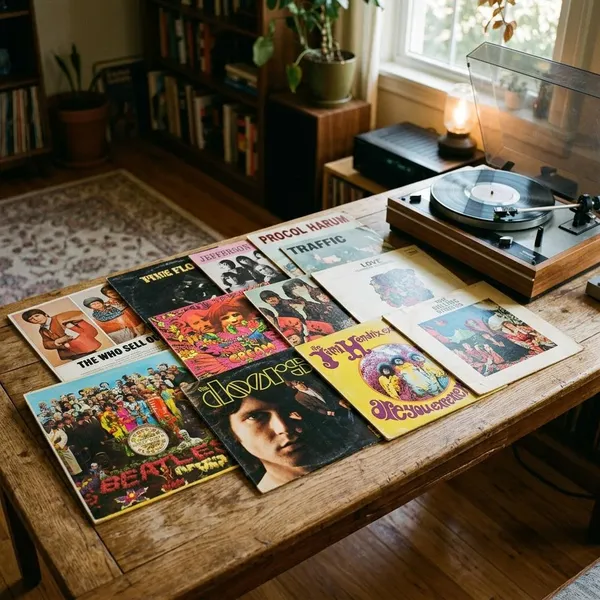
Why 1967 became a landmark year for rock
1967 matters because several changes arrived at once. Audiences were more willing to sit with albums, bands were more willing to take risks, and studios could support ideas that would have been hard to capture only a few years earlier. The result was not one movement, but several overlapping ones.
Albums became complete artistic statements
Before 1967, rock albums could still be treated as containers for singles, covers, and filler. By this point, more artists were thinking about sequencing, cover design, mood, and how one track changed the next. That shift is a major reason these records still work as full listens.
Sgt. Pepper's is the most famous example, but it is not the only one. Forever Changes feels emotionally unified, The Who Sell Out uses a playful radio concept, and The Doors builds a consistent atmosphere from the first track to the last. If you only sample the hits, you miss a big part of what made the year different.
Psychedelic production reached the mainstream
Psychedelic production stopped being only an underground flavor and became part of widely heard rock records. Tape effects, unusual panning, layered vocals, reverb, drones, and non-rock instruments gave albums a more immersive sound.
- Start with Surrealistic Pillow if you want strong songs with psychedelic color.
- Move to Sgt. Pepper's for polished studio imagination and album design.
- Try The Piper at the Gates of Dawn when you are ready for something looser and more eccentric.
- Save The Velvet Underground & Nico for a harsher, less decorative kind of experimentation.
Blues rock grew louder and more experimental
Blues rock in 1967 did not abandon its roots; it amplified them. Cream and Hendrix kept blues feeling central, but the guitar tones, distortion, soloing, and rhythmic push made the music sound larger and more aggressive.
This is where the year becomes important for listeners who love later hard rock. Disraeli Gears and Are You Experienced both point forward, but in different ways: Cream gives you the power-trio framework, while Hendrix makes the guitar feel almost limitless. If psychedelic pop feels too delicate, start here instead.
Major debut albums introduced new sounds
One reason 1967 feels unusually rich is that several debut albums arrived already carrying a complete identity. The Doors, Hendrix, Pink Floyd, and The Velvet Underground did not sound like tentative first drafts. Each one opened a different lane.
Folk, pop, and classical ideas entered rock
Not every 1967 breakthrough came from volume or studio effects. Some of the most lasting changes came from melody, arrangement, and songwriting detail. Folk brought narrative and acoustic textures; pop kept songs direct; classical and baroque touches added drama and shape.
This matters if you are building a listening list for repeated play rather than historical homework. Younger Than Yesterday, Forever Changes, Something Else by The Kinks, and Days of Future Passed are good choices when you want craft over sheer impact. They prove that 1967 rock could expand without always becoming louder or stranger.
Conclusion
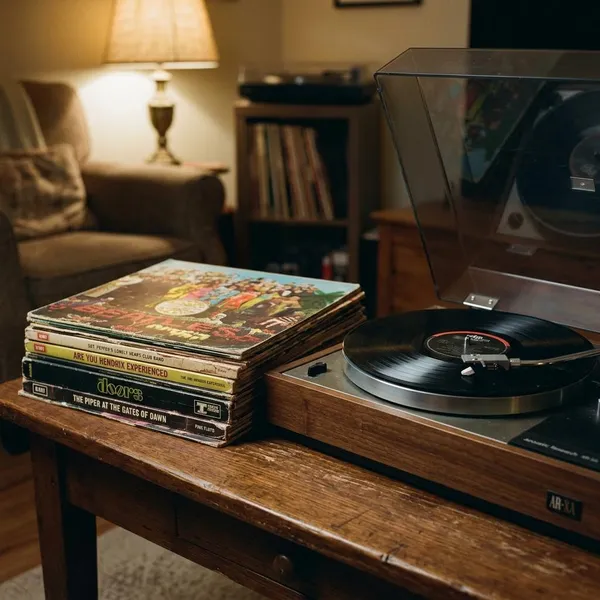
The best way to hear 1967 is to avoid treating it as one psychedelic blur. Start with accessible landmarks such as The Doors, Surrealistic Pillow, Disraeli Gears, and Are You Experienced, then branch into records like Forever Changes or The Velvet Underground & Nico when you want more tension and depth. That mix gives the clearest picture of why the year still feels alive rather than merely important.