
If you are starting with 1970s classic rock albums, do not try to hear everything at once. Begin with the sound you already like: Rumours for polished songwriting, Led Zeppelin IV for heavier guitars, or The Dark Side of the Moon for atmosphere. After that, add one album that feels different, because the decade only starts to make sense when you hear its contrasts.
Best 1970s rock albums by sound
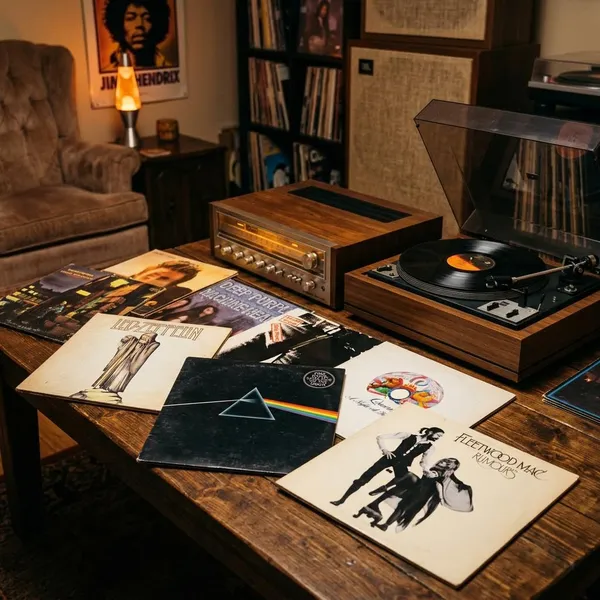
The easiest way into the decade is by sound rather than by release date. Some albums are built around riffs, some around studio atmosphere, some around character, and some around radio-ready songwriting that still has bite.
If you only know classic rock from playlists, full albums can be surprising. The familiar songs often work better when you hear what surrounds them: the quieter tracks, the sequencing, and the way a band controls mood across two sides of an LP.
| Sound you want first | Start here | What to listen for |
|---|---|---|
| Big riffs and range | Led Zeppelin IV | Heavy songs balanced with acoustic space and drama |
| Darker, heavier rock | Paranoid | Simple riffs with a thicker, more ominous tone |
| Polished songwriting | Rumours | Clean production hiding sharp emotional tension |
| Headphone atmosphere | The Dark Side of the Moon | Flow, sound effects, and a full-album mood |
| Theatrical personality | Ziggy Stardust | Character, style, and concise glam-rock songs |
Which 1970s rock album should you hear first?
Start with the album that matches your current taste, not the one someone tells you is the "most important." A good first album should make you curious enough to play the next one.
Start with Rumours for polished songwriting
Rumours is the safest beginner pick because the songs are immediate without feeling thin. It works especially well if you usually listen to pop, singer-songwriter music, or harmony-heavy bands and want a classic rock album that does not ask for much patience on the first play.
Choose Led Zeppelin IV for heavier rock
Pick Led Zeppelin IV if your idea of classic rock starts with guitar power. It gives you the famous riffs, but it also leaves room for folk textures and slower-building drama, which keeps the album from feeling like one long volume test.
Try The Dark Side of the Moon for atmosphere
The Dark Side of the Moon is the best first choice for a late-night, headphone, or focused listening situation. It is not difficult in the way some progressive rock can be; its appeal comes from flow, mood, and production detail rather than technical complexity alone.
Play Born to Run for big anthems
Born to Run is the one to play when you want momentum and emotional lift. It is a strong fit for listeners who care about lyrics as much as guitar sound, because the album's power comes from images of streets, escape, pressure, and restless hope.
Pick Ziggy Stardust for theatrical rock
Ziggy Stardust is the right entry point if you like pop hooks but want something stranger and more character-driven. The songs are short enough to grab quickly, while the album's persona gives them a sharper identity.
If concept albums usually put you off, this is one of the better exceptions to test. You do not need to decode every detail to enjoy it; the record works first as a set of strong songs, then as a larger Bowie world.
Hear Who's Next for a classic rock foundation
Who's Next is the all-purpose recommendation when you want one album that sounds unmistakably classic rock: big drums, big choruses, forceful vocals, and enough emotional range to avoid feeling blunt. It is also a smart bridge between heavier rock, arena rock, and more melodic radio staples.
Why the 1970s became rock's album era
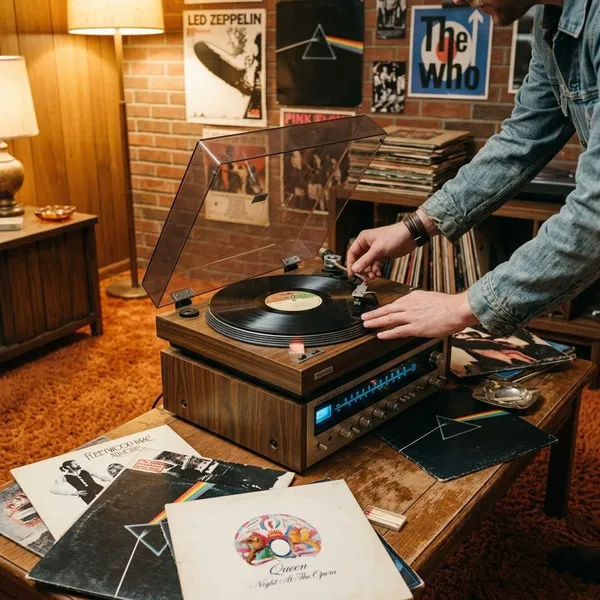
The 1970s became rock's album era because bands, labels, radio, and listeners all started treating the LP as the main event. A single could make someone notice a band, but a strong album could build loyalty.
That shift matters when you listen now. Many of these records were built for side-one and side-two listening, with openers, contrasts, and closers chosen carefully. Even the most radio-friendly albums often have a stronger shape than a greatest-hits playlist.
Bands treated albums as complete experiences
Rock bands increasingly used albums to create identity, not just collect songs. Ziggy Stardust builds a character, Born to Run builds a cinematic world, and Rumours turns personal tension into a polished front-to-back listen. The album format gave artists room to control mood in a way one single could not.
Hard rock and heavy metal found distinct sounds
The decade made heavier guitar music easier to separate into different lanes. Led Zeppelin could be heavy and mystical, Deep Purple could be fast and sharp, and Black Sabbath could sound darker and more oppressive. That distinction helped listeners follow a sound, not just a band name.
For a new listener, this is useful because "heavy 1970s rock" is not one thing. If Zeppelin feels too loose, Deep Purple may connect faster. If Deep Purple feels too bright, Sabbath may be the heavier mood you were looking for.
Progressive rock pushed songs beyond radio length
Progressive rock proved that a large audience would sit with longer structures, recurring themes, and album-length flow. The Dark Side of the Moon is the easiest example because it feels immersive without requiring the listener to love every progressive-rock habit.
Studio production became more ambitious
Studios became part of the art, not just the place where performances were captured. Layered vocals, richer drum sounds, tape effects, careful mixing, and stereo detail helped albums feel more expensive, immersive, and worth owning as complete objects.
You can hear two very different uses of that ambition in Rumours and The Dark Side of the Moon. One makes emotional songs sound clean and controlled; the other uses production to make the whole album feel like a continuous environment.
Rock reached a larger mainstream audience
Rock moved deeper into mainstream culture, which gave major albums more visibility through radio, touring, record stores, and word of mouth. That larger audience also allowed different styles to thrive at the same time: Fleetwood Mac, Black Sabbath, Bowie, Springsteen, and Pink Floyd could all be part of the broader rock conversation without sounding alike.
Conclusion
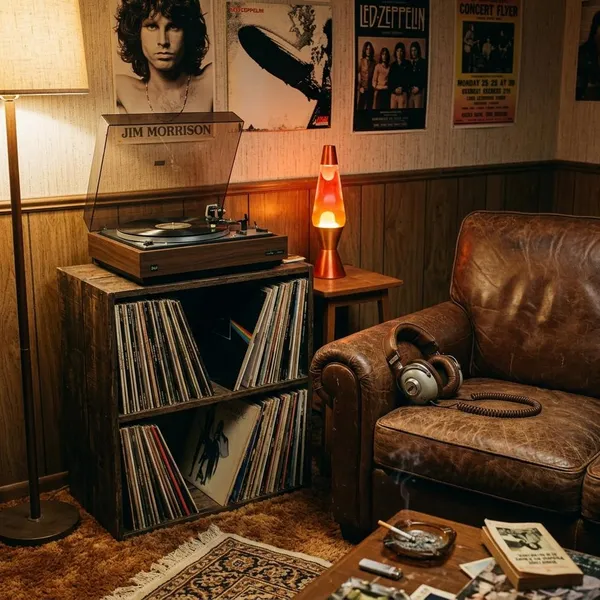
The smartest way to explore these albums is to choose one that fits your taste, then use the next pick to challenge it. Rumours is the easiest welcome mat, Led Zeppelin IV gives you the heavier foundation, and The Dark Side of the Moon shows why the full-album experience mattered so much. Once one of them clicks, the rest of the decade feels less like homework and more like a set of doors opening in different directions.