
If you want a useful way into 1974 classic rock albums, start by matching the year to your listening mood rather than trying to hear everything at once. The strongest records from 1974 range from heavy, polished hard rock to uneasy singer-songwriter albums, art-rock oddities, and early electronic landmarks, so the "best" starting point depends on whether you want riffs, atmosphere, hooks, or experimentation.
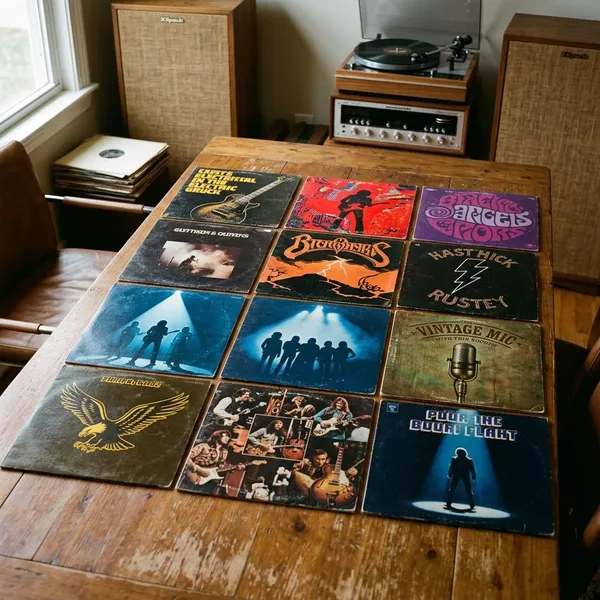
10 essential 1974 classic rock albums
A smart first pass through 1974 should cover the records that still feel alive, not just the ones that sold well. The eight albums highlighted here are strong anchors for the year, with two more obvious additions to keep in mind: King Crimson's Red for heavier progressive rock and Big Star's Radio City for power-pop influence.
On the Beach by Neil Young
On the Beach is the choice for listeners who want mood over polish. Neil Young sounds tired, wary, and unusually direct, which makes the album feel less like a performance and more like someone thinking out loud after the 60s optimism has worn off.
Start with "Walk On" if you want the easiest entry, then give "Ambulance Blues" the time it needs. This is not the best first pick for someone expecting big choruses, but it is one of the year's most rewarding albums if you like loose playing, emotional weather, and songs that reveal themselves slowly.
Autobahn by Kraftwerk
Autobahn matters because it widens the idea of what a rock-era album could be. It is not classic rock in the guitar-band sense, but its influence on post-punk, synth-pop, alternative music, and studio-minded rock is too important to leave out.
Sheer Heart Attack by Queen
Sheer Heart Attack is where Queen's early promise becomes fully recognizable. "Killer Queen" supplies the obvious doorway, but the real appeal is how quickly the album jumps between hard rock bite, theatrical pop, strange humor, and tightly stacked vocals.
Court and Spark by Joni Mitchell
Court and Spark is essential when you want 1974 at its most elegant and emotionally intelligent. Joni Mitchell blends personal writing with jazz-colored harmony and accessible melodies, without sanding off the complexity of the songs.
If your idea of classic rock is mostly loud guitars, this album is a useful correction. It shows how album-oriented music in 1974 could be sophisticated, intimate, and widely appealing at the same time.
Diamond Dogs by David Bowie
Diamond Dogs catches Bowie between glam rock and something darker, rougher, and more paranoid. "Rebel Rebel" is the track everyone knows, but the album's real pull is its grimy atmosphere and half-collapsing theatrical world.
This is a good pick if you like albums that feel slightly unstable. It may not be Bowie's neatest record, but that messiness is part of its point, and it helps explain why later punk, goth, and alternative artists found so much to borrow from his mid-70s work.
Second Helping by Lynyrd Skynyrd
Second Helping is the practical Southern rock entry point for 1974. "Sweet Home Alabama" can overshadow the rest, but the album's staying power comes from the combination of three-guitar force, tight grooves, and Ronnie Van Zant's plainspoken detail.
Country Life by Roxy Music
Country Life is polished without becoming polite. Roxy Music make art rock feel physical here: elegant surfaces, sharp edges, and enough tension to keep the songs from turning into style exercises.
Pretzel Logic by Steely Dan
Pretzel Logic is the album to play when you want craft, hooks, and a little poison in the lyrics. Steely Dan compress jazz, pop, rock, and studio precision into songs that are short enough to feel approachable but detailed enough to reward repeat listening.
"Rikki Don't Lose That Number" is the easy entrance, though the album works best as a full set. It is a useful choice for someone who likes classic rock but gets tired of looseness, because every part feels placed for a reason.
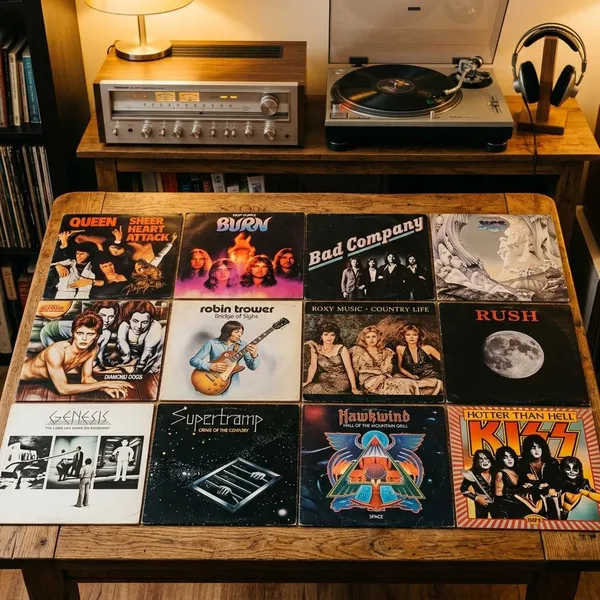
1974 classic rock albums by sound
The easiest mistake is treating 1974 as one single classic-rock sound. It is more useful to divide the year by what you want from the next listen: volume, atmosphere, polish, strangeness, roots, or songwriting detail.
| Listening mood | Start with | Move to next |
|---|---|---|
| Big riffs and force | Sheer Heart Attack | Burn or Red |
| Art-school drama | Diamond Dogs | Country Life or Kimono My House |
| Quiet tension | On the Beach | Rock Bottom |
| Studio craft | Pretzel Logic | Court and Spark |
| Future-facing sound | Autobahn | Brian Eno's Taking Tiger Mountain (By Strategy) |
Hard rock and early heavy metal
For weight and drive, 1974 gives you several different routes. Deep Purple's Burn is hard rock with muscle and control, Bad Company's debut is cleaner and more arena-ready, and Budgie's In for the Kill! points toward the rougher edge that metal fans often value.
- Want a gateway? Try Sheer Heart Attack for variety and hooks.
- Want heavier riffing? Move to Burn or Red.
- Want something less polished? Budgie is the more cult-friendly pick.
Progressive and experimental rock
Progressive rock in 1974 was not just long songs and technical display. Genesis' The Lamb Lies Down on Broadway pushed narrative ambition, King Crimson's Red made complexity feel heavy and severe, and Robert Wyatt's Rock Bottom turned fragility into something deeply strange and complete.
Glam and art rock
Bowie, Roxy Music, and Sparks show how 1974 glam had moved beyond glitter and poses. Diamond Dogs, Country Life, and Kimono My House all use image, irony, and theatricality as part of the music itself.
If you are choosing between them, go by temperament: Bowie is darker and more dystopian, Roxy Music is elegant but tense, and Sparks is sharper, funnier, and more eccentric. None of them works as background music in quite the same way; they reward attention to personality as much as melody.
Southern and roots rock
Southern and roots-based albums offered a different kind of strength in 1974: direct playing, lived-in grooves, and songs that felt close to the road rather than the art school or studio laboratory. Second Helping is the obvious pillar, while On the Beach shows the more bruised, inward side of rootsy rock.
Singer-songwriter and jazz-pop
The quieter end of 1974 is not lightweight. Court and Spark, Pretzel Logic, and Stevie Wonder's Fulfillingness' First Finale all prove that restraint, harmony, and arrangement can carry as much force as volume.
Choose this path for late-night listening, careful lyric listening, or a break from heavy guitars. If you are building a small vinyl or streaming playlist, pairing Joni Mitchell with Steely Dan is especially useful because one leans emotional and open while the other feels cool, compressed, and sly.
Why 1974 mattered for classic rock
1974 sits in a useful middle point: the late-60s glow had faded, but punk had not yet forced rock to simplify and reset. That left room for albums that were bigger, stranger, more polished, and sometimes more uneasy than what had come before.
The year matters most because rock was splitting into strong sub-languages at the same time. Hard rock learned control, progressive music stretched form, glam made style feel serious, and cult albums quietly handed future bands a different set of tools.
Hard rock became heavier and more polished
By 1974, many hard rock bands had learned that heaviness landed harder when the recordings were clearer. Burn hits with force, but it also has shape; Bad Company sound tough without letting the songs become cluttered.
That shift made heavier music easier for radio and arenas without removing its bite. For a listener tracing the road toward later hard rock and metal, this is one of the key changes to notice: the sound is no longer just raw power, but managed impact.
Progressive rock reached new creative heights
The best progressive albums from 1974 used complexity for pressure, atmosphere, or story rather than decoration. The Lamb Lies Down on Broadway and Red could hardly feel more different, yet both make standard rock forms seem too small for what their bands wanted to express.
Glam and art rock kept breaking rules
Glam and art rock stayed important because they refused the idea that rock had to be either sincere or artificial. Bowie, Roxy Music, and Sparks showed that performance, fashion, humor, and strangeness could deepen the songs instead of distracting from them.
Cult albums shaped punk and alternative rock
Some of 1974's longest shadows came from records that were not the biggest cultural events at the time. Big Star's Radio City became a power-pop and indie-rock touchstone, while Rock Bottom showed how unconventional an album could be without feeling unfinished.
- For punk roots: listen for attitude and compression in Bowie, Sparks, and Big Star.
- For metal roots: hear how Red turns precision into weight.
- For alternative rock: notice the mix of beauty, unease, and personality in the cult records.
The bigger point is that 1974 was not only a blockbuster year. It was also a seed year, with albums that later musicians heard as permission to be sharper, stranger, or less polished.
Conclusion
The best way to approach 1974 is to treat it as a crossroads, not a single canon. Start with the record that fits your taste, then deliberately jump to a different sound: Queen to Kraftwerk, Joni Mitchell to King Crimson, Lynyrd Skynyrd to Roxy Music. That contrast is where the year becomes interesting, because 1974's real strength is how many versions of rock were becoming fully formed at once.