
If your mental map of classic rock starts with British bands and arena guitar heroes, the first thing to fix is the starting point: Black musicians built much of the sound before rock was treated as a mostly white genre. The most essential black classic rock artists to know are not just "influences" in the background; they shaped the riffs, backbeats, vocals, stagecraft, psychedelia, and funk-rock grooves that made classic rock recognizable.
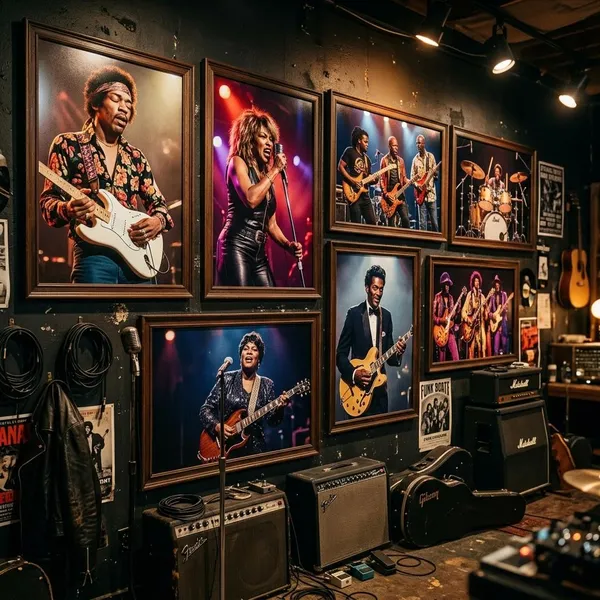
Black rock pioneers behind classic rock
Start here if you want the foundations rather than only the famous 1970s version of classic rock. These early artists explain why rock guitar sounds sharp, why the beat feels physical, and why the best rock singers often sound closer to gospel release than polite pop technique.
Sister Rosetta Tharpe
Sister Rosetta Tharpe belongs near the front of any honest rock timeline. Her electric guitar playing had bite, swing, and confidence before rock and roll had fully settled into a commercial form. If you listen for the attack of the notes rather than just the gospel setting, you can hear the path toward lead guitar as a commanding rock voice.
Chuck Berry
Chuck Berry gave rock one of its most usable blueprints: a bright guitar intro, a driving rhythm, and lyrics that moved with cars, school, dancing, youth, and trouble. "Johnny B. Goode," "Roll Over Beethoven," and "Sweet Little Sixteen" still work because the songs are compact, visual, and built for motion.
- New to early rock? Start with Berry to hear the basic rock song form snap into place.
- British Invasion fan? Listen for the guitar phrases and song structures later absorbed by the Beatles, the Rolling Stones, and many others.
Little Richard
Little Richard made rock feel dangerous, funny, glamorous, and explosive. His voice did not simply carry a melody; it burst through the track. "Tutti Frutti," "Long Tall Sally," and "Lucille" show how vocal force and pounding piano could turn a short song into a full-body event.
Bo Diddley
Bo Diddley's contribution is rhythm you can recognize almost instantly. The Bo Diddley beat gave rock a hypnotic, percussive pulse that traveled into garage rock, British beat music, and countless bar-band riffs. His guitar was not there only for melody; it worked like a drum with strings.
Big Mama Thornton
Big Mama Thornton's version of "Hound Dog" is a useful reality check for anyone who only knows the later Elvis Presley hit. Her recording has grit, authority, and blunt emotional weight. It reminds you that early rock did not grow from polished pop manners; it came from blues, R&B, and performers who could make a song feel lived-in.
Her place matters especially because Black women are too often pushed to the side in rock histories. Thornton's power is not a footnote to the genre. It is part of the sound rock kept borrowing from.
Fats Domino
Fats Domino shows the warmer side of early rock and roll. His rolling New Orleans piano, relaxed voice, and crossover hits such as "Ain't That a Shame" and "Blueberry Hill" helped make rhythm and blues feel approachable to a much wider audience without draining away the groove.
Black classic rock artists of the 1960s and 1970s
The 1960s and 1970s are often treated as the heart of classic rock, so this is where the story needs extra care. Black artists were not only inspiring other bands from earlier decades; they were actively expanding rock through psychedelic guitar, funk-rock, soul-rock, hard rock songwriting, and arena-level performance.
Jimi Hendrix
Jimi Hendrix did not merely become one of rock's great guitarists; he changed what the electric guitar was allowed to do. Feedback, fuzz, wah-wah, sustain, studio layering, and fluid improvisation became expressive tools in his hands rather than noise on the edges of a song.
For a practical entry point, play "Purple Haze," "Foxy Lady," and "Voodoo Child (Slight Return)" next to earlier Chuck Berry recordings. The distance between them shows how quickly Black artists moved rock from riff-based singles into psychedelic and hard rock possibility.
Arthur Lee and Love
Arthur Lee led Love with a different kind of rock imagination. Instead of leaning only on volume or blues power, Love mixed folk-rock, garage edge, orchestration, and uneasy psychedelic writing. Forever Changes still feels special because it is beautiful without being comfortable.
Sly and the Family Stone
Sly and the Family Stone made rock, soul, funk, and pop feel like they belonged in the same room. The band's multiracial, mixed-gender lineup also mattered visually and culturally, but the music is the real proof: group vocals, hard grooves, bright hooks, and social tension all push against each other.
- For a party playlist: Sly gives you songs that connect quickly without feeling lightweight.
- For deeper listening: focus on how the bass, rhythm guitar, organ, and voices share the groove instead of leaving everything to a lead guitar.
George Clinton and Funkadelic
George Clinton and Funkadelic stretched rock into something heavier, stranger, and more rhythmically elastic. Maggot Brain is the key record for rock listeners because Eddie Hazel's title-track guitar performance belongs in the same conversation as the great extended guitar statements of the era.
Tina Turner
Tina Turner's rock importance is not only about hit singles. It is about the way she attacked a performance with voice, body, timing, and stamina. With Ike and Tina Turner, songs like "Proud Mary" became stage detonations; later, Private Dancer proved she could command mainstream rock and pop attention on her own terms.
Buddy Miles
Buddy Miles brought heavy rock drumming together with soul and funk feel. His work with Electric Flag, Jimi Hendrix, Band of Gypsys, and the Buddy Miles Express shows why groove matters even when the guitars are loud. "Them Changes" is a clean example: the track hits hard, but it still moves.
Phil Lynott and Thin Lizzy
Phil Lynott, the Black Irish frontman of Thin Lizzy, gives classic rock one of its sharpest combinations of swagger and storytelling. As bassist, singer, and songwriter, he helped make "The Boys Are Back in Town" and "Jailbreak" feel both tough and melodic.
How Black artists shaped the classic rock sound
Names matter, but the sound itself makes the case even more clearly. Black artists shaped classic rock through specific musical choices: how the guitar leads, how the beat lands, how vocals build intensity, how performers use the stage, and how psychedelia and funk pushed rock away from neat genre borders.
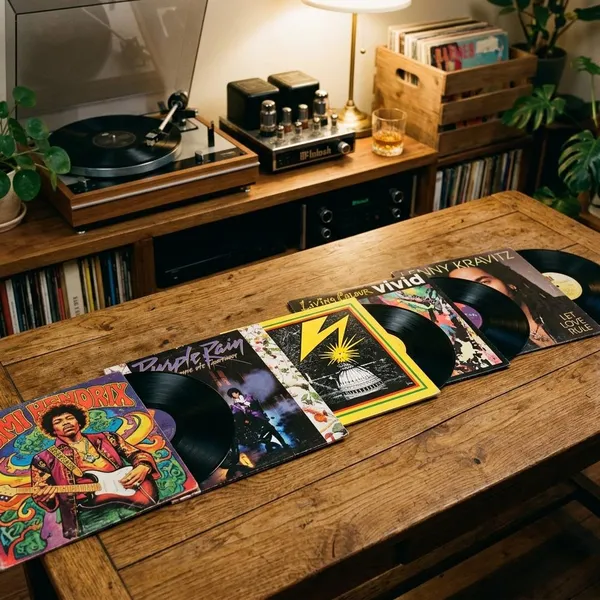
Electric guitar became a lead voice
Rock guitar became central because Black musicians kept moving it forward. Tharpe gave the electric guitar authority, Berry made riffs into song signatures, and Hendrix turned the instrument into a source of color, drama, and controlled chaos. If you want to hear the progression, follow that order before jumping to later hard rock players.
Backbeats gave rock its drive
The backbeat is one reason rock feels physical instead of merely melodic. Rhythm and blues, New Orleans piano, Bo Diddley's patterns, and funk syncopation all helped create that forward push. You do not need music theory to notice it; the test is simple: does the song make stillness feel almost unnatural?
Gospel shaped powerful vocals
Gospel influence gave rock singers permission to sound urgent, strained, ecstatic, and emotionally exposed. Little Richard and Tina Turner are obvious examples, but the larger point is that rock vocals often prize conviction over neatness. A perfect tone matters less than whether the singer sounds as if the song has to come out.
Stagecraft became more explosive
Classic rock performance owes a lot to Black artists who treated the stage as a visual and physical space. Little Richard's flamboyance, Tina Turner's movement, James Brown's precision, and Hendrix's guitar theater all raised the expectation for what a rock show could be.
Psychedelia pushed rock further
Hendrix, Arthur Lee, and Funkadelic show three different psychedelic routes. Hendrix stretched the guitar and studio, Lee made rock more mysterious and arranged, and Funkadelic added surreal imagery with heavy grooves. Together, they make psychedelic rock feel less like one scene and more like a set of possibilities.
Funk added heavier grooves
Funk changed rock by making heaviness less dependent on volume alone. Sly and the Family Stone, Buddy Miles, and Funkadelic showed that bass lines, syncopation, and tight rhythmic interplay could make a track hit harder. If you like rock that feels both muscular and danceable, this is the branch to explore first.
Essential Black rock albums to hear first
A focused album path helps more than a giant list. The best first choices depend on what you want to understand: the birth of rock songwriting, the wildness of early performance, psychedelic guitar, funk-rock, artful 1960s songwriting, hard rock storytelling, or Tina Turner's later solo command.
- Shortest route: Here's Little Richard, Are You Experienced, and Maggot Brain.
- Most accessible route: Chuck Berry Is on Top, Stand!, and Jailbreak.
- More atmospheric route: add Forever Changes and Private Dancer when you want range beyond riffs.
Chuck Berry Is on Top by Chuck Berry
Chuck Berry Is on Top is the cleanest album-length doorway into Berry's rock language. The riffs are bright, the stories are vivid, and the songs move fast enough to show why later bands kept returning to him. Choose this first if you want to understand rock as songwriting craft.
Here's Little Richard by Little Richard
Here's Little Richard is the better first pick if you want energy before analysis. The vocals, piano, and rhythm section rush forward with almost reckless joy. It explains the wild side of rock more quickly than a long historical argument ever could.
Are You Experienced by The Jimi Hendrix Experience
Are You Experienced is essential because it changes the scale of rock guitar. Hendrix makes the amplifier, studio, and effects feel like part of the instrument. For guitar-focused listeners, this is not optional background listening; it is one of the turning points.
Forever Changes by Love
Forever Changes is for the listener who wants classic rock to feel beautiful, anxious, and slightly haunted. Arthur Lee's writing and the album's orchestral folk-psychedelic sound make it stand apart from louder 1960s records. It is less immediate than Berry or Little Richard, but it rewards attention.
Stand by Sly and the Family Stone
Stand! is one of the easiest albums here to share with someone who does not think they are studying rock history. The hooks are strong, the grooves are generous, and the band's social and musical ideas come through without turning the record into homework.
Maggot Brain by Funkadelic
Maggot Brain is the album to choose when you are ready for the stranger edge of Black rock. The title track alone justifies the listen, but the full record matters because it refuses to separate guitar exploration, funk rhythm, soul feeling, and psychedelic weirdness.
Conclusion
The practical way to hear classic rock more clearly is to stop treating Black artists as a roots chapter and start hearing them as central architects. Begin with the early pioneers, move into Hendrix, Love, Sly, Funkadelic, Turner, Miles, and Lynott, then let the albums guide your ear; familiar rock sounds will start to feel less accidental and much more connected.