
Classic rock 8 track tapes are worth buying when you know whether you want listening copies, display pieces, or collectible rarities. Start with condition and playability before chasing rare titles, because a famous album with a bad pad, stiff roller, or failed splice can become more project than pleasure.
What determines the value of classic rock 8-tracks
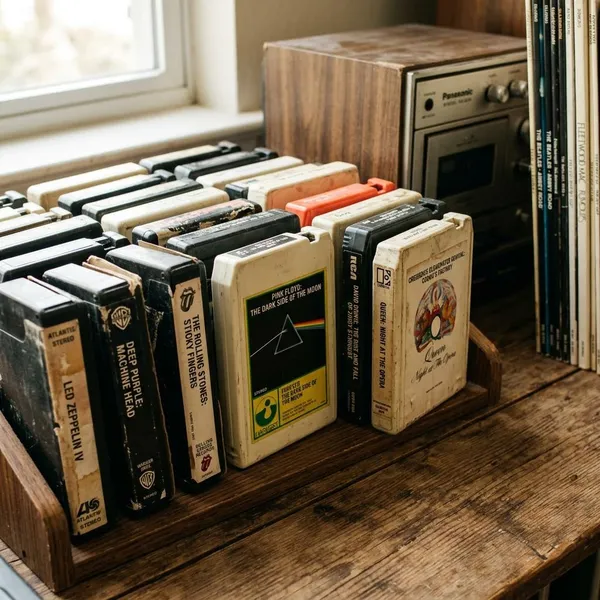
Value usually comes from five things working together: the artist, the album, how hard the release is to find, how clean the cartridge looks, and whether it can actually play. A tape does not become valuable just because it is old. Many common 8-tracks are still inexpensive, while a scarce pressing by a wanted artist can sell for much more if the shell, label, and internal parts are still respectable.
Artist and album demand
Big names help, but the specific album decides a lot. Classic rock buyers usually respond more strongly to landmark albums, greatest hits releases, and records with instantly recognizable songs than to a less-loved late-career title from the same band.
Release rarity
Rarity matters most when the artist is already desirable. Record club editions, late-era 8-track releases, promotional copies, unusual label designs, and regional variations can all make a tape harder to find.
Cartridge and label condition
Look first for problems that cannot be hidden in a pretty front photo: cracked corners, warped plastic, broken seams, melted areas, heavy writing, water stains, and label peeling. Light shelf wear is normal, but heat damage and shell cracks can affect both display value and playback safety.
- Good display copy: sharp label, clean shell, readable spine, no obvious fading.
- Good listening copy: intact shell, clean tape path, working pad and roller, tested if possible.
- Risky copy: loose tape, missing roller, cracked shell, strong musty smell, or unclear photos.
Tested playback
A tested tape is usually safer to buy, especially online. "Tested" should mean more than "I put it in and heard music." The useful details are whether it played at steady speed, changed programs, avoided squealing, and completed more than a few seconds without dragging.
Normal hiss or a brief program-change interruption is not the same as a mechanical fault. Repeated slowing, scraping, or a tape that stalls is different; that points to a repair need or a player problem.
Original packaging
Original sleeves, slipcases, retail stickers, and clean outer packaging can raise collector appeal. They also make a tape look better on a shelf, which matters if the goal is a music-room display rather than regular playback.
For a sealed or sleeved tape, separate the package value from the tape's mechanical risk. A beautiful sleeve does not guarantee the pressure pad, splice, or roller inside has survived decades of storage.
Which classic rock 8-tracks should you buy first
The best first buys are not usually the rarest ones. New collectors are better off starting with affordable, clean, common titles so they can learn how the format sounds, how players behave, and which flaws are easy to fix.
Common albums for regular listening
Common classic rock albums are ideal for everyday play because replacement copies are easier to find. Widely sold tapes from bands such as Boston, Foreigner, Journey, The Doobie Brothers, Fleetwood Mac, or The Eagles often give you recognizable music without rare-title pricing.
For a casual listener, a clean tested common album is usually a smarter purchase than a scarce but untested tape. You get more listening time and less anxiety about every program change.
Clean copies for display
If the tape will mostly sit on a shelf, cosmetic condition becomes the priority. Choose strong labels, bright artwork, straight shells, and packaging without water stains or split seams.
Mixed lots for budget collecting
Mixed lots can be a good deal when the price per tape is low and the photos show the actual cartridges. They are useful for building a starter collection, finding repair practice, and occasionally uncovering a better title hidden among common albums.
| Buy the lot if | Several titles interest you, labels are visible, and the seller shows the tape openings or shell condition. |
| Skip or offer low if | Photos are blurry, many tapes have loose tape showing, or most titles are unwanted filler. |
| Best use | Budget collecting, repair practice, and player testing before using better tapes. |
Rare releases for serious collectors
Rare releases make more sense after you have handled enough ordinary tapes to recognize trouble. Before paying collector prices, ask for clear photos of the front, back, spine, opening, sleeve, and any catalog or label details that support the rarity claim.
A serious buyer should also ask whether the tape has been played recently and whether any repairs were done. A repaired foil splice is not automatically bad, but sloppy work can catch during playback. When the tape is expensive, vague answers are a reason to slow down.
How to play vintage 8-track tapes safely
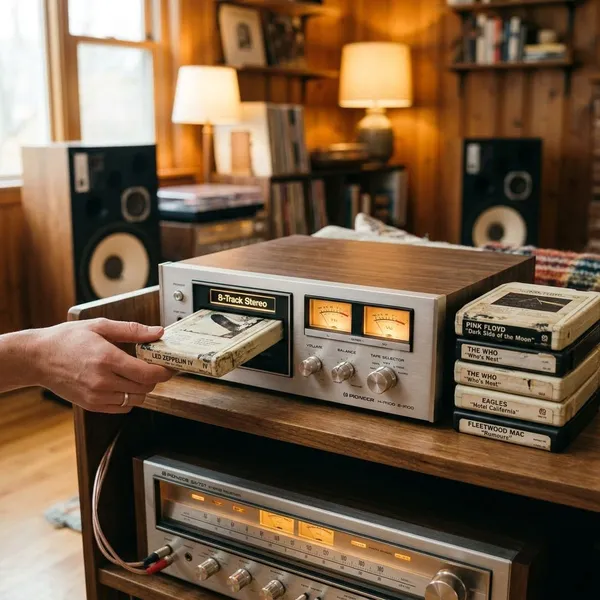
Safe playback starts with the player, not the tape. A neglected deck can chew a good cartridge, and a damaged cartridge can leave residue or loose tape inside a working machine.
Start with a clean working player
Use a player that powers on, runs at a steady speed, and changes programs normally. Clean the head and tape path carefully before inserting better tapes, especially if the deck has been stored for years.
If the player hums, slows down, eats tapes, or needs force to accept a cartridge, do not treat your good tapes as test equipment. Service the machine first or test with a disposable common tape.
Test the player with a common tape
An inexpensive common tape is the safest first test because it tells you whether the deck is behaving without risking a favorite album. Let it run briefly, listen for speed stability, and check that the program change works without a violent click or stall.
- Safe enough to continue: steady speed, normal hiss, smooth program change.
- Stop and inspect: squealing, slowing pitch, scraping, tape spill, or sudden muffled sound.
- Do not test with: rare tapes, sealed tapes, sentimental copies, or cartridges already showing loose tape.
Listen for dragging or squealing
Squealing, scraping, or a dragging sound usually means friction somewhere in the cartridge or player. A healthy 8-track may have hiss and imperfect fidelity, but it should not sound as if the tape is fighting the machine.
Stop early if the pitch drops or the tape sounds strained. One extra minute can turn a simple roller or pad repair into a wrinkled tape loop.
Stop playback if the tape jams
If a tape jams, stop the player immediately and remove the cartridge gently. Do not keep pressing play, do not tug hard on loose tape, and do not assume the machine will pull the loop back into place.
For a low-value tape, you might open the shell and learn the repair. For a rare or sentimental copy, set it aside until you can inspect it with proper tools and a calm workspace.
Common 8-track problems and repairs
Most 8-track failures are mechanical rather than mysterious. Pads collapse, foil splices fail, rollers stiffen, and contact areas get dirty. Many repairs are manageable, but it is better to learn on cheap tapes before opening anything valuable.
Replace a collapsed pressure pad
A weak pressure pad often causes muffled sound, dropouts, or poor head contact. If the tape seems to play but the audio is dull or uneven, the pad is one of the first things to check.
Replacing it is often worth doing on listening copies because the repair can make a dramatic difference without changing the outside appearance. On a display-only tape, you may leave it alone unless you plan to play it.
Repair a failed foil splice
The foil splice joins the loop and triggers program changes. When the adhesive fails, the tape may stop switching programs, switch unreliably, or separate inside the cartridge.
A clean splice repair needs careful alignment. If the joint is crooked, bulky, or placed poorly, it can catch during playback and cause the same kind of problem again.
Free or replace a stiff pinch roller
A stiff pinch roller is a bigger risk than many beginners expect. It can cause drag, pitch wobble, squealing, and tape damage because the tape is no longer moving smoothly through the transport.
Sometimes cleaning and freeing the roller is enough. If it is hardened, misshapen, sticky, or seized, replacement is the safer route before you play the cartridge again.
Clean dirty cartridge contacts
Dirty sensing or contact areas can cause unreliable program changes or inconsistent playback behavior. Start with gentle cleaning before opening the cartridge, because this is one of the lower-risk fixes.
Use light pressure and avoid abrasive scraping. If cleaning does not help, the issue may be deeper inside the shell, such as a splice, pad, or roller problem.
How to store classic rock 8-track tapes
Storage should protect both the outside and the moving parts inside. Heat, dampness, dust, and pressure are the main enemies, and damage from poor storage is often harder to fix than a simple pad or splice failure.
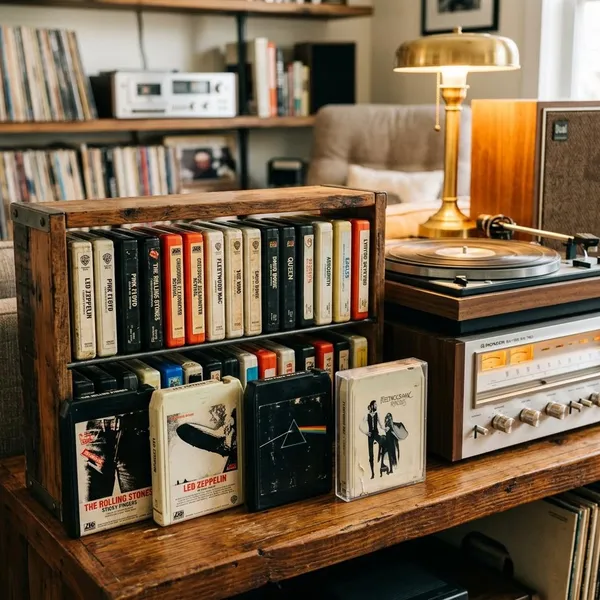
If you only display a few tapes, keep them out of direct sun. If you are building a larger collection, think more like a record collector: stable indoor conditions, easy access, and no heavy stacks pressing on fragile shells.
Keep them cool and dry
A climate-controlled room is usually better than an attic, garage, basement, or car trunk. Heat can warp shells and weaken adhesives, while damp conditions can stain labels, encourage mildew, and affect metal parts.
If a tape arrives after sitting in cold or hot weather during shipping, let it settle at room temperature before playback. That small pause gives you time to inspect the shell and reduces the chance of testing it while materials are stressed.
Protect them from dust and sunlight
Dust can work its way into openings and contact areas, while sunlight fades labels and can warm the cartridge unevenly. A closed cabinet, storage box, or shaded shelf is usually enough for normal home collecting.
Open display is fine for a few favorites, but avoid a bright window ledge. A tape can look good there for a month and slowly lose the exact label color that made it worth displaying.
Store them upright without pressure
Store cartridges upright, with enough space that they are not squeezed. Heavy stacks can stress shells, scuff labels, and make it easier to crack a cartridge when pulling one from the pile.
Dividers help if you have rows of tapes. They keep the cartridges standing straight and reduce the handling damage that happens when a loose row collapses sideways.
Check playable tapes regularly
Playable copies deserve occasional checks even if they are stored well. Pads can age, rollers can stiffen, and splices can fail while a tape sits untouched.
You do not need to run every tape constantly. Rotate through the ones you actually play, and inspect any cartridge that starts dragging, squealing, or changing programs poorly before putting it back on the shelf.
Conclusion
The smartest way to collect 8-tracks is to match the tape to its job: common tested copies for listening, clean shells and packaging for display, and rare releases only after you know how to spot mechanical risk. If you check condition before price and test equipment before valuable tapes, the format stays fun instead of turning into a shelf full of fragile surprises.