
If you want to understand 1969 rock without getting lost in endless "greatest albums" lists, start with the records that changed how rock albums were made and heard. The year gave listeners polished songwriting, heavier riffs, darker blues-rock, rootsy storytelling, and the first big steps toward progressive rock. A good listening path matters: begin with the most approachable classics, then move toward the stranger and denser records once your ears have a feel for the year.
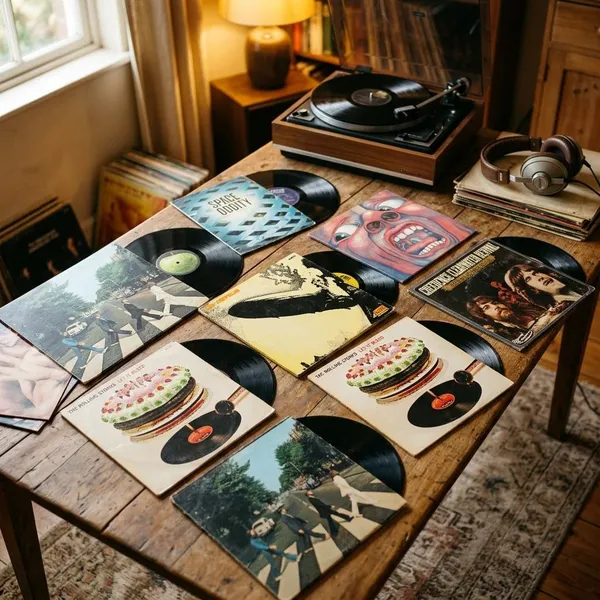
Best classic rock albums of 1969
The strongest albums from 1969 are not all strong for the same reason. Some work because every song is instantly memorable, while others matter because they changed what a rock album could be. If you only want a core shelf, these six records give you the clearest picture of the year's range.
Abbey Road by The Beatles
Abbey Road is the easiest album here to recommend without caveats. "Come Together," "Something," and "Here Comes the Sun" are immediate enough for casual listening, but the side-two medley gives the record a shape that rewards hearing it straight through.
Led Zeppelin II by Led Zeppelin
Led Zeppelin II is the 1969 pick for anyone who wants rock to hit harder. "Whole Lotta Love" is the obvious doorway, but "Heartbreaker," "Ramble On," and "What Is and What Should Never Be" show why the album became such a model for hard rock.
- Choose it first if you already like later hard rock or heavy guitar music.
- Save it for later if you prefer harmony, softer songwriting, or rootsier albums.
- Listen for the way blues foundations become something bigger, louder, and more physical.
Let It Bleed by The Rolling Stones
Let It Bleed has a rougher, darker pull than Abbey Road. "Gimme Shelter" sets the tone immediately, while "You Can't Always Get What You Want" stretches the album into something larger and more reflective.
This is the record to play when you want bluesy rock with tension rather than polish. It is not tidy, and that is the point: the loose edges make the album feel alive.
Tommy by The Who
Tommy matters because it showed that a rock album could carry a full narrative and still produce songs that worked on their own. "Pinball Wizard," "I'm Free," and "We're Not Gonna Take It" keep the concept from becoming only an intellectual exercise.
If you are new to concept albums, treat Tommy as a second-stage listen. It is more rewarding when you have time for the whole record rather than sampling a few tracks in the background.
In the Court of the Crimson King by King Crimson
In the Court of the Crimson King is where 1969 starts to feel bigger, stranger, and more cinematic. "21st Century Schizoid Man" is abrasive and forceful, while the title track moves in a grander, more atmospheric direction.
The Band by The Band
The Band turns away from psychedelic excess and moves toward folk, country, rhythm and blues, and character-driven storytelling. "The Night They Drove Old Dixie Down" and "Rag Mama Rag" feel rooted rather than showy.
Its strength is restraint. The playing supports the songs, the vocals feel communal, and the album proves that intimacy could be just as influential as volume or ambition in 1969.
Best 1969 rock albums for beginners
For beginners, the smartest move is not to start with the most "important" album in an academic sense. Start with the record that matches your taste now, then branch out. Someone coming from modern hard rock will probably connect faster with Led Zeppelin, while someone who likes singer-songwriter records may find Crosby, Stills and Nash much easier to love first.
Abbey Road for timeless songwriting
Pick Abbey Road if you want the safest all-round introduction. It has famous songs, rich production, and enough variety to show how wide late-1960s rock had become without overwhelming a new listener.
Led Zeppelin II for heavy rock
Led Zeppelin II is the best beginner choice for listeners who care most about riffs, drums, and energy. It is historically important, but it does not require historical knowledge to enjoy; the force of the playing lands quickly.
Let It Bleed for bluesy rock
Let It Bleed works well if you want atmosphere, danger, and roots influence. It is less polished than Abbey Road, but it gives you a stronger sense of rock as something gritty, unstable, and emotionally charged.
Crosby Stills and Nash for vocal harmonies
Crosby, Stills and Nash is the gentler entry point. The harmonies are the main attraction, but the real value is how the album balances acoustic warmth with careful arrangement.
- Best for: listeners who like melody, harmony, and reflective songs.
- Start with: "Suite: Judy Blue Eyes" for ambition, "Marrakesh Express" for accessibility.
- Skip for now if: you mainly want hard riffs or dramatic album concepts.
Green River for short direct songs
Green River by Creedence Clearwater Revival is ideal if older albums sometimes feel too long or self-important to you. The songs are compact, catchy, and rooted in swamp rock, country, blues, and rhythm and blues.
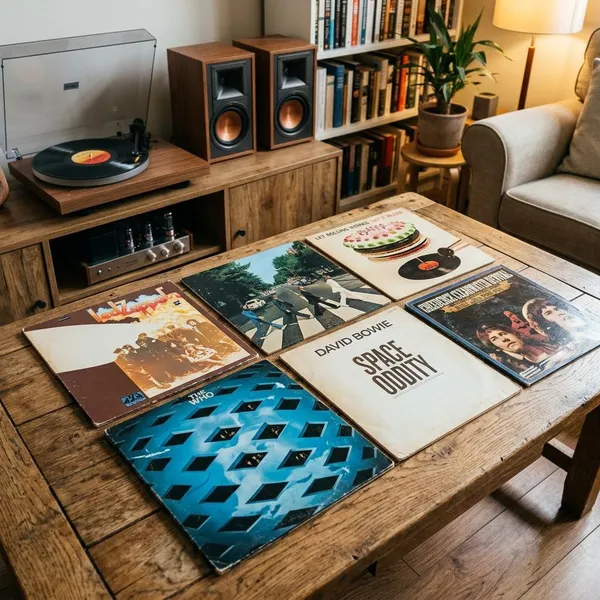
Why 1969 changed rock music
1969 changed rock because several shifts happened at the same time. The album became more important than the single, heavy rock found a larger audience, progressive rock became more defined, and roots music returned with new confidence. That combination makes the year feel like both the climax of the 1960s and the start of the 1970s rock era.
Albums became complete artistic statements
By 1969, major rock artists were thinking beyond a few singles and filler tracks. Abbey Road, Tommy, and The Band all depend on sequencing, mood, and flow, even though they use those tools in very different ways.
Hard rock developed a heavier sound
Hard rock did not appear fully formed in 1969, but the year made its direction much clearer. Led Zeppelin II pushed blues-based rock toward heavier riffs, bigger drums, and a more commanding vocal style.
The key difference is not just volume. The music feels heavier because of the attack: the riffs are built to dominate, the rhythm section feels physical, and the production gives the band a larger presence.
Progressive rock expanded song structures
Progressive rock became harder to ignore in 1969, especially with In the Court of the Crimson King. Rock songs could now stretch, change shape, and borrow from jazz, classical music, and theatrical arrangement without losing their identity.
For a listener, this changes the job. You are not only waiting for a chorus; you are following atmosphere, movement, and contrast over a longer span.
Folk and roots music returned to the forefront
While some bands pushed rock outward, others pulled it back toward folk, country, blues, and older American forms. The Band, Creedence Clearwater Revival, Crosby, Stills and Nash, and Neil Young all helped make roots-based music feel central again.
This is why 1969 is not only a year of heavy or experimental records. If you prefer songs that feel grounded and human, the roots side of the year may end up being the part you replay most.
New bands shaped the sound of the 1970s
Several acts that would matter deeply in the 1970s either emerged or made major statements in 1969. Led Zeppelin pointed toward hard rock dominance, King Crimson helped define progressive rock, and groups such as the Allman Brothers Band and Chicago opened different paths through blues, jazz, and extended ensemble playing.
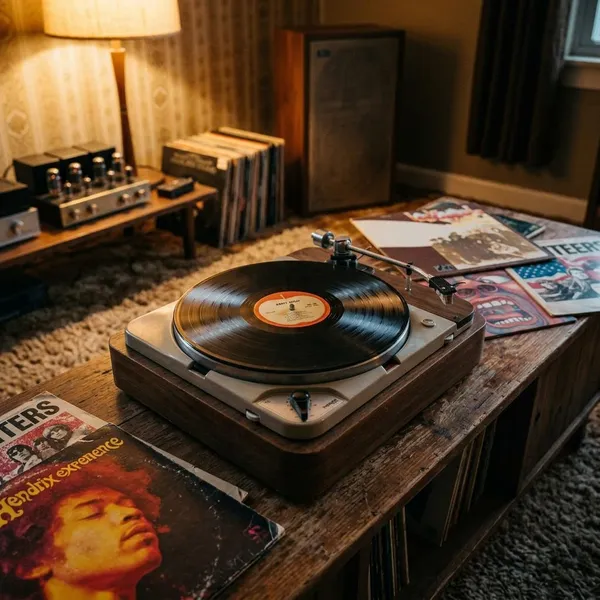
How to explore classic rock from 1969
The best listening order depends on your patience and taste. If you are building a first classic rock library, move from accessible albums to more demanding ones. If you already know the big songs, use the same path but listen for contrast: polish versus grit, riffs versus harmony, short songs versus long-form ambition.
Start with Abbey Road and Let It Bleed
Begin with Abbey Road and Let It Bleed because they show two major sides of 1969 without asking too much from a new listener. One is polished and melodic; the other is darker, looser, and more blues-based.
Move into Led Zeppelin and The Who
After that, move to Led Zeppelin II and Tommy. This is where rock expands in two different directions: heavier sound on one side, album-scale storytelling on the other.
- Play Led Zeppelin II when you want impact and riffs.
- Play Tommy when you have time to follow a full concept.
- Compare them to hear how different "ambitious rock" could be in the same year.
Add folk rock and roots records
Add Crosby, Stills and Nash, The Band, Green River, and Everybody Knows This Is Nowhere once you want a warmer and more grounded view of the year.
This stage is especially useful for regular listening. If you are putting music on while cooking, driving, or working around the house, these records may fit more naturally than the bigger conceptual albums, while still teaching you a lot about where rock was heading.
Finish with prog and deeper cuts
Finish with In the Court of the Crimson King, then branch toward records such as Stand Up, Chicago Transit Authority, Aoxomoxoa, or the Allman Brothers Band debut.
Do not force these too early if they feel dense. They often make more sense after you have heard the year's more direct albums, because you can place the longer structures and unusual textures in context.
Conclusion
The smartest way into 1969 is to treat it as a set of different doors, not one single sound. Start with Abbey Road or Let It Bleed, choose your next step based on whether you want heavier riffs, harmonies, roots music, or bigger concepts, and save the densest prog records for when you are ready to listen closely. That route makes the year feel less like homework and more like one of the richest listening trails in classic rock.