
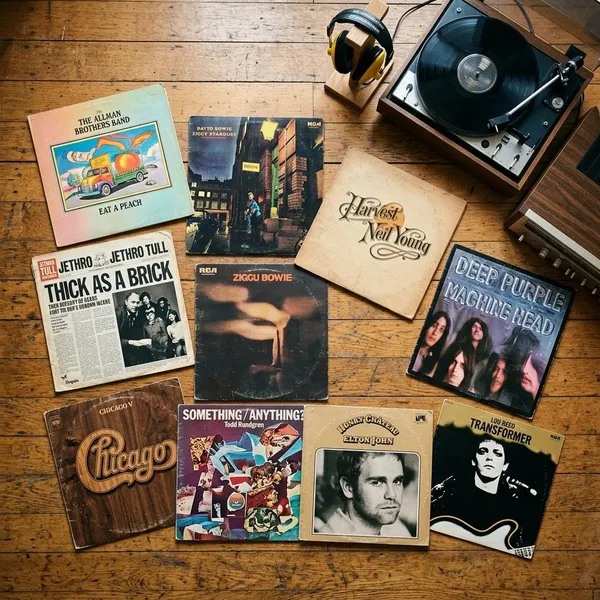
If you want the best starting point for classic rock albums 1972, do not treat the year as one single sound. Start with the style you already like: Machine Head for riffs, Harvest for acoustic warmth, Ziggy Stardust for glam hooks, and Close to the Edge if you want a full prog immersion. Once those click, the deeper records from the same year make much more sense.
Best 1972 rock albums by style
1972 is easier to hear when you split it by mood and purpose. Some albums are obvious first listens because they hit quickly; others need a quiet evening, headphones, or a little patience. The mistake is trying to rank every major record by the same standard.
Machine Head and Vol. 4 for heavy rock
Machine Head by Deep Purple is the cleaner, more instantly exciting choice: fast playing, huge riffs, and songs that announce themselves within seconds. Vol. 4 by Black Sabbath is murkier and stranger, with heaviness that feels psychological as much as physical.
- Machine Head: start here if you want drive, clarity, and guitar-organ firepower.
- Vol. 4: choose this if you like darker atmosphere and heavier mood shifts.
- Best first tracks: "Highway Star," "Smoke on the Water," "Supernaut," and "Snowblind."
Together, they show why 1972 matters to heavy rock. One points toward arena-ready hard rock; the other pushes closer to the emotional weight later metal would build on.
Close to the Edge and Foxtrot for prog
Close to the Edge by Yes and Foxtrot by Genesis are not background records. They work best when you are willing to follow long sections, sudden changes, and ideas that unfold slowly.
Yes feel more fluid and instrumental, especially on the title track and "And You and I." Genesis lean more theatrical, with "Watcher of the Skies" and "Supper's Ready" building atmosphere through story and tension. If you are new to prog, try one side at a time rather than forcing the whole album in one sitting.
Ziggy Stardust and The Slider for glam rock
Ziggy Stardust is the glam album for listeners who want character, drama, and songs that still work outside the concept. "Starman," "Moonage Daydream," and "Suffragette City" have enough hooks to make the bigger mythology optional.
The Slider by T. Rex is less narrative and more immediate. Marc Bolan's strength is not complexity; it is the way a groove, a phrase, and a little swagger can carry a whole song. If Bowie feels like a rock theatre production, T. Rex feels like a glitter-covered singles machine with real bite.
Harvest and Eagles for country rock
Harvest is the better choice when you want a quiet, personal record. It suits a late-night listen or a slow weekend morning, especially if songs like "Old Man" and "The Needle and the Damage Done" are the kind of writing you value most.
The Eagles' debut is easiergoing and more communal. "Take It Easy" and "Peaceful Easy Feeling" make it ideal for someone who wants harmony, road-song warmth, and a smoother entry into early-1970s country rock. Neither album is "less rock" because it is softer; both show how wide the rock audience had become.
Best 1972 albums for new listeners
The most useful beginner path is not the most historically impressive path. Start with records that make their appeal clear quickly, then move toward the longer, denser albums once your ear is used to the year's sounds.
Machine Head for powerful guitar riffs
Machine Head is the safest heavy-rock starter because it does not make you wait for the payoff. "Highway Star" is fast and flashy, "Space Truckin'" has a thick groove, and "Smoke on the Water" remains famous because the riff is simple without feeling small.
Harvest for warm acoustic songs
Choose Harvest when you want songs first and rock history second. Neil Young keeps much of the album plainspoken, which makes the emotional weight easier to hear.
This is also the better starting point for a listener who finds long solos or heavy records tiring. "Heart of Gold" is the obvious doorway, but "Old Man" and "The Needle and the Damage Done" are where the album's staying power becomes clearer.
Ziggy Stardust for bold glam rock
Ziggy Stardust works for beginners because the concept never buries the songs. You can enjoy it as a character-driven album, a glam rock landmark, or simply a tight run of memorable tracks.
Eagles for easygoing country rock
The Eagles' debut is the least intimidating album in this starter group. It is clean, melodic, and built around harmonies that make the songs feel familiar quickly.
It is especially useful for casual listening: car rides, relaxed afternoons, or anyone who wants early-1970s rock without heavy volume or prog complexity. If someone says they want "classic rock, but not too intense," this is an easy recommendation.
Can't Buy a Thrill for polished songwriting
Can't Buy a Thrill is the smart next step after the more obvious 1972 classics. "Do It Again" and "Reelin' in the Years" are immediate, but the album's real appeal is how polished the writing feels without becoming bland.
Underrated rock albums from 1972
Once the famous records are covered, 1972 still has plenty left. The strongest overlooked albums are not obscure for the sake of being obscure; they fill in parts of the year that the standard canon can miss.
Argus by Wishbone Ash
Argus is the underrated 1972 album most likely to win over classic rock fans quickly. The twin-guitar sound is melodic rather than showy, and the whole record has a mythic, almost windswept mood.
Try "The King Will Come" first. If that mix of folk color, hard-rock weight, and patient guitar lines works for you, the rest of the album is worth hearing front to back.
Obscured by Clouds by Pink Floyd
Obscured by Clouds often gets treated as a stop on the way to The Dark Side of the Moon, but that makes it sound less enjoyable than it is. It is a smaller, looser Pink Floyd album, and that can be a strength.
For a casual listener, this may actually be easier to revisit than the band's more monumental records. "Free Four" and "Childhood's End" give it a song-based pull, while the instrumentals keep the atmosphere intact.
Demons and Wizards by Uriah Heep
Demons and Wizards is a strong pick if you like hard rock with organ, harmonies, and a fantasy edge. "Easy Livin'" is the fast entry point, but the album's appeal is bigger than one track.
Bare Trees by Fleetwood Mac
Bare Trees is easy to miss if your image of Fleetwood Mac begins with their later commercial peak. This earlier version of the band is quieter, more fragile, and more atmospheric.
It is best for listeners who want mood over spectacle. The album does not announce itself as a giant landmark, but its melodies and emotional restraint give it a long afterlife once you settle into it.
Paul Simon by Paul Simon
Paul Simon broadens the 1972 picture because it shows how much careful songwriting existed outside the louder album-rock lane. It is concise, rhythmic, and full of small details that do not feel labored.
"Mother and Child Reunion" and "Me and Julio Down by the Schoolyard" are the obvious openers, but the album's real value is its light touch. It is a good reminder that a 1972 essential does not need to be heavy, long, or dramatic to matter.
Why 1972 was a landmark year for rock
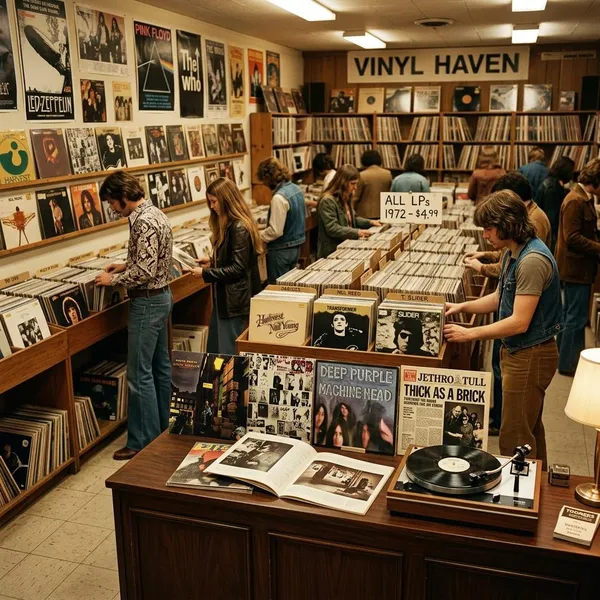
1972 stands out because several rock movements matured at the same time. Hard rock got heavier, progressive rock became more ambitious, glam broke through visually and commercially, and country rock reached listeners who might not have wanted louder records.
Hard rock became heavier
By 1972, heaviness was becoming more than loud blues-rock. Machine Head gave it speed and precision, while Vol. 4 gave it dread, weight, and emotional darkness.
That difference matters. Later heavy metal did not grow from one single sound; it came from bands learning how to make riffs, atmosphere, and volume feel like a whole identity.
Progressive rock grew more ambitious
Progressive rock in 1972 was not just adding longer songs. Albums like Close to the Edge, Foxtrot, and Thick as a Brick asked listeners to follow structure, theme, and changing textures across whole sides of vinyl.
Glam rock reached the mainstream
Glam rock made image part of the music's force. Bowie and T. Rex proved that style, character, and presentation could sharpen a song rather than distract from it.
That shift changed the expectations around rock stardom. A band or artist no longer had to look like a denim-clad blues-rock unit to feel serious; theatricality could carry real musical weight.
Country rock found a wider audience
Harvest and Eagles helped make softer, roots-based rock feel central rather than secondary. Acoustic guitars, close harmonies, and plainspoken melodies reached a wide audience without needing to imitate harder bands.
For listeners building a 1972 collection, this is the balancing point. Without country rock and singer-songwriter records, the year can look too dominated by riffs, concepts, and spectacle.
Albums became complete artistic statements
The strongest 1972 albums feel deliberate even when they sound loose. Exile on Main St. has its basement-like sprawl, Ziggy Stardust has its character arc, Close to the Edge has its long-form architecture, and Harvest has its intimate emotional center.
Conclusion
The best way into 1972 is to choose by listening mood, not by reputation alone: Machine Head when you want power, Harvest when you want warmth, Ziggy Stardust when you want color, and Close to the Edge when you want an album to take over the room. After that, records like Argus, Bare Trees, and Obscured by Clouds prove how deep the year goes. Few rock years make it this easy to find both famous landmarks and personal favorites.