
If you want the short answer, the essential classic rock albums 1983 gave us are the records where big hooks, sharper production, MTV visibility, and heavier guitar sounds all collided. Start with Pyromania, Synchronicity, or Eliminator if you want the clearest picture of the year, then branch into metal, arena rock, progressive pop, and early alternative-leaning rock from there.
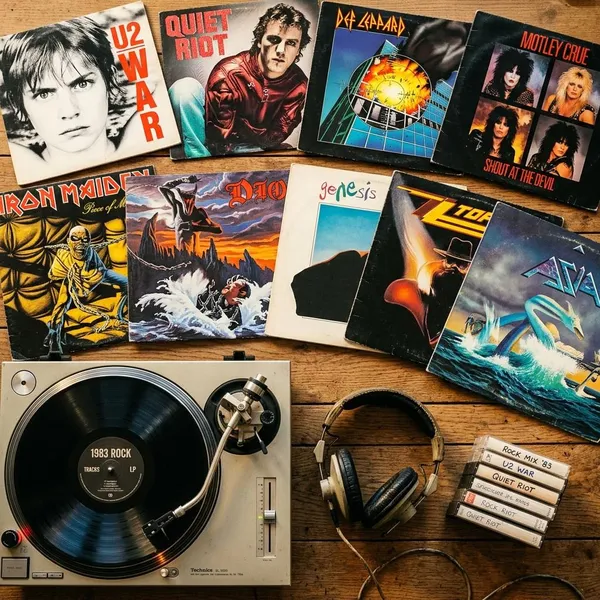
The 10 best classic rock albums from 1983
1983 was not one kind of rock year. It had blockbuster hard rock, polished pop-rock, classic heavy metal, stadium ballads, and albums that hinted at where alternative rock would go later in the decade. That range is why a good 1983 listening list should not be only the biggest sellers or only the heaviest records.
| Album | Best first listen if you want... | Why it matters |
|---|---|---|
| Pyromania by Def Leppard | Big hard rock anthems | It helped set the sound of glossy, hook-heavy 1980s hard rock. |
| Synchronicity by The Police | Smart songwriting with polish | It proved rock could be commercial, tense, and artful at the same time. |
| Eliminator by ZZ Top | Riffs, groove, and MTV-era style | It showed how a veteran blues-rock band could modernize without losing its bite. |
| 90125 by Yes | Progressive ideas in compact songs | It turned a prog legacy into sharp, radio-ready pop-rock. |
| Holy Diver by Dio | A clear classic metal entry point | It gave heavy metal drama, melody, and authority in one very approachable package. |
The other five records fill out the year just as strongly: Genesis for sleek band reinvention, Frontiers for arena-rock emotion, Rebel Yell for punk attitude turned into pop-rock swagger, Piece of Mind for ambitious metal, and War for rock with political urgency.

Which 1983 rock album should you hear first?
The easiest way to choose is to decide what you want from the first listen. If you want instant impact, start with Pyromania. If you want groove and style, choose Eliminator. If you want songwriting with more emotional tension, try Synchronicity.
- One-album test: play Pyromania first if you want the broadest 1983 rock snapshot.
- One-evening sampler: play three songs each from Pyromania, Synchronicity, and Holy Diver.
- Full-album listener: start with the record whose mood you actually want, not just the biggest title.
- Avoid this mistake: judging the year only by singles; several of these albums are stronger in context.
Start with Pyromania for big rock anthems
Choose Pyromania first if you want the most direct hit of 1983 hard rock. It is loud, bright, catchy, and paced so well that even the deeper cuts feel connected to the singles.
This is the safest recommendation for a mixed group too. If one person likes classic rock radio, another likes 1980s pop polish, and someone else wants guitars, Pyromania usually gives everyone something to hold onto.
Choose Eliminator for sharp riffs and hooks
Eliminator is the better first play when you want something leaner and more groove-driven. ZZ Top does not overload the songs; the appeal is in the stomp, the guitar tone, and the clean hook.
Try Synchronicity for polished songwriting
If lyrics, atmosphere, and tension matter more to you than sheer volume, Synchronicity is the smart first choice. It still has major singles, but it is more restless and layered than a simple hits-plus-filler album.
It is also the best pick for someone who usually listens to new wave, smart pop, or moodier rock. The album rewards a quieter listen more than a party listen.
Play 90125 for progressive pop rock
90125 makes the most sense if you want musicianship without a long progressive-rock commitment. It is crisp, technical, and melodic, with "Owner of a Lonely Heart" acting as the obvious doorway.
- Good fit: you like polished production but want more detail than standard radio rock.
- Less ideal: you want raw guitar grit or old-school 1970s prog sprawl.
Pick Holy Diver for classic heavy metal
Holy Diver is the right starting point if your taste already leans heavier but you still want memorable songs. It gives you the drama of metal without making the first listen feel like homework.
For a beginner-metal scenario, choose this before Piece of Mind. Iron Maiden may be more fast-moving and ambitious, but Dio is usually the smoother first step into classic heavy metal from 1983.

Why 1983 was a major year for rock
1983 mattered because rock was being reshaped from several directions at once. MTV changed how bands were discovered, arena rock reached a very commercial form, metal widened into clearer branches, and older bands learned how to sound current without fully abandoning their identities.
MTV brought rock bands to larger audiences
MTV did not make weak songs strong, but it made strong songs travel faster. Def Leppard, ZZ Top, Billy Idol, and The Police all benefited from music that could be recognized visually as well as heard on radio.
The practical effect is easy to hear now: many 1983 rock songs feel built around a complete identity. The riff, chorus, image, and video memory all work together, which helped casual viewers become album buyers or long-term fans.
Arena rock reached its commercial peak
Frontiers and Pyromania show arena rock near its most efficient form: big choruses, clear emotional stakes, and production polished enough for radio but forceful enough for large venues.
This was not always subtle music, and that is part of the point. The best arena rock from 1983 understood scale. It gave listeners songs that worked in a car, on television, and in a crowd.
Heavy metal split into new styles
Heavy metal was no longer moving in just one lane. Holy Diver leaned into heroic, melodic metal; Piece of Mind pushed speed, storytelling, and technical control; Metallica's Kill 'Em All, though outside the main ten here, pointed toward thrash.
For a listener exploring metal history, 1983 is useful because the choices are clear. You can hear the difference between accessible classic metal, more ambitious traditional metal, and the faster underground direction that would grow through the decade.
Veteran bands found modern sounds
ZZ Top, Yes, and Genesis all updated their sound in different ways. The common thread was not copying younger bands; it was tightening the songs, embracing newer studio textures, and making the old strengths easier to hear in a changed market.
- ZZ Top: kept the groove, sharpened the presentation.
- Yes: compressed progressive skill into radio-ready structures.
- Genesis: balanced atmosphere with more direct pop-rock writing.
New artists reshaped the next decade
U2 and Billy Idol show two very different ways newer or rising acts pushed rock forward. U2 brought urgency and moral weight; Idol brought image, attitude, and crossover confidence.
That split matters because the rest of the decade would not be ruled by one rock style. Some listeners wanted spectacle, some wanted heavier music, and others wanted songs that felt sharper, leaner, or more socially charged. 1983 gave all of those paths more room.

Conclusion
The best way into 1983 rock is to pick by mood, not by reputation alone: Pyromania for the big hard-rock picture, Synchronicity for polished tension, Eliminator for groove, and Holy Diver or Piece of Mind when you want metal. Once those click, the rest of the year opens up naturally, because 1983 was less a single sound than a turning point where rock learned how to be bigger, sharper, heavier, and more visual at the same time.