
If classic rock AOR feels confusing, start with the sound rather than the acronym: big melodies, clean production, strong vocals, and albums that still work beyond the famous singles. For a first listen, Boston and Journey give the clearest entry point, while Foreigner, REO Speedwagon, Toto, and Styx show how wide the style can get without losing its radio-ready polish.
What AOR means in classic rock
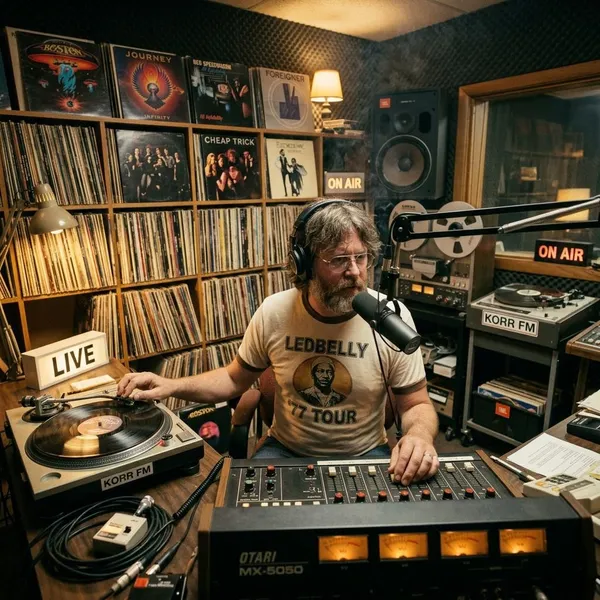
AOR has two meanings that often get mixed together. The older meaning is album-oriented radio, a radio format built around albums and deeper cuts. The later meaning is album-oriented rock, a label for polished, melodic rock associated with bands such as Journey, Boston, Foreigner, Toto, Styx, and REO Speedwagon.
Album-oriented radio as the original meaning
Album-oriented radio began as a contrast to singles-driven programming. Instead of playing only short, obvious hits, FM stations could give space to album tracks, longer songs, and artists whose appeal came from a full record rather than one quick single.
That matters for classic rock because it changed how listeners discovered bands. A casual listener might hear the hit first, then catch a deeper album cut that made the band feel more substantial. For someone exploring the music now, that is still a useful habit: do not judge an AOR band only by the song you already know from playlists or sports arenas.
Album-oriented rock as the later genre label
Album-oriented rock is the sound most people mean today when they say AOR: melodic mainstream rock with polished production, strong lead vocals, clear choruses, and arrangements built to sound big without becoming messy.
It overlaps with arena rock and melodic rock, but it is not just another name for either one. Arena rock points more toward scale and concert impact. Melodic rock points more toward tuneful songwriting. AOR usually sits between them, with radio discipline, album craft, and a glossy but still guitar-driven sound.
How classic rock AOR developed
Classic rock AOR did not appear as a finished genre overnight. It grew from open-ended FM radio, became stronger as album cuts found loyal listeners, and then tightened once stations and labels realized which sounds worked reliably.
Free-form FM radio opened the format
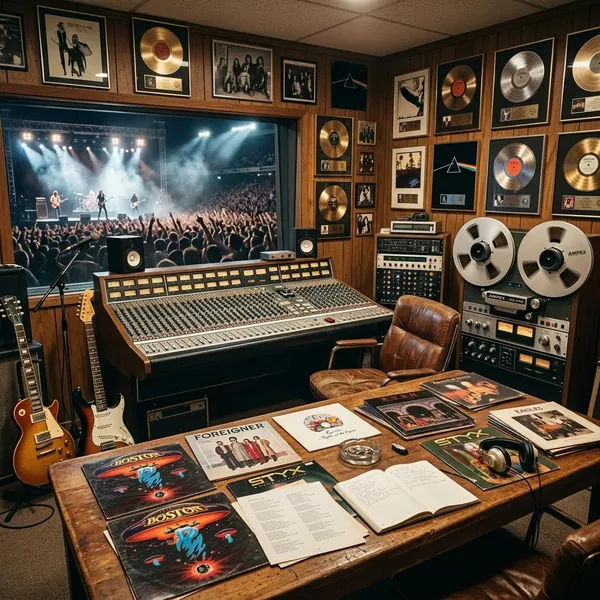
Free-form FM radio gave DJs room to play music that did not fit neatly into AM pop formats. A set could move through blues-rock, progressive rock, hard rock, and singer-songwriter material, which made albums feel like places to explore rather than containers for singles.
For modern listening, that history gives a good rule of thumb: if an album looks like "just one hit plus filler," give at least the first side or first half a fair listen before deciding. AOR often reveals itself through pacing, not only through the biggest chorus.
Album cuts widened rock playlists
Album cuts proved that non-singles could become fan favorites. Once radio listeners responded to deeper tracks, bands had a reason to make records with several strong entry points: an anthem, a ballad, a harder rocker, and maybe a moodier piece that gave the album character.
- For hit-focused listeners: start with the familiar singles, then try two or three surrounding tracks.
- For album listeners: play the record in order and notice where the pace changes.
- For playlist builders: avoid choosing only ballads, or the style will sound softer than it really is.
Commercial programming tightened the sound
Once AOR became commercially valuable, radio playlists became more controlled. Songs with strong choruses, clean vocals, and polished arrangements had a better chance of repeat airplay than loose jams or rougher album experiments.
That shift is why later classic rock AOR can sound so precise. The upside is consistency: many albums are easy to enjoy quickly. The downside is that weaker examples can feel too calculated, so the best records are the ones where the hooks still feel alive rather than assembled to meet a format.
What the classic rock AOR sound is like
The classic rock AOR sound is built around balance. It should have enough guitar power to feel like rock, enough polish to work on radio, and enough melody to stay memorable after one listen.

Melody-first songs with big choruses
AOR usually puts melody before attitude. The guitar parts may be strong and the drums may hit hard, but the song lives or dies by the vocal line and the chorus payoff.
Polished guitars and layered keyboards
Guitars in AOR tend to be full, bright, and controlled rather than raw for its own sake. Keyboards add width, atmosphere, and lift, especially in choruses where the track needs to feel larger.
Listen to the balance between the two. If you come from hard rock, Foreigner may feel like the easiest bridge because the guitars keep more bite. If you prefer sleek studio detail, Toto may make more sense because the keyboard and guitar parts are arranged with unusual precision.
Clear vocals and stacked harmonies
Clear lead vocals are central to AOR because the hook needs to be understood quickly. Singers such as Steve Perry, Brad Delp, Lou Gramm, and Kevin Cronin are different from one another, but all of them make melody feel direct and emotionally readable.
Stacked harmonies are the extra lift. They can make a chorus feel massive without adding heaviness, which is one reason Boston and Styx sound so wide even when the songs themselves are tightly structured.
Power ballads beside harder rock tracks
Power ballads are not a side issue in AOR; they are part of the album logic. A harder track gives movement, while a ballad resets the mood and lets the singer carry the emotional center.
For a first album listen, avoid skipping every slower track. On the other hand, if you only sample the ballads, you may get the wrong idea and think AOR is softer than it is. The style works best when the big emotional songs sit beside the rockers.
Best AOR albums for beginners
The best beginner AOR albums are not just collections of famous songs. They show how the style works across a full record: hooks, contrast, pacing, polish, and enough personality to separate one band from another.
If you want the quickest route, start with Boston or Escape. If you already like harder classic rock, go to 4. If you want smoother musicianship, choose Toto IV. If theatrical arrangements interest you, Paradise Theatre is the better doorway.
| Album | Best first-listen reason | Good fit if you want |
|---|---|---|
| Boston by Boston | The cleanest core AOR sound | Huge hooks and layered guitars |
| Escape by Journey | The vocal peak of arena-sized AOR | Emotional choruses and big singalong moments |
| 4 by Foreigner | A tougher, punchier version of the style | Melodic rock with more bite |
| Hi Infidelity by REO Speedwagon | Warm, direct, very accessible songwriting | Hooks with everyday emotional appeal |
| Toto IV by Toto | Studio polish and refined arrangements | Smooth production and precise musicianship |
| Paradise Theatre by Styx | Theatrical AOR with strong choruses | Drama, harmonies, and album personality |
Boston by Boston
Boston is the easiest first stop because it makes the AOR formula obvious in the best way: soaring melodies, layered guitars, bright harmonies, and production that feels polished without draining the rock energy.
"More Than a Feeling" is the obvious doorway, but the album's real value is consistency. The deeper tracks keep the same sense of lift and craft, which helps explain why AOR was tied so strongly to full-album listening.
Escape by Journey
Escape shows the grand, emotional side of AOR. Steve Perry's voice gives the album its center, but the band's tight arrangements keep the drama from floating away.
For beginners, this is the record to choose when vocals matter most. "Don't Stop Believin'" may dominate the public memory, but the album works because Journey could make big songs feel personal as well as stadium-sized.
4 by Foreigner
4 is the better pick if you want AOR with more muscle. The production is clean, but Lou Gramm's voice and the band's direct arrangements give the album a firmer rock edge than some smoother entries in the style.
It is also a useful correction to a common mistake: AOR is not automatically soft rock. At its best, it can be sharp, physical, and radio-friendly at the same time.
Hi Infidelity by REO Speedwagon
Hi Infidelity is approachable because its emotions are plainspoken. The hooks are polished, but the songs do not feel distant or overly technical.
This is a good choice for someone who likes classic rock but does not want the most dramatic or studio-perfect version of AOR first. It has enough rock movement to keep pace, while the ballads and mid-tempo songs make the album easy to live with.
Toto IV by Toto
Toto IV represents the studio-crafted side of AOR. The playing is precise, the arrangements are smooth, and the production rewards close listening, but the songs still come first.
Choose this one when you want detail rather than sheer force. It is not the roughest or loudest AOR album, and that is the point: it shows how refined the style could become while still staying connected to classic rock radio.
Paradise Theatre by Styx
Paradise Theatre brings a theatrical edge to AOR. The harmonies, keyboards, and dramatic pacing give it a different personality from the more straightforward albums on the beginner list.
If progressive rock is already part of your listening, Styx may click faster than expected. The songs are polished and accessible, but there is enough concept-album flavor to keep the record from feeling like a simple run of radio tracks.
Conclusion
The smartest way into classic rock AOR is to treat the hits as doors, not destinations. Start with one full album that matches your taste—Boston for the core sound, Escape for vocal drama, 4 for more rock bite, or Toto IV for studio polish—and listen for how the choruses, production, ballads, and deeper cuts work together.