
If you only know Boston from "More Than a Feeling," the quickest way to understand the band is to hear how planned the music is without sounding stiff. The classic rock band Boston was built around Tom Scholz's studio vision and Brad Delp's voice, which is why the songs still feel polished, huge, and easy to remember decades later.
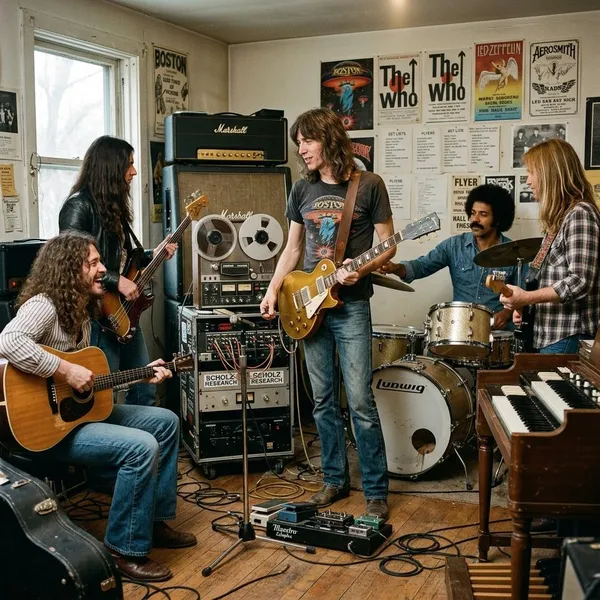
Who formed the classic rock band Boston
Boston formed around guitarist, songwriter, engineer, and producer Tom Scholz, with singer Brad Delp becoming the voice most listeners connect to the band. Barry Goudreau and Jim Masdea were also important in the early development, especially before the first album turned Boston into a major name.
Tom Scholz led the writing and production
Tom Scholz was the main architect of Boston's early sound. He wrote much of the material, played key guitar and keyboard parts, and treated recording almost like engineering a machine: every tone, layer, and transition had to fit.
That control is why Boston records often sound more precise than many 1970s rock albums. If you are trying to understand the band's appeal, listen first for the guitar tone and the way the parts lock together rather than only for solos or volume.
Brad Delp became the signature voice
Brad Delp gave Boston its emotional center. His high lead vocals could cut through the dense arrangements, but they still sounded warm rather than harsh.
How Boston went from demos to a record deal
Boston's breakthrough can look sudden from the outside, but the band had been refining material for years before the 1976 debut. The important detail is that the demos were not rough sketches; they already carried much of the sound that later made the album famous.
For a new listener, this explains why the first Boston album feels so confident. It was not a label-created product rushed into shape after a contract. The songs had already been tested, rebuilt, and polished before CBS/Epic finally said yes.
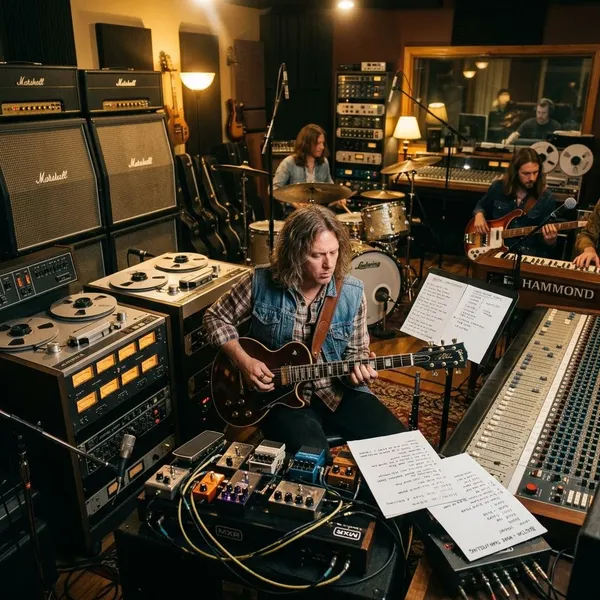
Scholz built the songs in his home studio
Scholz's home studio gave him the one thing most unsigned bands did not have: time. He could keep adjusting guitar layers, vocal parts, keyboard textures, and song structure without watching a professional studio clock drain the budget.
That matters when you hear the debut today. The songs do not sound like a band simply playing live in a room; they sound assembled with care, but still aimed at the punch of rock radio.
Delp layered the lead and harmony vocals
Delp's vocals were part of the construction, not just something placed on top. He could sing demanding lead lines and then add harmony parts that made the choruses feel wide and bright.
- Lead vocal: the clear, high line that gives the song its identity.
- Harmony layers: the extra lift that makes the chorus feel larger.
- Emotional effect: polished rock that still feels human.
Repeated rejections led to a 1976 CBS deal
Boston was rejected by labels before landing the CBS/Epic deal in 1976. The delay could have ended the project, but it also gave Scholz and the other musicians more time to sharpen the material.
The demos became the core of the debut album
Several early recordings became the foundation of the debut album, which helps explain why it plays less like a first attempt and more like a finished statement. "More Than a Feeling," "Peace of Mind," and other key tracks had already been shaped before the wider audience heard them.
What makes Boston's sound distinctive
Boston's sound is distinctive because the band combined clean power with melody. The guitars are layered, the vocals soar, and the choruses feel huge, but the songs rarely collapse into clutter.
If you are comparing Boston with other classic rock bands, check three things first: the guitar clarity, Delp's vocal stacking, and how quickly the chorus sticks. Those are the details that separate Boston from a standard 1970s hard rock act.
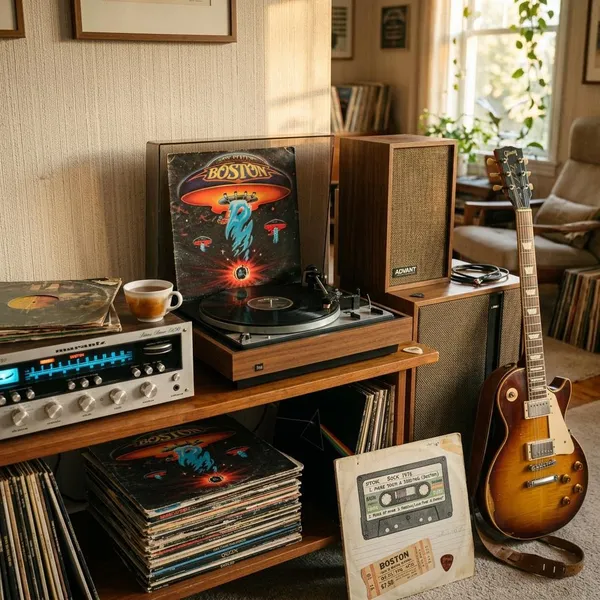
Layered guitars with a clean tone
The guitars sound big, but they stay readable. Scholz's layered approach gave Boston weight without the muddy blur that can make some dense rock recordings tiring.
High vocals with rich harmonies
Delp's high vocals made Boston instantly recognizable, but the harmonies are what make many choruses feel almost panoramic. They add scale without making the songs feel theatrical or over-sung.
Big choruses built around strong melodies
Boston's choruses work because the melodies are strong before the production makes them huge. "More Than a Feeling" is the obvious example: the chorus would still be memorable even in a stripped-down version, but the full arrangement turns it into an arena-sized hook.
This is also why Boston is a safe starting point for someone who likes melody more than heavy rock. The band has guitar power, but the songs are usually carried by tune and lift rather than aggression alone.
Precise production without losing rock energy
The production is careful, but the records do not feel lifeless. "Smokin'" still moves, "Foreplay/Long Time" still builds tension, and the faster passages have enough push to keep the polish from becoming sterile.
Essential Boston songs to hear first
For a first listen, start with the debut-album songs, then add "Don't Look Back" and "Amanda" to hear how the band's sound carried into later periods. If you only have 20 minutes, play "More Than a Feeling," "Peace of Mind," "Foreplay/Long Time," and "Amanda" in that order.
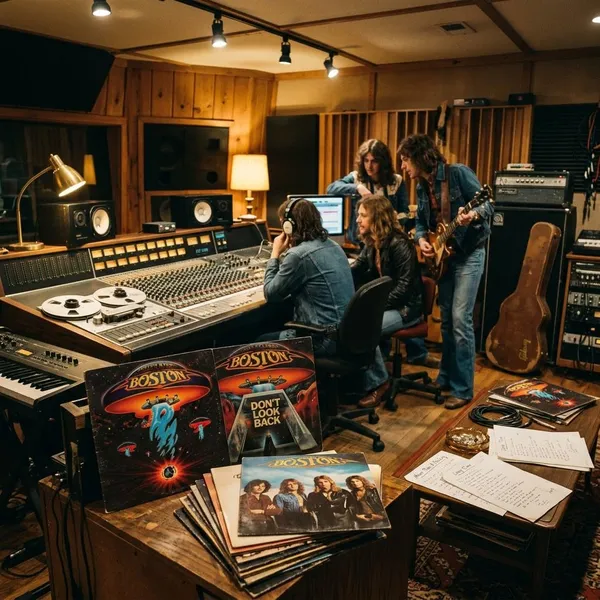
More Than a Feeling
"More Than a Feeling" is the essential starting point. It has the acoustic opening, the bright guitar lift, Delp's soaring vocal, and the chorus that made Boston a permanent part of classic rock radio.
Do not skip it just because it is overplayed. For the band's identity, it is still the cleanest single example.
Peace of Mind
"Peace of Mind" shows Boston at its most balanced: polished guitar work, a steady groove, and a lyric about stepping away from status chasing. It is a better second listen than another obvious hit because it proves the band had more than one kind of hook.
Foreplay Long Time
"Foreplay/Long Time" is the track to play when you want Boston's bigger musical ambition. The instrumental opening gives the song drama before it turns into a driving melodic rocker, so it works especially well for listeners who enjoy progressive touches but still want a clear chorus.
Don't Look Back
"Don't Look Back" is the best quick sample from the second album. It has the familiar Boston shine, but the mood feels a little more urgent, which makes it useful after the debut material.
Amanda
"Amanda" shows Boston's softer side and explains why the band still connected in the 1980s. If someone only knows the arena-rock tracks, this is the song that widens the picture without abandoning the band's melodic style.
Smokin'
"Smokin'" brings out the band's livelier, harder-driving side. The keyboards give it extra character, and the track helps keep the debut album from feeling like only polished mid-tempo rock.
Boston albums that shaped the band's story
Boston's album story is short compared with many classic rock bands, but each major release marks a clear stage: the explosive debut, the difficult follow-up, the long-awaited return, and the later catalog that kept the name alive.
Boston launched the band in 1976
Boston is the essential album. Released in 1976, it introduced "More Than a Feeling," "Peace of Mind," "Foreplay/Long Time," "Rock and Roll Band," and "Smokin'," which is an unusually strong set for a debut.
If you normally sample bands through greatest-hits playlists, Boston is one case where the original album is worth hearing in full. The sequencing shows how much variety was already there.
Don't Look Back followed the breakthrough
Don't Look Back had the hard job of following one of rock's most successful debuts. It did not replace the first album in most fans' minds, but the title track proved Boston could still deliver a major anthem.
Third Stage marked a long-awaited return
Third Stage arrived after a long gap and brought Boston back to mainstream attention, especially through "Amanda." The album is important because it shows the band's melodic approach working in a different era, not just as a leftover from the 1970s.
Later albums extended the band's catalog
Later albums such as Walk On, Corporate America, and Life, Love & Hope are best approached after the core records. They extend the story through lineup changes and shifting expectations, but they are not the first place I would send a new listener.
They matter most if you are interested in Boston as an ongoing Scholz-led project rather than only the classic Delp-era sound.
Conclusion
Boston's lasting appeal comes from a rare mix of craft and feeling: Scholz gave the songs their detailed architecture, while Delp made them sound open, bright, and human. Start with the 1976 debut if you want the clearest picture, then branch into "Don't Look Back" and "Amanda" to hear how the band's polished melodic rock carried beyond its first breakthrough.