
If you are looking for classic rock bands 2000s fans still treat as essential, start with the groups that gave the decade its most durable sounds: nu metal, garage revival, post-punk revival, pop-punk, emo, and big arena rock. The safest way in is not to rank every band at once, but to pick the sound you like most first, then move toward the albums that still hold up beyond nostalgia.
Best alternative and heavy rock bands of the 2000s
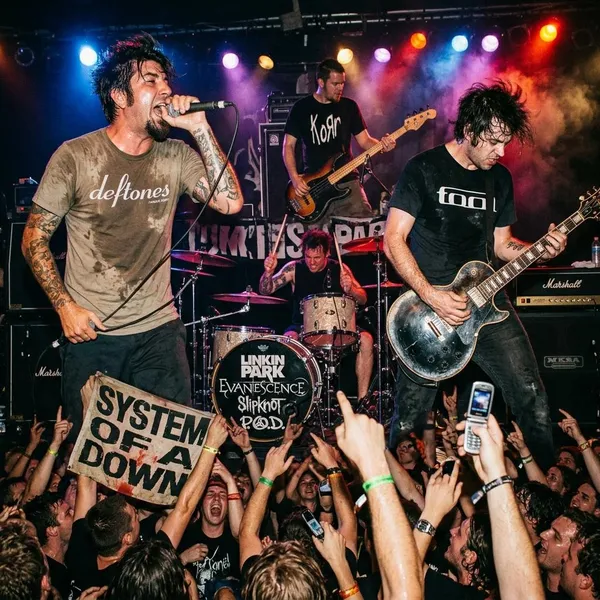
The heavier side of 2000s rock was not one single lane. Some bands made heavy music easier to enter through melody and rap, while others leaned into political chaos, stadium choruses, progressive drama, or dry desert-rock groove.
Linkin Park
Linkin Park are the obvious first stop for anyone who wants 2000s rock to hit hard but still feel instantly accessible. Hybrid Theory and Meteora turned nu metal into a mainstream language: heavy guitars, electronic edges, rap verses, clean choruses, and lyrics built around frustration, pressure, and isolation.
System of a Down
System of a Down were the decade's reminder that mainstream heavy rock could still be strange. Toxicity moved between frantic riffs, political bite, sudden tempo changes, and huge hooks without smoothing out the band's personality.
Try "Chop Suey!" or "Toxicity" when you want something heavier than radio rock but less predictable than standard metal. They are not the neatest entry point for casual background listening, but they are one of the best choices if you want 2000s rock with tension, humor, anger, and real identity.
Foo Fighters
Foo Fighters carried alternative rock into arenas without making it feel overly complicated. "Learn to Fly," "All My Life," "Best of You," and "The Pretender" show why they became such a reliable name: big choruses, muscular guitars, and songs that work equally well on radio or in a festival crowd.
- Start here if: you want rock that feels familiar, melodic, and loud enough without being abrasive.
- Skip deeper cuts at first if: you mainly want the more experimental side of the decade.
Muse
Muse made 2000s rock feel dramatic and oversized. Origin of Symmetry, Absolution, and Black Holes and Revelations mixed alternative rock with progressive ambition, electronic textures, falsetto vocals, and a sense of scale that set them apart from the stripped-down garage bands of the same era.
Queens of the Stone Age
Queens of the Stone Age sit in a different corner of heavy 2000s rock: less confession, more groove. Songs for the Deaf is the key record, with "No One Knows" and "Go with the Flow" showing how a band could sound heavy, stylish, and tightly controlled at the same time.
They are a smart pick if nu metal feels too emotional or arena rock feels too obvious. The appeal is in the rhythm, the restraint, and the way the riffs lock in without needing to shout for attention.
Best garage and indie rock bands of the 2000s
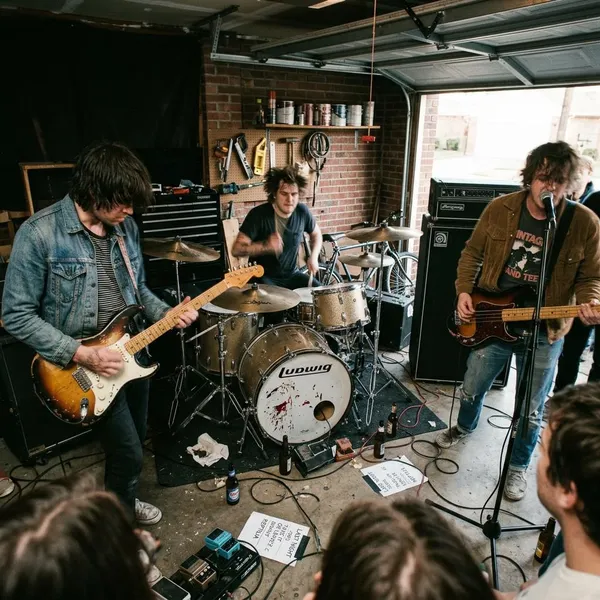
Garage and indie rock gave the 2000s a different kind of energy. Instead of huge production and emotional overload, these bands often made guitars feel sharp, lean, stylish, and immediate.
This is the better starting area if you want a playlist for driving, parties, or everyday listening rather than a heavy emotional release. The mistake to avoid is treating "indie" as quiet or soft; many of these records are direct, punchy, and built around memorable riffs.
The White Stripes
The White Stripes proved that a rock band did not need a huge setup to sound massive. Jack and Meg White used blues, punk, garage rock, and space to create records that felt raw without feeling unfinished.
Elephant is the practical starting point because "Seven Nation Army" is familiar even to people who do not follow rock closely, while deeper tracks show how much personality the band could pull from a stripped-down format. If modern guitar music often sounds too polished to you, this is the correction.
The Strokes
The Strokes made early-2000s guitar rock feel cool again. Is This It is still the essential album because it is tight, stylish, and easy to replay without sounding like it is trying too hard.
Choose The Strokes when you want concise songs, dry vocals, interlocking guitars, and a city-night feel rather than big emotional release. "Last Nite," "Someday," and "Reptilia" are the obvious entry points, but the album works best as a full listen because the mood is so consistent.
The Killers
The Killers took indie-rock style and pushed it toward neon choruses. Hot Fuss is not raw like The White Stripes and not as detached as The Strokes; it is brighter, more dramatic, and much more open about wanting big hooks.
- Best first song: "Mr. Brightside," because it still explains their staying power in under four minutes.
- Best fit: listeners who want guitar music that also works at parties, bars, and group sing-alongs.
- Watch for: a polished sound that may feel less "garage" than other bands in this section.
Arctic Monkeys
Arctic Monkeys arrived with speed, wit, and unusually sharp detail. Whatever People Say I Am, That's What I'm Not captured nightlife, boredom, awkward encounters, and young frustration with a specificity that made the songs feel lived-in.
They are a good choice if lyrics matter as much as guitar energy. "I Bet You Look Good on the Dancefloor" gives you the rush, but the real reason the band mattered was Alex Turner's eye for small social moments.
Kings of Leon
Kings of Leon are useful because they show one common 2000s rock path: a scruffy band growing into an arena act. Early records had a rough Southern-rock edge, while Only by the Night brought the bigger, cleaner sound that made "Sex on Fire" and "Use Somebody" unavoidable.
If you prefer the raw side of indie rock, start earlier. If you want emotional, radio-ready rock that still has some grit, start with the later hits and work backward.
Best pop-punk and emo bands of the 2000s
Pop-punk and emo were where 2000s rock became most personal for a lot of listeners. The songs were fast, melodic, dramatic, and built for people who wanted choruses they could carry around after one listen.
This is the right section if your main test is emotional connection rather than guitar tone. For a casual nostalgia playlist, start with the singles; for a better feel for the scene, listen to the albums because image, sequencing, and fan identity mattered almost as much as individual hits.
Green Day
Green Day were already important before the 2000s, but American Idiot gave them one of rock's strongest second peaks. It turned pop-punk into something bigger: political, theatrical, radio-friendly, and still direct enough for longtime fans.
My Chemical Romance
My Chemical Romance made emo-adjacent rock feel grand, visual, and communal. Three Cheers for Sweet Revenge has the sharp breakout energy, while The Black Parade is the defining statement: theatrical, dramatic, and built around songs that turned private feelings into something huge.
Fall Out Boy
Fall Out Boy brought clever phrasing and glossy hooks to the pop-punk boom. From Under the Cork Tree and Infinity on High made them one of the easiest bands to recommend to listeners who want catchy songs with more lyrical personality than a simple sing-along.
- For instant hooks: "Sugar, We're Goin Down."
- For scene-era energy: "Dance, Dance."
- For crossover polish: "Thnks fr th Mmrs."
Paramore
Paramore entered a crowded scene and still sounded distinct because the songs were tight and Hayley Williams' voice gave them immediate identity. Riot! is the cleanest entry point, with "Misery Business," "That's What You Get," and "Crushcrushcrush" balancing punchy guitars with bright, emotional choruses.
Blink-182
Blink-182 belong in this decade even though their rise started earlier. Their 2003 self-titled album pushed the band toward darker textures and more mature songwriting, while songs like "I Miss You," "Feeling This," and "Always" kept their influence alive for younger pop-punk and emo acts.
If you want the jokier, faster version of the band, go back to the late-1990s material. If you want to understand their 2000s relevance, focus on how they made pop-punk sound more reflective without losing melody.
Which 2000s rock sound fits your taste
The easiest way to choose is to decide what you want first: heaviness, raw guitars, danceable rhythm, fast choruses, dramatic lyrics, or arena-sized lift. That first choice matters more than starting with the most famous band.
Nu metal for heavy riffs and rap
Pick nu metal if you want heavy riffs, sharp rhythm, emotional release, and vocals that can move between melody, shouting, and rap. Linkin Park are the most beginner-friendly choice; System of a Down are better if you want the heavier side to feel more chaotic and unusual.
Garage rock for raw guitar energy
Garage rock is the better fit when you want guitars to sound physical and uncluttered. Start with The White Stripes if you like bluesy minimalism, or early Strokes if you want something cleaner, cooler, and more urban.
Post-punk revival for danceable rhythms
Post-punk revival works when you want rock with movement. The Strokes, The Killers, and some Arctic Monkeys tracks have enough edge for guitar fans but enough rhythm for social listening.
This is often the best entry point for someone who says they "do not really like rock" but enjoys indie playlists, danceable bass lines, or songs that feel stylish rather than heavy.
Pop-punk for fast hooks and catchy choruses
Choose pop-punk when melody is the main thing. Green Day, Blink-182, Fall Out Boy, and Paramore all show different versions of the same basic promise: quick songs, memorable choruses, and emotional clarity without too much musical friction.
- For political scale: Green Day.
- For youthful humor and melody: Blink-182.
- For clever, glossy hooks: Fall Out Boy.
- For punchy emotion and strong vocals: Paramore.
Emo for dramatic and personal songwriting
Emo is the right direction if the lyric and mood matter as much as the riff. My Chemical Romance are the clearest 2000s starting point because their songs turn personal fear, grief, anger, and identity into something theatrical enough for a crowd.
Arena rock for big anthems
Arena rock is for listeners who want scale: choruses built for crowds, polished production, and songs that feel bigger than the room. Foo Fighters, Muse, and later Kings of Leon are the easiest names to try first.
If you are making a playlist for a mixed group, this is usually the safest lane because the songs are bold without requiring everyone to love heavier or more niche rock styles.
| Your taste | Start with | Best first album or song |
|---|---|---|
| Heavy but accessible | Linkin Park | Hybrid Theory |
| Raw guitar energy | The White Stripes | Elephant |
| Cool indie rhythm | The Strokes | Is This It |
| Big pop-punk statement | Green Day | American Idiot |
| Theatrical emotion | My Chemical Romance | The Black Parade |
| Arena-sized rock | Foo Fighters or Muse | "The Pretender" or "Starlight" |
Conclusion
The best way to revisit 2000s rock is to treat it as several scenes rather than one fixed sound: start with Linkin Park for heavy crossover, The White Stripes or The Strokes for guitar revival, Green Day or Paramore for hooks, My Chemical Romance for drama, and Foo Fighters or Muse for scale. Once you know which lane actually fits your taste, the decade stops feeling like a long nostalgia list and starts feeling like a set of modern classics you can still build a great playlist around.