
If you want to get into classic rock bands 60s listeners still talk about, do not start with a giant playlist of every famous name. Start with one sound: Beatles-style songwriting, Stones-style blues rock, Hendrix guitar fire, Doors darkness, or Beach Boys harmony. Once one band clicks, the rest of the decade becomes much easier to explore.
Essential British rock bands of the 60s
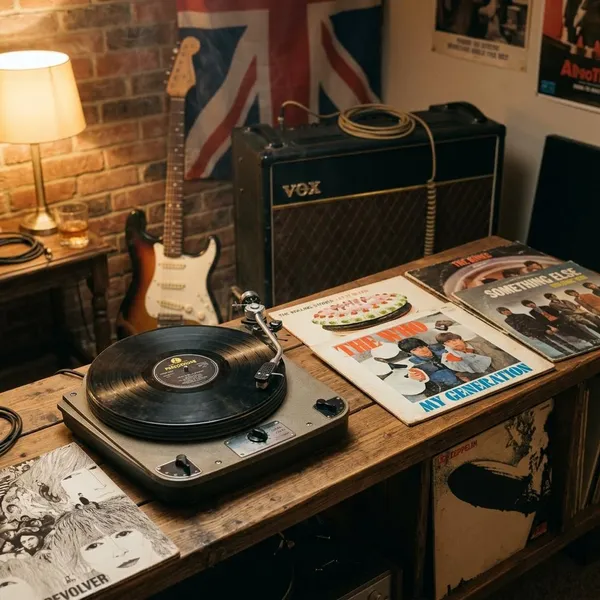
British rock in the 60s is the best first stop if you want the core language of classic rock: sharp singles, blues riffs, loud guitars, big choruses, and bands that quickly grew from pop acts into album artists. The practical way in is to hear how different these groups are from one another, not to treat them as one British Invasion block.
The Beatles
The Beatles are the safest first choice because they give you several versions of 60s rock in one catalog: tight early pop-rock, folkier mid-period writing, psychedelic studio ideas, and late-decade polish. If you are new, start with Revolver; it is short enough to absorb, but broad enough to show why the band changed the shape of rock albums.
- Start with: Revolver, then Rubber Soul or Abbey Road.
- Try first: "Taxman," "Eleanor Rigby," "Tomorrow Never Knows," and "A Day in the Life."
- Best for: listeners who care most about songs, melody, and creative arrangements.
The Rolling Stones
Go to The Rolling Stones when you want 60s rock to feel rougher, bluesier, and more physical. Their best late-60s work has a swagger that points straight toward 70s classic rock, especially on Beggars Banquet and Let It Bleed.
The Who
The Who are where 60s pop energy starts to feel explosive. Pete Townshend's power chords, Keith Moon's drumming, John Entwistle's bass, and Roger Daltrey's vocals made the band sound bigger and more aggressive than many of their peers.
The Kinks
The Kinks are essential if you like character, wit, and compact songwriting. "You Really Got Me" helped push distorted guitar toward hard rock, but Ray Davies' writing soon became more observational and distinctly British.
The Animals
The Animals are the British band to hear when you want grit without much polish. Eric Burdon's voice gives "House of the Rising Sun" and "We Gotta Get Out of This Place" a heaviness that feels emotional rather than just loud.
They work best as a focused compilation listen rather than an album-first band. If your taste leans toward bluesy vocals, working-class tension, and darker 60s rock, they deserve more than a quick one-song visit.
Essential American rock bands of the 60s
American 60s rock spreads out more by scene and mood. Instead of one dominant sound, you get California harmonies, Los Angeles darkness, folk-rock jangle, San Francisco psychedelia, and rootsy swamp rock. That variety is the point.
If British bands often make the decade feel sharper and more band-centered, American bands make it feel wider. A casual listener might start with the most melodic records; someone already into folk, country, or jam music may find the American side easier to enter.
The Beach Boys
The Beach Boys are the right start if you want beauty before volume. Their early surf image is only one part of the story; by Pet Sounds, Brian Wilson was building layered, emotionally detailed pop that still sits comfortably beside the most ambitious rock records of the decade.
- Start with: Pet Sounds.
- Try first: "Wouldn't It Be Nice," "God Only Knows," and "Good Vibrations."
- Best for: harmony lovers, studio-pop fans, and listeners who prefer craft over guitar solos.
The Doors
The Doors are the obvious pick for dark psychedelia. Their music is not bright flower-power rock; it is tense, theatrical, bluesy, and often nocturnal. Jim Morrison gets most of the attention, but the sound depends just as much on Ray Manzarek's keyboard lines and the space the band leaves around them.
Start with the debut album, especially "Break On Through," "Light My Fire," and "The End" if you want the full mood. If you usually like cinematic or slightly strange music more than cheerful oldies, The Doors may click faster than The Beatles.
The Byrds
The Byrds helped turn folk-rock into a defining American sound. Their jangling guitars and close harmonies made Dylan-influenced songwriting feel lighter, cleaner, and more radio-ready without stripping away the poetry.
"Mr. Tambourine Man" is the easy doorway, but The Notorious Byrd Brothers gives a better sense of their range. They are also a useful bridge if you like acoustic songwriting but are not ready for heavy psychedelic jams or blues-rock volume.
Jefferson Airplane
Jefferson Airplane capture the San Francisco psychedelic scene in its most accessible form. Surrealistic Pillow is the place to begin because "Somebody to Love" and "White Rabbit" give you strong songs before the catalog becomes more sprawling.
Creedence Clearwater Revival
Creedence Clearwater Revival are the easiest American 60s band to recommend to almost anyone. They arrived late in the decade, but their songs are direct, rootsy, and unusually durable: "Proud Mary," "Bad Moon Rising," "Green River," and "Fortunate Son" still land quickly.
Choose CCR if you want short songs, strong grooves, and no psychedelic fog. They are also a good option for someone who finds 60s rock too ornate or dated; their best records sound plain in the best way, with every part serving the song.
Best psychedelic and blues-rock bands of the 60s
Psychedelic and blues-rock bands are where the decade starts to stretch: louder guitars, longer tracks, heavier rhythms, looser structures, and more interest in sound itself. This is the branch to explore after you know whether you want intensity, improvisation, or atmosphere.
The Jimi Hendrix Experience
The Jimi Hendrix Experience should be your first stop if electric guitar is the main attraction. Hendrix used feedback, fuzz, wah, sustain, and rhythm in ways that still sound alive rather than museum-piece impressive.
Cream
Cream are the cleanest bridge from 60s blues-rock into hard rock. Eric Clapton, Jack Bruce, and Ginger Baker made the trio format feel huge, with blues roots, heavier amplification, and room for improvisation.
- Start with: Disraeli Gears for the most approachable balance.
- Then try: Wheels of Fire for more live power.
- Listen for: riffs, bass movement, drum force, and the blues structure underneath the volume.
The Grateful Dead
The Grateful Dead are not the simplest beginner band, and that is worth saying plainly. If you want tight singles, they may frustrate you at first. If you are curious about rock as a live, changing conversation, they become much more interesting.
For the 60s, try Anthem of the Sun or Aoxomoxoa, then sample a late-60s live recording rather than forcing yourself through everything chronologically. Their importance is not just in individual songs; it is in the idea that a rock performance could keep transforming in real time.
Santana
Santana belong here because the band broke through in 1969 with a sound that fused rock guitar, Latin rhythm, blues feeling, and percussion-heavy momentum. The debut album Santana is the obvious starting point, especially "Evil Ways."
This is a good choice if you want psychedelic rock that moves. Where some late-60s music drifts, Santana stays grounded in rhythm, which makes the band easier to enjoy even if you are not usually drawn to long instrumental passages.
Big Brother and the Holding Company
Big Brother and the Holding Company are inseparable from Janis Joplin's voice, and Cheap Thrills is the record to hear. "Piece of My Heart" and "Ball and Chain" are raw, strained, and emotional in a way that polished classic rock often is not.
They are not the best first pick for clean production or tidy playing. They are the right pick when you want 60s rock to sound messy, human, and pushed to the edge.
Which 60s rock band should you start with
The best first band depends on what already pulls you into music. If you are listening casually on a weekend, start with the most immediate songs. If you want to understand the decade properly, choose one album and sit with it before jumping to the next famous name.
Use this simple order if you feel stuck:
- Pick one trait: songwriting, riffs, guitar, mood, or harmony.
- Choose one full album: avoid starting with a 60-song playlist.
- Add one contrast: Beatles after Stones, Hendrix after Beach Boys, Doors after CCR.
- Keep a short playlist: ten strong songs are better than a crowded archive.
- Go deeper only after something clicks: then try Love, The Zombies, Moby Grape, or Quicksilver Messenger Service.
The Beatles for timeless songwriting
Start with The Beatles if you want the most reliable entry point. They work for casual listening, album listening, and deeper musical study, which is rare. Revolver is the best first test: if that record connects, you can move earlier for pop charm or later for studio ambition.
The Rolling Stones for blues-driven rock
Choose The Rolling Stones if rhythm and attitude matter more to you than perfect polish. They are especially good for listeners who already like blues, hard rock, bar-band energy, or guitar riffs that feel simple but memorable.
The Jimi Hendrix Experience for guitar innovation
Hendrix is the right start when you want to hear why the electric guitar became such a central classic rock instrument. Begin with Are You Experienced? rather than scattered live clips; the songs make the experimentation easier to grasp.
The Doors for dark psychedelia
The Doors fit listeners who like atmosphere, tension, and a little danger. They are not the warmest first band, but they are one of the most distinctive. If you usually prefer moody albums, late-night music, or lyrics with a theatrical edge, start with the debut and then try Strange Days.
The Beach Boys for harmony and studio craft
The Beach Boys are the best start for people who hear arrangements before riffs. Pet Sounds is gentle on the surface, but the details keep unfolding: vocal stacks, unusual instrumentation, and emotional shifts that feel more adult than the early surf image suggests.
This path is also useful if you are introducing someone to 60s rock who does not like "heavy" music. The Beach Boys prove that the decade's innovation was not only about distortion and volume.
Conclusion
The smartest way into 60s rock is to choose the sound you already respond to, then let that lead you outward: The Beatles for songs, The Rolling Stones for bluesy force, Hendrix for guitar, The Doors for atmosphere, and The Beach Boys for harmony. Once one record feels alive instead of merely "important," the decade stops being a history lesson and becomes a set of paths you can actually enjoy.