
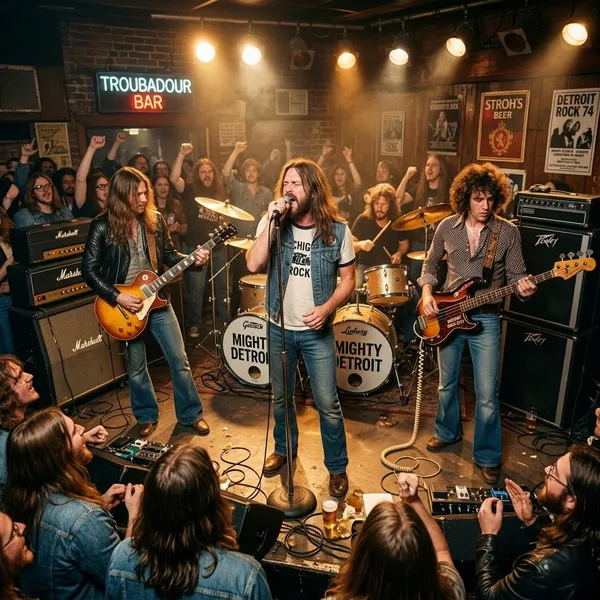
Michigan is one of the best states to explore if you want classic rock with real range: big arena riffs, road-worn storytelling, garage grit, proto-punk danger, and sharp power-pop hooks all came from the same place. If you are starting from scratch, begin with Bob Seger for familiar songwriting, Grand Funk Railroad for heavy crowd energy, and MC5 or The Stooges if you want to hear where punk attitude started forming.
Essential classic rock bands from Michigan
Michigan's classic rock story is not just a Detroit story, even though Detroit is central to it. Flint, Ann Arbor, and the Great Lakes Bay region all matter, and the best way to hear the state's influence is to notice what each band adds: scale, songwriting, noise, attitude, or hooks.
- For mainstream classic rock: start with Grand Funk Railroad and Bob Seger.
- For the rawer edge: go to MC5 and The Stooges before moving into later punk and alternative rock.
- For shorter, punchier songs: try Mitch Ryder, Brownsville Station, and The Romantics.
- For guitar-heavy late-1960s rock: The Amboy Dukes are worth hearing beyond Ted Nugent's later reputation.
Grand Funk Railroad
Grand Funk Railroad came out of Flint and turned simple, forceful rock into a huge 1970s arena sound. Their appeal is not subtlety; it is volume, momentum, and choruses that make sense in a packed room.
Bob Seger and the Silver Bullet Band
Bob Seger and the Silver Bullet Band are the easiest entry point for many listeners because the songs feel familiar even before you know them well. Seger's best writing turns cars, work, memory, small towns, and passing time into classic rock that feels lived-in rather than staged.
"Night Moves," "Turn the Page," "Mainstreet," and "Against the Wind" are the key starting points. Choose Seger first if you want melody and storytelling more than noise or rebellion.
MC5
MC5 brought Detroit rock into a louder, more confrontational space. They are often called proto-punk, but they still belong in classic rock conversations because their late-1960s attack changed what guitar bands could sound like.
"Kick Out the Jams" is the obvious first play, preferably loud. The mistake is treating MC5 as only a historical footnote; the best tracks still work because they feel unstable, urgent, and alive.
The Stooges
The Stooges, led by Iggy Pop, stripped rock down to repetition, distortion, tension, and attitude. If polished classic rock feels too neat to you, this is the Michigan band that pushes in the opposite direction.
Start with "I Wanna Be Your Dog," then try "No Fun" and "Search and Destroy." They are not difficult songs on paper, but that is the point: the power comes from pressure and mood, not complicated arrangements.
Mitch Ryder and the Detroit Wheels
Mitch Ryder and the Detroit Wheels show how Detroit rock's force was already developing in the mid-1960s. Their R&B-driven rock and roll hit harder than much of the pop-rock around it, especially on "Devil with a Blue Dress On/Good Golly Miss Molly."
The Amboy Dukes
The Amboy Dukes sit in the late-1960s space where psychedelic rock, garage energy, and harder guitar sounds overlap. "Journey to the Center of the Mind" is the essential track, but the bigger reason to hear them is their transitional role: they point toward the heavier guitar rock that would dominate the next decade.
Brownsville Station
Brownsville Station bring the bar-band side of Michigan rock into focus. "Smokin' in the Boys Room" is funny, rowdy, and instantly memorable, which is exactly why it lasted.
The Romantics
The Romantics arrived later than the core 1970s classic rock wave, but they belong in the Michigan rock conversation because they kept Detroit guitar energy attached to bright, efficient pop songwriting.
Michigan rock sounds that shaped the genre
Michigan did not produce one neat classic rock sound. Its influence comes from several scenes pushing in different directions at the same time: Flint made rock bigger, Detroit made it harder and more confrontational, Ann Arbor helped feed the proto-punk side, and later Detroit power pop tightened the songs without removing the guitars.
Arena rock from Flint
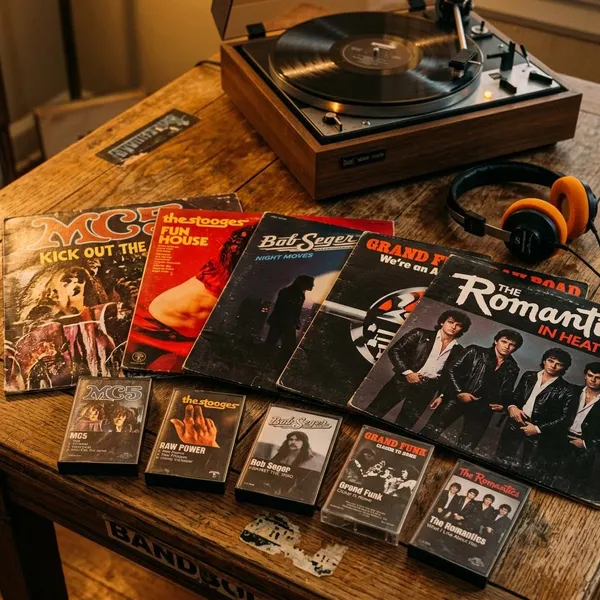
Flint's clearest contribution is Grand Funk Railroad's heavy arena rock. The songs are built for quick impact: a strong beat, a direct riff, a chorus people can grab onto, and very little patience for over-explaining the idea.
That makes Grand Funk a good choice for a road-trip playlist or a loud weekend listen. It may not be the most delicate branch of Michigan rock, but it is one of the most immediate.
Heartland rock from Detroit and Ann Arbor
Bob Seger turned Detroit and Ann Arbor roots into heartland rock with emotional weight. The sound works because it gives you radio hooks without losing the feeling of real places, real aging, and real regret.
If you are listening at night, driving, or leaning toward lyrics over riffs, this is probably the Michigan lane that will hit first. Seger's songs do not ask you to decode them; they ask whether you recognize the feeling.
Proto-punk from Detroit and Ann Arbor
MC5 and The Stooges helped define proto-punk before punk had a settled name or uniform. Their shared lesson is simple: rock could be thrilling because it was rough, not despite being rough.
- MC5: faster, more political, more explosive.
- The Stooges: darker, more repetitive, more primal.
If you usually prefer polished classic rock, these bands may sound abrasive at first. Give them a few focused listens before judging them by normal radio-rock standards.
Garage rock from the Great Lakes Bay region
Michigan garage rock matters because it kept the local-band feeling intact: quick songs, rough edges, small-room energy, and the sense that performance mattered more than perfection. Even when a group did not become a national name, that attitude fed the state's larger rock identity.
Power pop from Detroit
Detroit power pop, especially through The Romantics, proves Michigan rock was not only heavy, gritty, or confrontational. It could also be concise, bright, and hook-driven while still sounding like a guitar band.
This is the best branch for someone who likes classic rock energy but wants songs that land fast. The catch is not to dismiss it as lightweight just because the choruses are easy to remember.
Essential songs by Michigan classic rock bands
A short starter playlist is more useful than trying to hear every Michigan band at once. These four songs cover the main routes: arena rock, heartland storytelling, proto-punk attack, and stripped-down menace.
We're an American Band by Grand Funk Railroad
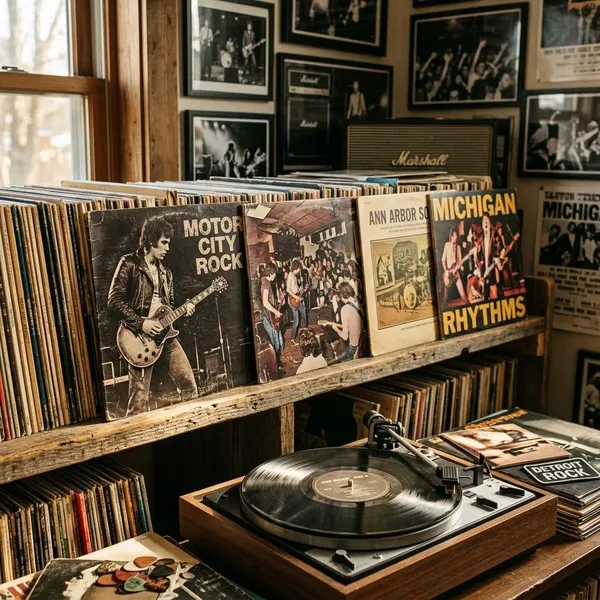
"We're an American Band" is the direct route into Grand Funk Railroad. It has the stomp, the swagger, and the touring-band myth all packed into a song that wastes almost no time getting to the point.
Use it as the test for whether Grand Funk is your lane. If the big chorus and blunt confidence work for you, the deeper catalog will make more sense.
Night Moves by Bob Seger and the Silver Bullet Band
"Night Moves" is the Seger song to hear when you want to understand why his music lasted. It is nostalgic without pretending the past was simple, and the writing feels specific enough to be personal but broad enough to travel.
Kick Out the Jams by MC5
"Kick Out the Jams" is less about polish than ignition. The performance feels like a live wire, and that is why it became such an important bridge between late-1960s rock, punk, garage revival, and harder underground guitar music.
I Wanna Be Your Dog by The Stooges
"I Wanna Be Your Dog" shows how powerful a simple, repeated idea can become when a band commits fully to mood. The piano pulse, guitar grind, and Iggy Pop's vocal all create tension without needing much movement.
For listeners curious about punk, post-punk, or alternative rock, this track is one of the cleanest Michigan starting points. It sounds old only in date; the attitude still feels current.
Where to start with Michigan classic rock
The best starting point depends on what you already like. Do not begin with the "most important" band if the sound does not match your taste; start with the doorway you are most likely to enjoy, then work outward.
| If you want... | Start with | Then try |
|---|---|---|
| Storytelling and familiar radio hooks | Bob Seger | "Turn the Page," "Mainstreet" |
| Loud, simple, arena-ready rock | Grand Funk Railroad | "I'm Your Captain," "Some Kind of Wonderful" |
| Punk roots and raw energy | MC5 or The Stooges | Kick Out the Jams, Raw Power |
| Catchy guitar pop | The Romantics | "Talking in Your Sleep" |
Bob Seger for storytelling and familiar hooks
Pick Bob Seger first if you want songs that feel approachable right away. "Night Moves," "Turn the Page," "Mainstreet," and "Against the Wind" give you melody, memory, and enough grit to keep the songs from feeling soft.
Grand Funk Railroad for heavy arena rock
Grand Funk Railroad is the right first stop when you want classic rock to feel physical. Their best songs are built for volume, so they work better in the car or through good speakers than as quiet background music.
MC5 for raw political energy
MC5 suits listeners who want rock with confrontation in it. Start with "Kick Out the Jams," but be ready for a sound that values pressure and release more than tidy studio perfection.
The Stooges for early punk attitude
The Stooges are the better choice if you want something darker and more minimal than MC5. "I Wanna Be Your Dog," "No Fun," and "Search and Destroy" are enough to show why so many later punk and alternative bands borrowed from them.
The Romantics for catchy power pop
The Romantics are a smart entry point for someone who likes short, upbeat songs more than long jams or raw noise. Start with "What I Like About You," then use "Talking in Your Sleep" to hear the band's cleaner, more polished side.
Conclusion
Michigan classic rock is worth exploring by sound rather than by fame alone: Seger gives you the stories, Grand Funk gives you the scale, MC5 and The Stooges give you the danger, and The Romantics prove the state could still write tight pop hooks. Start with the band that matches your taste, but do not stop there; the real payoff is hearing how many different versions of American rock came out of the same state.