
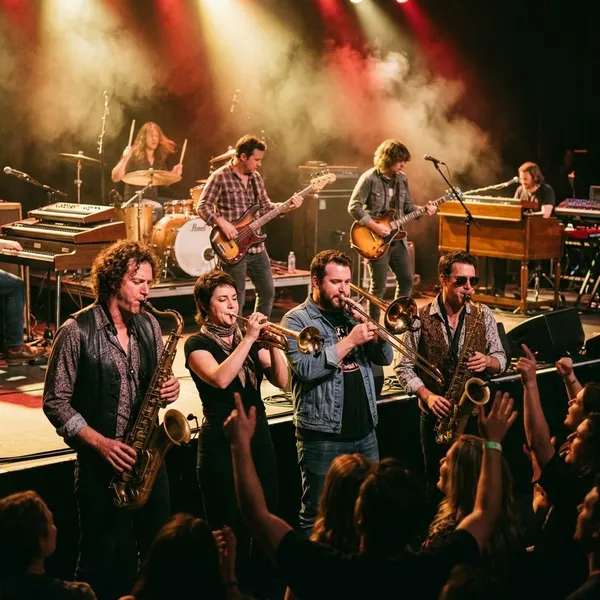
If you want classic rock bands with horn sections, start with the groups where brass was part of the band's identity, not just a studio decoration. Chicago and Blood, Sweat & Tears are the easiest entry points, Tower of Power is the groove pick, and bands like The Electric Flag, Lighthouse, Cold Blood, and Chase show how far the sound can stretch into blues, soul, funk, and jazz-rock.
Essential classic rock bands with horn sections
The most important horn-rock bands did not use trumpet, saxophone, or trombone as background color. They built arrangements around them. That is the difference between a rock song with a few brass overdubs and a band whose sound changes because the horns are there.
Chicago
Chicago is the cleanest starting point because the songs are accessible and the horn section is unmistakable. On tracks such as "25 or 6 to 4," "Does Anybody Really Know What Time It Is?" and "Saturday in the Park," the brass does more than decorate the chorus; it gives the band its shape.
Choose Chicago first if you want polished jazz-rock with strong melodies. Their early albums also work well once you are ready for longer arrangements, but the singles are enough to hear why they became the mainstream face of horn-driven rock.
Blood, Sweat & Tears
Blood, Sweat & Tears sit closer to brass-heavy pop and jazz-rock drama. "Spinning Wheel," "And When I Die," and "You've Made Me So Very Happy" show a band that could sound sophisticated without losing the listener in technique.
- Best first impression: "Spinning Wheel."
- Best fit: listeners who like big arrangements and theatrical vocals.
- Possible drawback: some tracks feel more arranged than raw, which may not suit blues-rock fans.
Tower of Power
Tower of Power is the choice when groove matters most. Their horn section hits with the precision of a rhythm instrument, especially on "What Is Hip?" and "So Very Hard to Go." If Chicago makes horns feel architectural, Tower of Power makes them feel physical.
The Electric Flag
The Electric Flag brought horns into a blues-rock setting without sanding off the rough edges. "Groovin' Is Easy" is the natural entry point: loose, soulful, and rooted in American blues and R&B rather than polished radio jazz-rock.
The Ides of March
The Ides of March prove that one huge horn riff can be enough. "Vehicle" is direct, punchy, and instantly recognizable, making it one of the best quick examples of how brass can make a rock single feel larger without making it complicated.
Lighthouse
Lighthouse took the format in a brighter, more expansive direction. "One Fine Morning" is melodic and open, with brass that lifts the song instead of pushing it into hard funk or dense jazz.
If you like the idea of horn rock but find some bands too busy, Lighthouse is a good correction. Their sound is full, but it still leaves room to breathe.
Cold Blood
Cold Blood belongs on the soul-rock side of the map. Lydia Pense's vocals give the band a powerful center, while the horns add heat and pressure around the groove. "You Got Me Hummin'" is the first track to try.
- Start here if: you want grit, vocals, and R&B feeling.
- Do not start here if: you mainly want clean pop hooks like Chicago.
The Sons of Champlin
The Sons of Champlin are a deeper West Coast pick for listeners who already like Chicago or Blood, Sweat & Tears but want something looser and more soulful. "Freedom" gives you the basic appeal: smooth movement, strong musicianship, and horns woven into the song rather than placed on top of it.
More horn-driven rock bands worth exploring
After the major names, the genre becomes more interesting because the bands stop sounding like obvious alternatives to Chicago. Some lean progressive, some get rougher, and some put technical brass playing right at the front.
If you are a casual listener, sample one or two songs before jumping into full albums. If you already like jazz-rock or prog, the less radio-friendly bands may actually be the better long-term discoveries.
If
If is a British jazz-rock band for listeners who want more instrumental movement and less radio polish. The saxophone and brass textures often interact with the rhythm section instead of simply reinforcing it, so the music feels more exploratory.
Colosseum
Colosseum is a stronger pick once you are ready for blues, jazz, and progressive rock to overlap. Their music often works better as an album experience than as a quick singles search, because the horns help shape mood and pacing over longer pieces.
Try them when you want something darker and more atmospheric than Chicago or Lighthouse.
Edgar Winter's White Trash
Edgar Winter's White Trash brings a rougher, stage-band energy to horn-driven rock. "Keep Playin' That Rock 'n' Roll" has the feel of a sweaty live set, with brass adding celebration and bite rather than smoothness.
Pacific Gas & Electric
Pacific Gas & Electric, often shortened to PG&E, mixed blues, soul, rock, and occasional horn arrangements into a grounded sound. They are not the first name most people mention in horn rock, but they are worth hearing if you prefer rootsy force over sleek arrangement.
C.C.S.
C.C.S. offers a bigger British brass-rock sound, with funk, jazz, and large-ensemble energy in the mix. Their version of "Tobacco Road" is a useful test: if you like familiar material turned into something heavier and more theatrical, they will probably click.
Chase
Chase is the most trumpet-forward choice here. Led by Bill Chase, the band pushed brass toward speed, precision, and high-impact jazz-rock. The sound can be intense, so it is not the easiest beginner route, but it is perfect if you want horns to act almost like lead guitars.
Essential horn-rock songs to hear first
A short playlist is the fastest way to understand the range. The mistake is starting with only one band and assuming the whole style sounds like that. Put a few polished, funky, bluesy, and soulful tracks next to each other, and the differences become obvious.
25 or 6 to 4 by Chicago
"25 or 6 to 4" is the must-hear Chicago track because the guitar riff and horn arrangement both feel essential. It is driving, memorable, and clear enough for a first-time listener.
Spinning Wheel by Blood, Sweat & Tears
"Spinning Wheel" is the best quick example of brass-heavy pop with jazz color. The hook is immediate, but the arrangement has enough turns to keep it from feeling plain.
What Is Hip by Tower of Power
"What Is Hip" is all about rhythmic force. The horns snap into the groove so tightly that they feel like part of the drum-and-bass engine, not a layer added after the fact.
Vehicle by The Ides of March
"Vehicle" is the short, punchy argument for horn rock. The opening brass figure does the heavy lifting right away, which makes it ideal for anyone who wants the style in its most direct form.
Groovin' Is Easy by The Electric Flag
"Groovin' Is Easy" brings a looser blues-rock feel. Listen to how the horns answer the vocal and widen the groove without making the track sound overly arranged.
One Fine Morning by Lighthouse
"One Fine Morning" shows the uplifting side of the style. The brass creates lift and size, making the song a good choice for listeners who want melody before muscle.
You Got Me Hummin' by Cold Blood
"You Got Me Hummin'" is a strong soul-rock entry because the horns support the vocal pressure instead of competing with it. The result feels gritty and human.
Freedom by The Sons of Champlin
"Freedom" adds a smoother West Coast feel to the starter list. It is less explosive than "Vehicle" or "What Is Hip," but that is the point: horn rock can be relaxed and still sound distinctive.
Which horn-driven rock sound fits your taste
The best choice depends on what you already enjoy. A listener coming from classic radio hits should not start in the same place as someone who loves funk grooves or progressive albums.
Use your first pick as a low-risk entry point, then deliberately choose a contrast. For example, if Chicago feels too polished, try The Electric Flag. If Tower of Power feels too groove-focused, try Lighthouse or Blood, Sweat & Tears for more song-centered arrangements.
| If you usually like... | Start with... | Why it works |
|---|---|---|
| Polished classic rock singles | Chicago | Strong hooks with horns built into the songs |
| Big vocals and dramatic arrangements | Blood, Sweat & Tears | Brass-forward pop with jazz color |
| Funk, soul, and tight grooves | Tower of Power | Horns lock into the rhythm section |
| Blues-rock with rough edges | The Electric Flag | Brass adds grit rather than polish |
| Longer, moodier album tracks | Colosseum | Jazz-rock and prog elements shape the music |
| Soulful vocals and heat | Cold Blood | The horns intensify the singer and groove |
Chicago for polished jazz-rock
Pick Chicago if you want the safest first step: clear songs, memorable choruses, and a horn section that is always part of the band's identity. For a short listening session, start with the singles; for a deeper one, move into the early albums where the jazz-rock side has more room.
Blood, Sweat & Tears for brass-heavy pop
Blood, Sweat & Tears fits listeners who like pop structure but want the brass to stand closer to the front. Their best tracks are polished, but they are not plain; the arrangements add movement, color, and a little theatrical tension.
Tower of Power for funk and soul
Choose Tower of Power when you want the horns to hit hard and stay tight. They are especially good for listeners who care less about classic-rock guitar drama and more about rhythm, bass, drums, and brass working as one machine.
The Electric Flag for blues-rock
The Electric Flag is the better match if you want the music to feel earthy. Their horns sound connected to blues, R&B, and live-band energy, so they are a useful alternative when the smoother horn-rock bands feel too tidy.
Colosseum for progressive jazz-rock
Colosseum is not the band I would hand to someone who only wants three-minute singles. They make more sense for a headphone listen, especially if you enjoy mood shifts, extended playing, and the space between blues-rock and jazz.
Cold Blood for powerful soul-rock
Cold Blood is the right pick when the voice matters as much as the arrangement. The horns add pressure and color, but the emotional center stays with the groove and Lydia Pense's vocal attack.
Conclusion
The best way into horn-driven classic rock is to avoid treating it as one sound. Start with Chicago or Blood, Sweat & Tears for the classic entry point, add Tower of Power if you want groove, then branch into The Electric Flag, Lighthouse, Cold Blood, Colosseum, or Chase depending on whether you want grit, melody, soul, atmosphere, or brass firepower. Once you hear how differently these bands use horns, the genre feels less like a novelty and more like one of classic rock's most flexible side roads.