
The best classic rock concept albums are not all built the same way, so the easiest way to choose one is to decide what you want first: a story, a character, a mood, or a long progressive piece. Start with The Dark Side of the Moon if you want the smoothest entry, Tommy if you want a clear rock opera, and Ziggy Stardust if you want big ideas in short, catchy songs.
Classic rock concept albums by type
Concept albums in classic rock usually fall into a few practical types. Some follow a plot, some build around a fictional persona, and others work because every song circles the same pressure point. That distinction matters because it changes how you should listen: a rock opera rewards following the story, while a thematic album rewards mood, transitions, and repeated ideas.
Tommy and Quadrophenia for rock opera
Tommy and Quadrophenia are the two Who albums to hear if you want rock opera in its classic form. Tommy is easier to enter because its story has a clear arc: trauma, isolation, fame, worship, and collapse. Even when the plot becomes strange, the repeated musical ideas keep the record moving like a staged work.
Quadrophenia is less tidy but often more human. Jimmy's anger, class tension, teenage identity, and need to belong make the album feel closer to a psychological drama than a simple plot record. If you are new to rock opera, start with Tommy; if you want character depth and a heavier emotional payoff, move to Quadrophenia.
Ziggy Stardust and The Lamb for character stories
Character albums work best when the central figure gives the songs extra charge without turning the record into homework. Bowie gets that balance almost perfectly on The Rise and Fall of Ziggy Stardust and the Spiders from Mars. Ziggy is a doomed alien rock star, but the album stays lean, melodic, and easy to replay.
- Ziggy Stardust: best if you want glam rock hooks, theatrical style, and a concept you can feel without studying it.
- The Lamb Lies Down on Broadway: better if you enjoy surreal stories, dense progressive rock, and albums that take several listens to open up.
The Dark Side of the Moon for shared themes
The Dark Side of the Moon proves that a concept album does not need a plot. Pink Floyd links the record through anxiety about time, work, money, conflict, death, and mental strain. The heartbeat, spoken voices, transitions, and steady emotional tone make the album feel like one continuous experience.
This is the safest recommendation for a listener who usually plays individual songs rather than full albums. There are no characters to track and no storyline to decode; the concept comes through in the flow. If you want one record that explains why album sequencing matters, start here.
Thick as a Brick and 2112 for prog suites
Prog suites stretch the idea of a concept album into long-form structure. Jethro Tull's Thick as a Brick is essentially one extended piece, full of recurring motifs, acoustic passages, heavier turns, and satire. It is complex, but it has more wit and movement than its reputation might suggest.
Rush's 2112 is a slightly different case because the title suite fills side one, while side two is made of separate songs. If you are being strict, it is not a full-album concept in the same way Thick as a Brick is. Still, the 2112 suite is one of the clearest examples of classic prog storytelling: a future society suppresses music and individuality, and the drama gives the riffs real purpose.
The Wall and Arthur for personal and social narratives
The Wall turns private damage into a huge theatrical structure. Pink's wall is psychological, but the album also pulls in war, school, fame, family loss, and authoritarian fantasy. It is a strong choice if you like dark films or stage dramas and want a record that feels almost visual as it plays.
The Kinks' Arthur (Or the Decline and Fall of the British Empire) is smaller in sound but sharp in observation. Ray Davies uses one ordinary man's life to look at class, family, postwar Britain, and fading national identity. Choose The Wall for emotional scale; choose Arthur when you want social storytelling with less spectacle and more everyday detail.
Best concept albums for new listeners
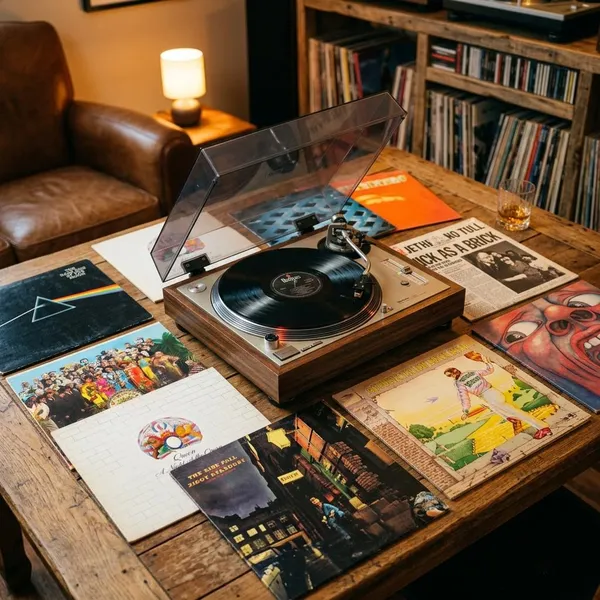
A good first concept album should not feel like a test. The best starting point depends on your normal listening habits: smooth full-album flow, clear storytelling, catchy songs, darker drama, or progressive complexity. If you are unsure, do not start with the most difficult record just because it is respected.
| If you usually like... | Start with | Why it works |
|---|---|---|
| Atmosphere and seamless albums | The Dark Side of the Moon | The concept is clear without a plot. |
| Storytelling and theatre | Tommy | The rock opera structure is easy to follow. |
| Catchy songs and style | Ziggy Stardust | The character adds meaning without slowing the songs. |
| Dark cinematic records | The Wall | The emotional arc is obvious and dramatic. |
| Long-form prog | Thick as a Brick | The whole album behaves like one suite. |
How to recognize a true concept album
Does the album gain meaning when you hear it in order? If the answer is yes, the concept is probably doing real work. A loose theme can make an album feel connected, but a true concept shapes the writing, sequencing, recurring details, and final impression.
One idea connects the full record
A real concept album has one central idea strong enough to hold the record together. That idea might be a story, a fictional character, a social setting, or a focused emotional theme. The songs can vary in sound, but they should still feel like parts of the same design.
The track order shapes the experience
Track order is the easiest practical check. If shuffling the album weakens the meaning, the sequence matters. Concept records often build tension, introduce ideas early, return to them later, and make the ending feel earned.
This is why some albums feel smaller when broken into singles. A strong track may still work alone, but inside the album it carries extra weight because of what came before it.
Characters or themes return across songs
Returning characters, images, sounds, or lyrical ideas are clear clues. Pink, Ziggy, Rael, and Jimmy give listeners someone to follow, while albums like The Dark Side of the Moon return to pressures such as time, money, and mortality from different angles.
- Named characters suggest a narrative concept.
- Repeated themes suggest a thematic concept.
- Musical reprises suggest the album was designed as a whole.
Music and lyrics develop together
The best concept albums do not leave the concept sitting only in the lyrics. The sound should help tell the story or deepen the theme. A tense narrative may use harsher arrangements; a reflective album may rely on flow, atmosphere, and recurring textures.
This is where weaker concept albums often fall short. A clever premise is not enough if the music could be rearranged in any order without losing impact.
The album works as one complete statement
A true concept album leaves you with a sense of completion, even if the ending is tragic, strange, or unresolved. The final track should feel like it answers, complicates, or closes the ideas that came before. That is the difference between an album with a theme and an album that behaves like a full statement.
For a quick judgment, check three things before calling an album a concept record: whether one idea connects most of the songs, whether the order changes the experience, and whether the ending feels tied to the beginning.
Conclusion
The strongest concept albums are worth hearing as albums, not as scattered tracks. If you want the most approachable start, play The Dark Side of the Moon front to back; if you want story, choose Tommy; if you want personality and hooks, go with Ziggy Stardust. Once those click, the heavier drama of The Wall, the social detail of Arthur, and the prog ambition of Thick as a Brick or 2112 make much more sense.