
The strongest classic rock debut album opening tracks do one thing before anything else: they make the band's identity obvious fast. A great first track does not just sound famous in hindsight; it gives a new listener a clear reason to trust the album, whether that reason is a riff, a voice, a mood, or a shock of attitude.
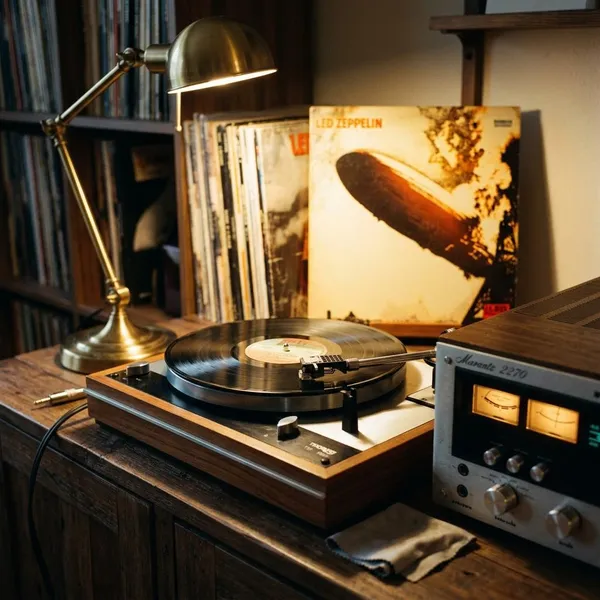
What makes a great debut album opener
A debut opener has more pressure than an ordinary album opener. There is no earlier album reputation to lean on, so the first track has to introduce the sound, set expectations, and make track two feel worth hearing.
When comparing openers, the first check is not whether the song became the biggest hit. The better question is whether it gives an honest first impression of the album. A huge single can be a weak opener if it points listeners in the wrong direction.
An instantly recognizable sound
The best debut openers usually announce themselves within seconds. That recognition might come from a guitar tone, a drum pattern, an organ part, a vocal entrance, or even a piece of atmosphere before the band fully arrives.
A clear sense of band identity
A strong opener should make the band feel specific, not just competent. "Runnin' with the Devil" quickly tells you that Van Halen are about swagger, tone, space, and confidence. "Good Times Bad Times" tells you Led Zeppelin can combine blues roots with unusual rhythmic power.
This is where some good songs fall short as openers. They may be catchy, but they do not explain the band. A debut opener needs to sound like the front door, not a random strong room somewhere inside the house.
A strong opening riff or vocal
Rock openers often live or die by the first physical gesture. A riff can pull the listener in before the lyrics matter; a vocal can do the same if it has enough authority, danger, or character.
- Riff-first impact: best when the band's guitar identity is central.
- Vocal-first impact: best when the singer defines the band's attitude.
- Rhythm-first impact: best when urgency or groove is the main hook.
A mood that fits the album
The right opener prepares the ear for the record that follows. It does not have to be the fastest, heaviest, or most commercial song; it has to make the album's emotional direction feel natural.
That is why "Black Sabbath" is such a clean example. The track's darkness is not a one-song trick. It sets up the album's larger atmosphere, so the listener is not surprised by the world that follows.
A reason to keep listening
The simplest test is whether the song makes track two feel necessary. A great debut opener gives enough personality to satisfy the first impression but leaves enough unanswered to keep the album moving.
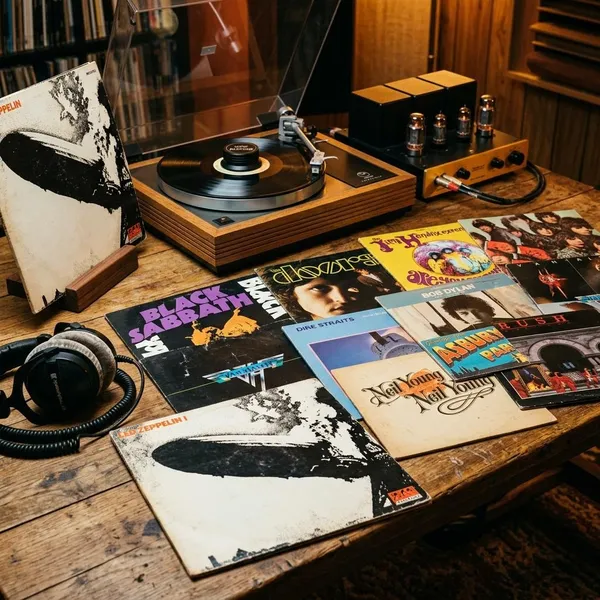
Classic rock debut openers by style
Not every debut opener is trying to win the same way. Some are built around groove, some around atmosphere, some around ambition, and some around a hook that makes the band feel radio-ready from the start.
Blues-driven hard rock
Blues-driven hard rock openers depend on feel. The riff has to land, the rhythm section has to sound locked in, and the performance needs enough bite to make familiar blues ingredients feel newly charged.
"Good Times Bad Times" remains the obvious benchmark. It is short, punchy, and unusually precise, with John Bonham's drumming giving the track a sense of weight that still jumps out. If someone wants a first stop for how hard rock grew out of blues language without sounding old-fashioned, this is the cleanest place to begin.
Dark and heavy rock
Dark and heavy openers work by controlling tension. Speed is optional; atmosphere is not. The point is to make the listener feel that the band has entered a heavier emotional space.
"Black Sabbath" succeeds because every choice points in the same direction. The sound effects, tempo, riff, and vocal all build dread. A common mistake when ranking heavy openers is to reward volume alone, but this track proves that patience can be more frightening than speed.
Progressive rock epics
Progressive debut openers ask for a different kind of listening. The structure may shift, the instrumental sections may take more space, and the band may be announcing ambition as much as identity.
"21st Century Schizoid Man" is the useful reference point here. It is complex, but it is not polite or distant. The track still has force, which is why it works as an opener rather than just an impressive performance.
Punk and art rock
Punk and art rock openers often win through personality. They do not need to sound huge; they need to sound alive, restless, and difficult to mistake for another band.
- "Break On Through": compact, urgent, and slightly dangerous.
- "See No Evil": sharp, nervous, and more angular in its attack.
- The key test: does the song sound like a scene arriving, not just a band playing?
The Doors sit in an interesting place because they predate punk, yet the opener has the kind of pressure and attitude later bands would chase.
Polished radio rock
Polish can be a strength when it sharpens identity instead of sanding it down. "Runnin' with the Devil" is accessible, but it still sounds unmistakably like Van Halen because the tone, vocal swagger, and space in the arrangement are so specific.
"Welcome to the Jungle" is more aggressive, yet it also shows how a debut opener can be hook-heavy without losing danger. For a listener choosing between a strict late-60s/70s classic rock lane and a broader rock introduction, this is the point where the definition matters. It may sit later than the core classic-rock era, but as a debut opener it is almost impossible to ignore.
Debut openers that introduced their bands best
The strongest examples are not just famous songs placed first. They are tracks that make the band's whole arrival feel clear. If you played only the opener for someone, they would still understand the group's basic appeal.
Good Times Bad Times for power and precision
"Good Times Bad Times" introduces Led Zeppelin with remarkable efficiency. The riff is direct, Robert Plant sounds fully present, and the rhythm section makes the song feel bigger than its short running time.
The real decision point is precision. Plenty of bands could play loud blues-based rock, but this opener makes the playing feel controlled and explosive at the same time. That balance is what turns it from a strong first song into a near-perfect debut statement.
Break On Through for urgency and attitude
"Break On Through" wastes no time creating motion. The rhythm pushes forward, the organ adds tension, and Jim Morrison's vocal brings the kind of charisma that feels inviting and unsettling at once.
It is also one of the best examples for someone who wants a debut opener that is not only about guitar power. The Doors introduce themselves through pulse, mood, and voice. That makes the track feel lean rather than small.
Black Sabbath for darkness and atmosphere
"Black Sabbath" is the clearest atmosphere-first choice. The track does not merely sound heavy; it makes heaviness feel like a complete environment.
What keeps it from becoming a gimmick is commitment. The band does not break the spell too early or soften the mood for easy access. If the question is which debut opener most clearly created a new emotional language for rock, this one has the strongest claim.
Runnin' with the Devil for swagger and guitar tone
Van Halen's opener is a lesson in restraint. Instead of opening with maximum speed, "Runnin' with the Devil" uses space, groove, and tone to make the band sound already formed.
That matters for new listeners because the song sets up Eddie Van Halen's guitar identity without turning the opener into a technical showcase. David Lee Roth's vocal adds the swagger, but the guitar sound gives the track its lasting signature.
Welcome to the Jungle for danger and intensity
"Welcome to the Jungle" is the broader-era pick: not from the earliest classic-rock period, but too effective as a debut opener to leave out of the conversation. It introduces Guns N' Roses as volatile, theatrical, and street-level dangerous within seconds.
The track is useful as a comparison because it shows what changed by the late 1980s. The hooks are huge, the production is sharper, and the attitude is more confrontational, yet the opener still does the classic debut job: it tells you exactly who has arrived.
- "Good Times Bad Times" for power, swing, and band chemistry.
- "Break On Through" for urgency without heaviness.
- "Black Sabbath" for mood as the main weapon.
- "Runnin' with the Devil" for swagger, tone, and restraint.
- "Welcome to the Jungle" for a later, more dangerous version of the debut-opening statement.

Conclusion
A great debut opener should make the band easier to understand, not just make the album start loudly. The most convincing choices give you a clear first impression, fit the record that follows, and still feel alive when heard outside their original moment. If you are exploring these albums for the first time, play the opener once on its own, then play it again as part of the full album; the difference usually tells you why the best first tracks last.