
The quickest way to understand classic rock drummers is not to rank them by speed, but to hear what each one does for the song. If you are new to the style, start with Ringo Starr or Charlie Watts for feel, John Bonham for power, and Neil Peart or Ian Paice when you want to study technique. The best choice depends on whether you want to become a better listener, a steadier band drummer, or a more adventurous player.
Most influential classic rock drummers
The most influential players were not all impressive for the same reason. Some changed the sound of heavy rock, some proved that restraint could be powerful, and some made the drum kit feel like a second lead voice. A useful way to approach them is to ask one question first: what did this drummer make possible for the band?
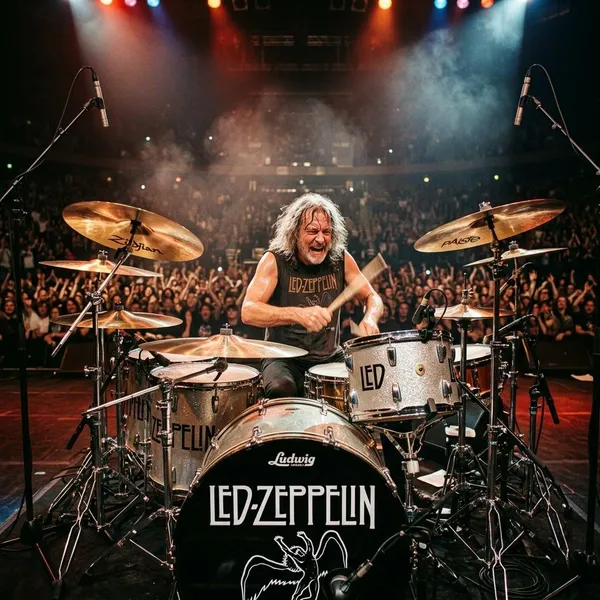
John Bonham
John Bonham remains the obvious starting point for many rock fans because his Led Zeppelin parts combine weight, swing, and a huge recorded sound. He could hit with frightening force, but the groove still moved. That is the part beginners often miss: Bonham was not just loud; he made heavy music breathe.
If you study him, do not jump straight to the fills. Listen first to how his kick drum and snare sit slightly behind the rush of the guitars. That pocket is why "heavy" in his hands feels physical rather than stiff.
Keith Moon
Keith Moon made The Who sound as if the whole band might lift off the ground. His drumming is full of tom runs, crashes, and sudden bursts, often behaving more like a dramatic voice than a background timekeeper.
Moon is not the best first model if your main problem is keeping steady time. He is more useful once you already understand the song's pulse and want to hear how controlled risk can raise the emotional temperature of a track.
Ringo Starr
Ringo Starr is the classic answer for drummers who want to learn taste. His Beatles parts are memorable because they are shaped around the vocal, the bass line, and the mood of the song. He rarely overplays, yet the drum part often becomes part of the hook.
- Beginner lesson: make the groove sing before adding decoration.
- Songwriter lesson: leave room for the lyric and melody.
- Listener lesson: notice how simple parts can still have personality.
Charlie Watts
Charlie Watts gave The Rolling Stones their relaxed, swinging center. His jazz background shows in the way he lets the groove sit back without losing authority. He was not trying to dominate the track; he was making the band feel right.
For a cover-band drummer, Watts is a practical study choice because his playing teaches patience. If the guitars already carry the attitude, the drums do not need to fight for attention.
Neil Peart
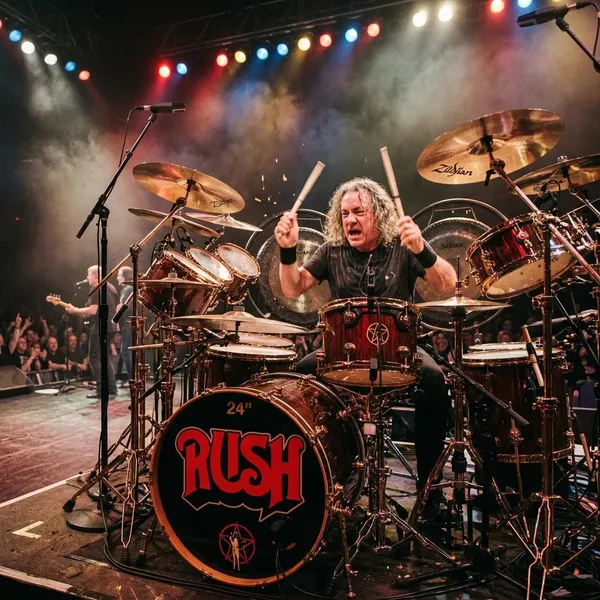
Neil Peart brought a level of structure and precision to Rush that made progressive rock drumming feel almost architectural. His parts are detailed, planned, and demanding, but the best ones still move the song forward rather than existing as technical display.
Study Peart when you want to understand arrangement. His fills often connect sections, his cymbal choices mark shifts in energy, and his odd-time work stays clear enough for the listener to follow.
Ian Paice
Ian Paice of Deep Purple is the drummer to hear when you want speed without stiffness. His playing has hard-rock drive, but it keeps a loose, jazzy snap that stops fast songs from becoming flat.
He is especially useful for players who can already play quickly but sound rushed. Paice shows that tempo only works when the groove still has shape.
Mitch Mitchell
Mitch Mitchell turned the Jimi Hendrix Experience into a real conversation. Instead of simply holding down the beat, he reacted to Hendrix's guitar with snare accents, cymbal color, and quick rhythmic turns.
His playing is a good reminder that invention is not the same as random busyness. The pulse stays alive, but the drums keep answering the guitar in real time.
Essential drum performances to hear
One signature track can teach more than a long biography. When listening, check three things in order: the basic groove, the drummer's use of space, and the moment when a fill changes the song's energy. That order keeps you from treating every performance as a hunt for difficult tricks.
John Bonham on When the Levee Breaks
"When the Levee Breaks" is essential because the drum part sounds massive without being busy. The room sound is famous, but the performance works because Bonham leaves space and makes every hit land with purpose.
Keith Moon on Won't Get Fooled Again
Keith Moon's performance on "Won't Get Fooled Again" is a study in dramatic pressure. He keeps throwing energy into the track, especially in the big transitions, but the song still moves forward instead of falling apart.
This is the kind of performance to study for excitement, not minimalism. If you are learning drums, copy the attitude before copying every note.
Ringo Starr on Come Together
"Come Together" shows how a drum part can define atmosphere. Ringo's tom-heavy groove is not technically flashy, but it gives the song its stalking, slightly strange feel.
For beginners, this is one of the best classic rock tracks to play slowly and carefully. The challenge is not speed; it is making the part feel relaxed, dark, and deliberate.
Charlie Watts on Gimme Shelter
Charlie Watts keeps "Gimme Shelter" tense by refusing to overstate the drama. The groove sits steady while the guitars and vocals create danger around it.
Neil Peart on Tom Sawyer
"Tom Sawyer" is the cleanest gateway into Neil Peart's style: precise, detailed, and still catchy. The drum part has enough complexity to reward close listening, but it never feels detached from the song.
- First listen: follow the main groove and how tightly it locks with the synth and bass.
- Second listen: notice how the fills announce new sections.
- Third listen: pay attention to how controlled the cymbal accents are.
Ian Paice on Highway Star
"Highway Star" is fast, but Ian Paice keeps it swinging. The playing has drive and precision without turning into a stiff sprint.
If you are a developing drummer, this track is a good test of control. The goal is not merely to survive the tempo; it is to keep the groove clear enough for the whole band to sound exciting.
Mitch Mitchell on Fire
On "Fire," Mitch Mitchell sounds quick, reactive, and playful. His fills and accents bounce around Hendrix's guitar without losing the forward push of the track.
This is a strong pick for listeners who think rock drumming is only about backbeats. Mitchell shows how interactive the drums can be while still serving a short, punchy song.
Classic rock drummers by playing style
Style matters because different drummers solve different musical problems. If you are choosing someone to study, match the drummer to your goal instead of starting with the biggest legend by default.
| What you want to improve | Start with | Listen for |
|---|---|---|
| Heavy groove | John Bonham, Bill Ward | Power that still swings |
| Band-first timekeeping | Charlie Watts, Phil Rudd | Space, consistency, restraint |
| Technical control | Neil Peart, Ian Paice | Clean transitions and precise fills |
| Explosive energy | Keith Moon, Alex Van Halen | Momentum without collapse |
| Rhythmic color | Mitch Mitchell, Stewart Copeland | Accents, cymbal choices, interaction |
| Song-focused parts | Ringo Starr, Levon Helm | Drums that support melody and mood |
Conclusion
The smartest way to explore classic rock drummers is to pick the player who matches your immediate goal: Ringo or Watts for taste, Bonham or Ward for heavy swing, Peart or Paice for control, Moon or Mitchell for risk and color. Rankings are fun, but the real value is hearing how each drummer changes the feel of a song. Start with one performance, listen for the groove before the fills, and the differences become much easier to hear.