
If you are searching for the classic rock hall of fame, you are usually looking for the Rock & Roll Hall of Fame rather than a separate classic-rock-only institution. The quickest way to get a reliable answer is to check three things: whether the act is eligible, whether it was nominated, and whether it was inducted as a performer or honored in another category.

How Rock Hall induction works
The Rock & Roll Hall of Fame process is easier to understand when you separate the steps. A famous band does not move straight from "old enough" to "inducted." It first becomes eligible, may or may not be nominated, and then has to be voted in from that year's ballot.
That distinction matters if you are checking one specific artist. A band can be eligible for years without appearing on the ballot, and a nominee can miss induction and return later. The fan vote is part of the process, but it is not the final decision by itself.
Artists become eligible after 25 years
An artist becomes eligible 25 years after the release of its first commercial recording. That rule applies to bands and solo artists, so a group from the late 1990s can now belong in Hall discussions even if it does not feel like "classic rock" to older listeners.
A committee selects the nominees
Before voters or fans get involved, a nominating committee chooses a smaller list from a much larger pool of eligible artists. This is where many "snub" arguments really begin, because a well-known act may never reach the public ballot in a given year.
- Influence: Did the artist change how later musicians sounded or worked?
- Innovation: Did the act push rock, metal, punk, pop, or another related style forward?
- Cultural reach: Did the music shape a scene, generation, or public moment?
- Catalog strength: Is there more than one famous song carrying the case?
Industry voters choose the performers
Once the nominee list is announced, ballots go to a larger voting body that includes historians, music industry figures, journalists, and previously inducted artists. These voters choose the performer inductees from that year's nominees.
For a casual fan, the useful way to read this is: popularity gets attention, but peer respect and historical weight often decide close cases. A band with fewer radio staples can still have a strong Hall argument if other musicians clearly built on its sound.
The fan vote counts as one ballot
The fan vote matters, but it does not work like a public election. The final fan ranking is counted as one ballot and added to the larger voting pool.
That makes the fan vote a signal rather than a guarantee. If an artist already has strong voter support, a big fan showing can reinforce momentum. If the voting body is not convinced, winning the fan vote alone usually is not enough.
Special categories follow separate paths
Not every Rock Hall honor is the same as performer induction. Categories such as Musical Influence, Musical Excellence, and the Ahmet Ertegun Award can recognize artists, musicians, producers, executives, or other figures whose impact does not fit neatly into the main performer ballot.
This is the detail that trips up a lot of quick searches. If someone says an artist is "in the Hall," check the category before assuming the act was inducted as a performer.
- Check the exact name. Search the band name and, if relevant, the solo artist name separately.
- Check the year. The induction year tells you whether it was an early recognition or a long-delayed one.
- Check the category. Performer induction and special awards are related, but not interchangeable.
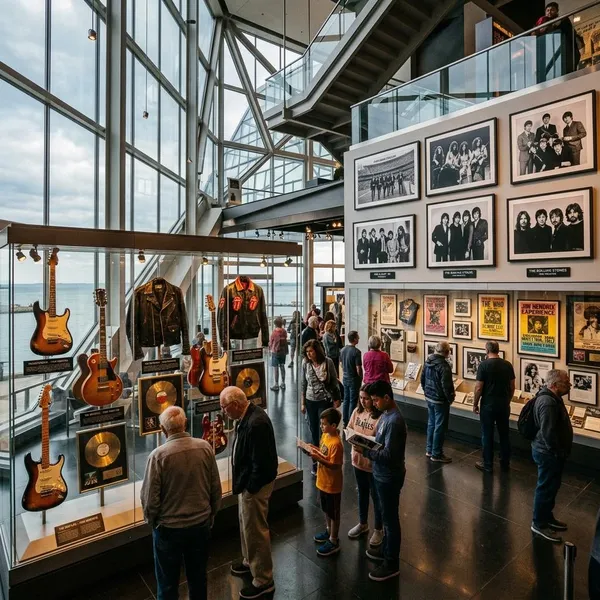
Classic rock legends already in the Hall of Fame
Many major classic rock names are already in the Rock & Roll Hall of Fame, but the details are not always as simple as "in" or "out." Some artists are inducted as bands, some also have separate solo recognition, and some waited much longer than their fan bases expected.
If you are checking before buying a record, planning a playlist, or settling a debate with friends, start with the official inductees database rather than a general web snippet. The official listing shows the category and year, which is where most confusion gets cleared up.
The Beatles, The Rolling Stones, and The Who
The Beatles, The Rolling Stones, and The Who are already Hall of Fame acts and sit near the center of rock history. Their cases are not really about whether they belong; they are examples of the kind of cultural, musical, and performance impact the Hall tends to recognize early.
The Beatles also show why one search may not be enough. The band has its own Hall status, while individual members can have separate solo entries. If you are checking a musician with both a famous band career and a major solo career, search both.
Led Zeppelin, Black Sabbath, and Deep Purple
Led Zeppelin, Black Sabbath, and Deep Purple help explain why Hall timing can be controversial. All three are central to hard rock and metal history, but not every genre-defining act gets recognized as quickly as fans expect.
Black Sabbath and Deep Purple are especially useful examples for metal and hard rock fans. A band can be massively influential and still wait while the Hall's priorities, voter attitudes, and genre balance shift over time.
Pink Floyd, Rush, and Yes
Pink Floyd fit the Hall's classic idea of an album-era giant: artistic ambition, huge records, and long cultural influence. Rush and Yes show a different path, where progressive rock's musicianship and loyal audiences eventually became harder for the institution to overlook.
If your favorite band belongs to a style that critics once treated as unfashionable, these cases are worth remembering. Hall recognition can lag behind fan consensus, especially for scenes built around technical playing, long-form albums, or less radio-friendly formats.
Queen, Journey, and Bon Jovi
Queen, Journey, and Bon Jovi are all in the Hall, but they represent different kinds of rock impact. Queen combine ambition, theatricality, and worldwide recognition. Journey and Bon Jovi lean more heavily into mass appeal, radio endurance, and arena-scale popularity.
| Artist type | What usually strengthens the Hall case | What fans should check |
|---|---|---|
| Foundational rock giants | Major influence across several generations | Whether members also have solo entries |
| Hard rock or metal acts | Genre-shaping sound and musician influence | Whether delay reflects genre bias or ballot timing |
| Arena and radio staples | Long public reach, touring impact, durable songs | Whether popularity is paired with historical influence |
Rock artists in the 2026 induction class
The 2026 induction class is the part many readers will want to verify most carefully, because annual classes depend on official Rock Hall announcements and category wording. For each name, check whether the recognition is for performer induction, a combined legacy, or another category.
These artists also show how broad the Hall conversation has become. A classic rock fan may be looking for guitar bands from the 1970s, while the same class can include punk, metal, post-punk, Britpop, and solo careers connected to earlier Hall-inducted groups.
Phil Collins
Phil Collins is the kind of name that makes band-versus-solo status important. Genesis already has its own Hall identity, but Collins' solo career is a separate case built around mainstream hits, drumming reputation, songwriting, production work, and a public profile that reached far beyond progressive rock.
Billy Idol
Billy Idol sits between punk attitude, MTV-era image, and mainstream rock success. His Hall case is not just about chart numbers; it is also about how he carried punk style into a wider rock audience without becoming a traditional classic rock act.
Iron Maiden
Iron Maiden are a major name for anyone tracking heavy metal's place in the Hall. Their case rests on global reach, a devoted fan base, technical consistency, visual identity, and a long influence on metal bands that followed.
- For metal fans: the key question is whether the Hall is treating metal as central rock history, not a side lane.
- For casual classic rock fans: the point is endurance; Maiden's audience and catalog have lasted far beyond one radio era.
Joy Division/New Order
Joy Division/New Order is a different kind of Hall story because the legacy is linked across two identities. Joy Division's short post-punk run became enormously influential, while New Order turned that history toward electronic music, dance culture, and alternative rock.
Oasis
Oasis bring the Hall conversation into the 1990s. Their case is built on era-defining songs, huge albums, Britpop visibility, and the kind of public identity that made rock feel like a mass cultural event again.
The debate around Oasis often comes down to what you value more: originality or cultural force. They were not trying to invent rock from scratch, but they gave a generation a shared set of songs, attitudes, and reference points. That can matter in a Hall argument.

Why famous classic rock artists may be missing
A missing favorite does not always mean the Hall has decided the artist is unworthy. Most of the time, the explanation is more specific: the act is eligible but has not been nominated, has been nominated but not voted in, or is recognized in a category fans do not usually check.
Eligibility does not guarantee nomination
An eligible artist can wait years without appearing on the ballot. The 25-year rule only opens the door; it does not force the nominating committee to use a ballot spot.
This is where many famous rock acts get stuck. A band may have millions of fans, heavy radio play, and a strong touring history, yet still lose out to artists the committee sees as more influential, more overdue, or more important to that year's balance.
Nomination does not guarantee induction
A nomination is real recognition, but it is not entry. Once an artist reaches the ballot, it still competes with every other nominee for a limited number of places.
Repeated nominations should not be read as meaningless failure. They often mean the artist has a serious case but has not yet landed in the right year, with the right voter support, against the right field.
Artists can return on later ballots
Artists can come back after missing induction. Hall support can build slowly as genres are reassessed, younger voters enter the conversation, or a band's influence becomes clearer with distance.
Solo and band careers are judged separately
A band induction does not automatically cover a member's solo work, and a solo induction does not automatically cover the band. The Hall treats those as separate artistic records.
This matters for artists such as Phil Collins, Paul McCartney, or any musician whose solo career had its own audience and influence. If you only search the band, you may miss the solo status; if you only search the person, you may miss the group entry.
Special awards differ from performer induction
Special awards can be important honors, but they are not the same as performer induction. They may recognize influence, musicianship, production, songwriting, or behind-the-scenes work.

Conclusion
The smartest way to check any classic rock Hall question is to avoid the vague "in or out" shortcut and look for the exact act, year, and category. Once you separate eligibility, nomination, performer induction, and special awards, most confusing cases become much easier to read—and you are less likely to mistake a delay, a solo entry, or a special honor for the wrong thing.