
If you want to understand Kansas in classic rock, start with the tension that made them unusual: they could write huge radio choruses without giving up progressive rock detail. The band's best work is not just "Carry On Wayward Son" and "Dust in the Wind," though those songs are the easiest doorway in. For a new listener, the smartest path is to hear the big songs first, then move into Leftoverture, Point of Know Return, and the more ambitious early albums.
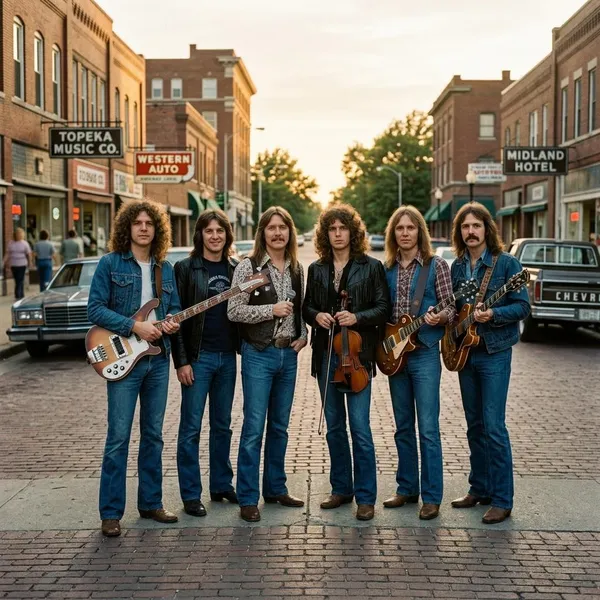
Why Kansas stands out in classic rock
Kansas sits in a useful middle place. They were more intricate than a typical arena-rock band, but they were usually more accessible than the most demanding progressive rock groups. That is why a casual listener can enjoy the hooks, while a musician may notice the arrangement choices, rhythm shifts, and layered vocal parts.
Progressive rock with strong hooks
Kansas made progressive rock feel less distant by keeping the songs anchored to melody. "Carry On Wayward Son" is the cleanest example: the opening harmonies feel grand, the instrumental sections are tight, and the chorus arrives with immediate force.
If you usually find prog rock too long or too self-serious, Kansas is a good test case. Start with the singles before the deeper album tracks; if the changes and instrumental passages feel exciting rather than tiring, the full albums will make more sense.
Violin-driven arrangements
The violin was not a decoration in Kansas. Robby Steinhardt's playing often acted like a second lead voice, answering guitar lines or adding a sweeping, almost orchestral edge. That sound helped Kansas stand apart from bands built mainly around guitar, keyboard, and vocals.
Detailed playing with big choruses
What keeps Kansas from sounding like a technical exercise is the way the detailed playing usually points toward a memorable moment. The band could handle complicated parts, but the songs still needed emotional lift. That balance is the reason their music works in two settings: close listening with headphones and casual listening on a classic rock playlist.
How Kansas rose to fame
Kansas did not become a classic rock name through one lucky single. Their rise was gradual: local roots in Topeka, early albums that built the sound, heavy touring, then a breakthrough when the right song reached the right audience.
Formation in Topeka
Topeka matters because Kansas did not come from one of the obvious rock-industry centers. The classic lineup developed from local and regional players, including Kerry Livgren, Phil Ehart, Steve Walsh, Rich Williams, Dave Hope, and Robby Steinhardt. That background gave the band a practical, workmanlike edge: the image came second to songs, rehearsals, and live performance.
Early albums and steady touring
The early records, including Kansas, Song for America, and Masque, are where the band's identity becomes clear. They are not always the easiest starting point for a beginner, but they show the ingredients forming: longer structures, violin-led passages, philosophical lyrics, and big vocal arrangements.
- For casual listeners: sample the early albums after the hits.
- For prog fans: move to Song for America sooner.
- For live-album listeners: pay attention to how tightly the band handles complex sections on stage.
Breakthrough with Leftoverture
Leftoverture, released in 1976, gave Kansas the opening they needed. "Carry On Wayward Son" had enough drama for serious rock fans and enough chorus power for radio. The album did not flatten the band's style; it focused it.
Peak success with Point of Know Return
Point of Know Return pushed Kansas even further into the mainstream. The title track kept the band's drive and precision intact, while "Dust in the Wind" reached listeners who might never have cared about progressive rock.
Most famous Kansas songs
The most famous Kansas songs work as different entry points. One listener may come in through the muscular rock of "Carry On Wayward Son," while another may only know the quiet sadness of "Dust in the Wind." Neither song tells the whole story alone.
Carry On Wayward Son
"Carry On Wayward Son" is the Kansas song most people recognize first. Written by Kerry Livgren, it combines layered vocals, spiritual searching, sharp instrumental breaks, and a chorus that still lands instantly. It is also the best quick test for whether the band's blend of prog detail and classic rock force works for you.
Dust in the Wind
"Dust in the Wind" is almost the opposite kind of signature song. Instead of big arrangement shifts, it relies on acoustic guitar, a restrained melody, and a lyric that feels direct without being overexplained.
This is the Kansas song most likely to cross outside the classic rock audience. A person who does not know the albums may still know this track from radio, family playlists, films, or quiet late-night listening.
Point of Know Return
"Point of Know Return" shows the band in motion: quick, polished, tense, and full of forward push. It is a good second step after "Carry On Wayward Son" because it keeps the energy high while showing a slightly leaner version of Kansas's precision.
Hold On
"Hold On" is useful because it points past the late-1970s peak. Released in 1980, it has a more direct radio shape, but it still carries Kansas's melodic confidence and vocal strength. If you only know the two biggest songs, "Hold On" is a reminder that the band's story did not stop at its most famous moment.

Best Kansas albums for new listeners
The best Kansas album to start with depends on what you want from the band. Do not begin with a deep cut just because it is more "serious," and do not stop at a greatest-hits playlist if the arrangements are what catch your ear.
| Listener situation | Best first choice | Why it works |
|---|---|---|
| You know one or two songs and want the safest album | Leftoverture | It balances the breakthrough hit with the band's full sound. |
| You want the most familiar classic-rock era | Point of Know Return | It includes major hits while still feeling like a complete album. |
| You already like longer progressive rock | Song for America | It leans further into the band's early ambition. |
Leftoverture for the breakthrough sound
Leftoverture is the best first Kansas album for most people. It has "Carry On Wayward Son," but it does not feel like an album built only to support one single. The rest of the record shows the band's scale, discipline, and melodic instincts without asking too much from a new listener.
Point of Know Return for the biggest hits
Point of Know Return is the better choice if you want the clearest connection to Kansas as a classic rock radio band. "Dust in the Wind" gives the album its widest emotional reach, while the title track keeps the band's sharper rock identity in view.
Song for America for deeper prog rock
Song for America is not the easiest first stop, but it may be the most rewarding early album for listeners who already enjoy longer-form rock. Give it more attention than background listening; the appeal is in how the sections unfold rather than in quick chorus payoff.

How Kansas changed after their classic era
After the classic peak, Kansas became a different kind of band to follow. Lineup changes, shifting radio trends, later albums, reunions, and anniversary tours all shaped how the catalog lived on. For many newer fans, the later story is less about chasing another "Dust in the Wind" and more about how a band protects a demanding legacy on stage.
Major lineup changes
Kansas went through major lineup shifts after its commercial peak, including changes involving key voices and instrumental personalities. That matters more for Kansas than for some bands because the classic sound depended on a very specific blend: Steve Walsh's vocals, Kerry Livgren's writing, Robby Steinhardt's violin and voice, and the rhythm-section foundation around Phil Ehart and Dave Hope.
Longtime members such as Phil Ehart and Rich Williams helped preserve continuity across later decades, but a listener should not expect every era to sound like the classic lineup frozen in time.
Later albums and reunions
Later Kansas albums are worth treating as context rather than as replacements for the classic records. Some listeners enjoy hearing how the band adapted; others mainly return to the 1970s catalog. Both reactions are fair.
- Start with later material if you are curious about the band's full timeline.
- Stay with the classic era first if you only want the essential Kansas sound.
- Use reunions as signposts when familiar members return and reconnect the later story to the peak years.
Live releases and anniversary tours
Live releases and anniversary tours have become central to the modern Kansas story. The songs were built for strong players, so the live setting can still show why the catalog has weight. Before buying tickets, check the current lineup, the tour theme, and whether the set leans toward hits, full-album performances, or deeper fan favorites.
Conclusion
Kansas lasts because the band's best music gives you both entry points and depth: a chorus you remember right away, then arrangement details that keep revealing themselves. Start with the four famous songs, choose Leftoverture or Point of Know Return as your first album, and move into Song for America if the progressive side is what pulls you in. That path gives the clearest sense of how a band from Topeka became a lasting name in classic rock.