
If you want classic rock multitracks for mixing practice, start with legal educational sessions and licensed releases rather than random folders promising famous songs. True original multitracks from well-known rock records are uncommon, so the useful question is not just "where can I download them?" but "can I trust the source, use the files safely, and actually learn from the session?"
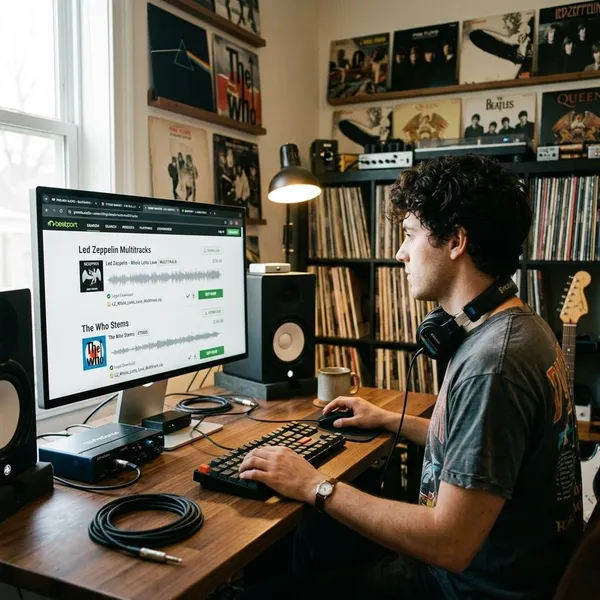
Where to find classic rock multitracks legally
The best sources make three things clear before you download anything: who released the audio, what kind of files are included, and what you are allowed to do with them. A clean educational rock session with proper notes is usually more useful than a famous song from an unverified link.
Official artist and label releases
Official artist and label releases are the strongest option when they exist. They may appear with anniversary editions, remix contests, documentary projects, fan promotions, or educational partnerships. The important advantage is provenance: the files are more likely to come from an approved archive rather than a fan reconstruction.
Cambridge-MT educational sessions
Cambridge-MT is one of the most practical places to start if your goal is learning. The sessions are built for education, and many rock recordings include live drums, bass, guitars, vocals, room sound, and the kind of arrangement decisions that translate well to classic rock mixing.
- Best for: home mixers, students, and anyone who wants reliable practice files.
- Watch for: genre labels, because not every session is "classic rock" in the strict catalog sense.
- Why it helps: the files are usually documented well enough to teach real DAW workflow.
Telefunken Live From the Lab recordings
Telefunken's Live From the Lab recordings are useful because they behave like real band recordings. They often include microphone detail, bleed, natural dynamics, and room sound, which are exactly the things that make rock mixing feel different from assembling loops.
Licensed remix and learning platforms
Licensed remix and learning platforms can provide stems or multitracks under specific rules. Some allow only private practice. Some allow uploads inside a contest or platform community. A few may permit wider sharing, but that needs to be stated clearly.
- Private practice only: fine for learning, not safe for public release.
- Contest use: follow the contest rules and deadline carefully.
- Public posting allowed: keep a copy of the license terms in case a platform flags the upload.
Production courses with downloadable sessions
Production courses can be a smart source because the audio often comes with teaching context. Instead of guessing why a drum sound works or why the guitars are arranged a certain way, you get files plus explanation.
Before paying, check whether the course includes full individual tracks or only grouped stems. If you are a beginner, stems can be enough for basic balance practice. If you want deeper training, look for individual drum mics, bass tracks, guitar layers, lead vocals, backing vocals, and room tracks.
Why famous classic rock multitracks are rare
Famous classic rock sessions are rare in public form because the original recordings are valuable, complicated assets. A song can be decades old and still have tightly controlled masters, unresolved approvals, or analog tapes that require careful transfer before anyone could share usable files.
Labels control the original masters
Labels often control the master recordings and the multitrack tapes or digital transfers connected to them. Those assets can support reissues, documentaries, licensing, remixes, and future catalog projects, so releasing raw tracks publicly is rarely a casual decision.
From the label side, the risk is obvious: isolated vocals, alternate performances, or unfinished production elements can be reused, misrepresented, or spread without control. Fan interest alone is not always enough to justify that exposure.
Older sessions may remain on analog tape
Many classic rock recordings were made on analog tape, and tape is not the same as a ready-to-download folder. Reels may need restoration, machine alignment, transfer, editing notes, and expert handling before they become a modern DAW session.
Reissues usually contain finished mixes
Most reissues are made for listeners, not mixers. Deluxe releases often include remastered albums, demos, alternate takes, live versions, or surround mixes, but not separate kick, snare, bass, guitar, and vocal files.
Commercial access requires extra licensing
Commercial access can involve master rights, publishing rights, performer approvals, producer agreements, estates, and platform terms. That is a lot of work for a release that mainly appeals to engineers, educators, and remixers.
This is also why independent artists, audio schools, and brand-backed recording sessions are more common sources. The rights are easier to clear, and the files can be prepared specifically for learning.
Unofficial files may be incomplete or mislabeled
Unofficial files often look exciting but fail the moment you open them. They may be rhythm-game stems, partial leaks, fan edits, or AI-separated audio labeled as multitracks. Missing microphones, poor alignment, phase problems, and vague names such as "Audio 01" make them weak practice material.
- Good sign: named tracks, release notes, consistent file format, clear usage terms.
- Bad sign: famous title, tiny files, no credits, no license, no source trail.
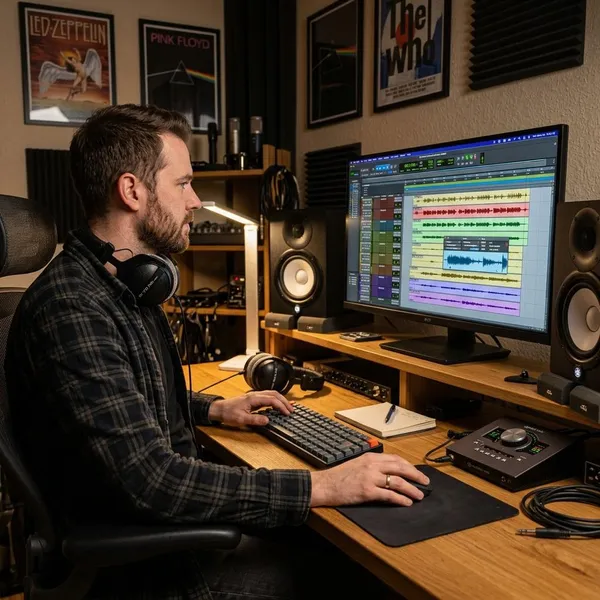
How to check a multitrack download
Check a download before you build a mix around it. The first priority is rights and source, then technical quality, then whether the tracks are complete and aligned. Audio quality matters, but a beautiful WAV file from an unclear source can still be a problem if you plan to share the result.
Read the usage terms
Start with the license. A download can be legal for private practice but not legal for YouTube, SoundCloud, TikTok, streaming services, or paid course material. If the terms are missing or vague, treat the files as practice-only.
Confirm the original source
Look for a named artist, label, educator, recording brand, school, or archive. A traceable source does two things: it reduces legal uncertainty and helps you judge whether the session is likely to be complete.
Check the file format
WAV and AIFF are usually the best formats for DAW work because they are uncompressed and widely supported. If 24-bit files are available, use them; they give you more room for gain changes and processing than heavily compressed audio.
MP3 files are acceptable for quick balance practice, but they are not ideal for judging cymbals, room tone, saturation, or subtle EQ. Also check that the files share the same sample rate before importing.
Review the full track list
A useful rock multitrack should give you enough parts to build a real mix: drums, bass, guitars, vocals, and any important keys, percussion, backing vocals, or room tracks. It does not need to be huge, but it should make musical sense.
| What you see | What it usually means | How to treat it |
|---|---|---|
| Kick, Snare, OH, Bass DI, Gtr L, Lead Vox | Prepared for mixing | Good practice candidate |
| Drums, Music, Vocals | Likely stems | Useful, but limited control |
| Audio 01, Audio 02, Final Edit | Poor documentation | Inspect carefully before trusting |
Make sure every file lines up
Import every file into a blank project from the same starting point. If the song plays correctly right away, the pack was probably exported properly. If drums, rooms, vocals, or overdubs drift or enter at strange times, you may be dealing with a damaged or incomplete session.
Do not trim silence before this test. Silence at the start of a file is often what keeps a later vocal, guitar overdub, or room mic in the correct place.
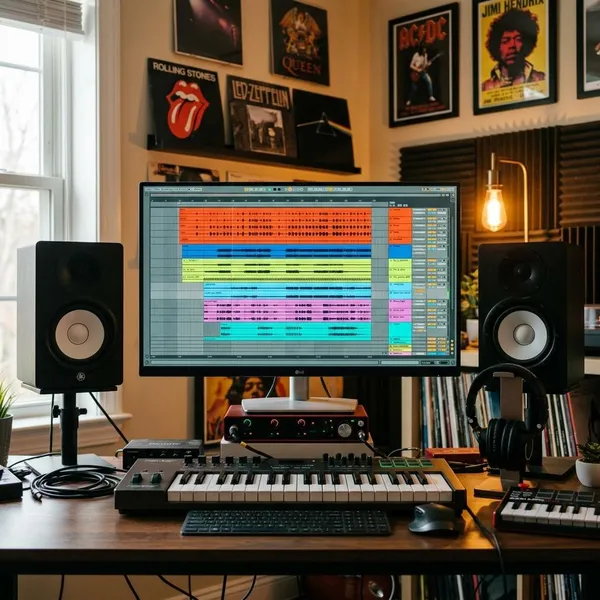
How to set up multitracks in your DAW
A clean DAW setup keeps you focused on the music instead of fighting the session. The basic order is simple: match the technical settings, import everything from the same point, organize the tracks, set safe levels, and build a rough balance before adding plugins.
Match the session sample rate
Set your project to the same sample rate as the files whenever possible, such as 44.1 kHz or 48 kHz. Most DAWs can convert automatically, but matching the source avoids unnecessary processing and prevents avoidable pitch or speed confusion.
Import every file from the same point
Place all files at the same timeline position, usually bar one or absolute zero. Keep the original silence intact until you know the whole session plays correctly.
- Do this first: import everything without editing.
- Then check: drums, room mics, and vocals for timing.
- Only after that: trim, clean, or move regions if needed.
Name and group the tracks
Rename tracks in plain language and group them by instrument family: drums, bass, guitars, vocals, keys, effects, and rooms. Even a 24-track rock session can feel messy if every channel has a vague file name.
Grouping also changes how you listen. Rhythm guitars become one arrangement layer, drum mics become one kit, and backing vocals become a support part instead of a row of disconnected files.
Set clean starting levels
Pull the faders down before building the first balance. Many downloaded tracks are already printed at healthy levels, and stacking them at unity can overload the mix bus quickly.
Build a rough mix before adding plugins
Use faders, panning, mutes, and basic routing before reaching for EQ or compression. Classic rock-style recordings often already contain useful tone in the performance, microphone placement, and room sound.
How to mix classic rock multitracks
Mixing classic rock multitracks is mostly about preserving performance while making the record feel balanced, clear, and alive. The safest priority order is rhythm section first, guitars second, vocal clarity always, and effects only when they support the song.
Build the groove with drums and bass
Start with drums and bass because they decide whether the track feels grounded. The kick should support the pulse, the bass should carry notes clearly, and the snare should speak without sounding detached from the kit.
Listen to the relationship before fixing tone. If the bass hides the kick, a level or EQ move may solve it. If the room mics make the drums exciting but blurry, bring them down or compress them more gently.
Balance rhythm and lead guitars
Rhythm guitars should create width and drive without covering the vocal or snare. Panning and level often solve more than aggressive EQ, especially when the part was double-tracked or recorded with contrasting tones.
Lead guitars need movement. A solo can come forward, but it should step back when the vocal returns. Automation usually sounds more musical than one fixed level across the whole song.
Use room tracks for depth
Room tracks can make a rock mix feel like people playing together rather than isolated instruments stacked in a grid. Bring them up slowly and stop before the low mids get cloudy or the cymbals smear.
- Small room lift: adds realism without changing the whole balance.
- Compressed drum room: can add excitement, but may exaggerate cymbals.
- No room tracks: try a short ambience, plate, or slap delay instead of a huge reverb.
Keep the lead vocal clear
The vocal has to survive the guitars. Set its level against the full band, not in solo, and check important lines at chorus entries, hooks, and endings. A tiny automation move on one phrase can be better than a large EQ boost on the entire track.
For a classic-style sound, moderate compression, a plate reverb, or a short slap delay often works better than a very wide modern vocal chain. The point is to keep the lyric present without making the vocal feel pasted on top of the band.
Add saturation and effects lightly
Saturation can add warmth and cohesion, but too much makes the midrange tiring and flattens the performance. Use it where it solves a problem: a bass that needs density, a vocal that feels too clean, or a drum bus that needs a little glue.
Conclusion
The most useful classic rock multitracks are not always the most famous ones; they are the files you can verify, use legally, import cleanly, and learn from without second-guessing the source. Start with trusted educational or licensed sessions, check rights before you share anything, and let the mix decisions come from the performance instead of forcing a modern plugin chain onto every track.