
If you are trying to understand why piano matters in classic rock, start with the players who made it feel like a lead instrument instead of background color. The best classic rock piano players gave songs drive, melody, drama, and personality, whether they were fronting the band, shaping a session, or pushing early rock and roll into something louder and wilder.
Most influential classic rock piano stars
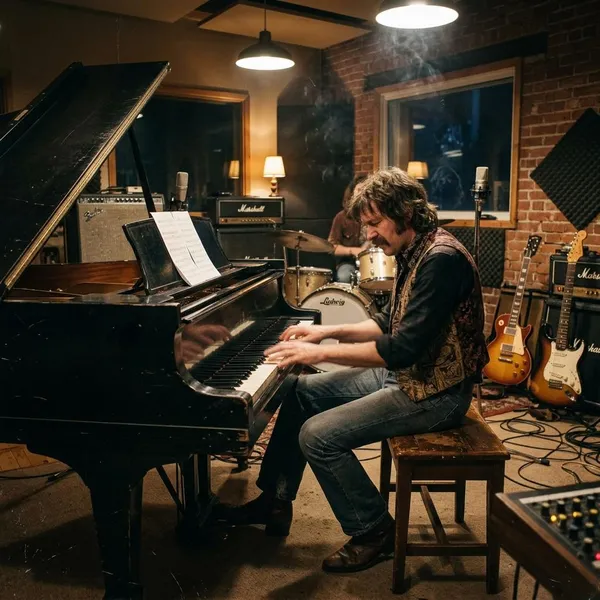
The most influential piano stars are the easiest place to begin because their keyboard style is part of their identity. You do not need to be a trained pianist to hear the difference: Elton John sounds expansive, Billy Joel sounds narrative, Leon Russell sounds earthy, Carole King sounds melodic, and Stevie Wonder makes the keyboard move like part of the rhythm section.
Elton John and his arena-sized piano sound
Elton John turned the piano into a rock-stage centerpiece. His playing can be delicate, but it usually carries a strong forward push: bright chord attacks, rolling motion, and enough rhythmic confidence to hold its own beside drums and guitars.
On "Tiny Dancer," the piano gives the song its emotional frame before the full arrangement opens up. On tougher rock tracks, his keyboard work becomes more percussive, proving that a piano-led song does not have to feel soft or small.
Billy Joel and his story-driven songwriting
Billy Joel's strength is how quickly the piano places you inside a scene. In "Piano Man," the keyboard is not just accompaniment; it creates the barroom mood, supports the characters, and keeps the storytelling conversational.
- Best entry point: "Piano Man" for narrative piano writing.
- Listen for: how the left hand keeps the scene moving while the vocal tells the story.
- Common mistake: treating his piano parts as simple singalong backing instead of structure.
Leon Russell and his Southern rock style
Leon Russell brought gospel, blues, country, and Southern boogie into a rougher piano language. His playing often feels less polished than pop piano, but that is part of the force: thick chords, rolling figures, and phrasing that sounds close to a human voice.
"A Song for You" shows the quieter side of that style. If you are comparing piano players by speed alone, Russell is easy to underrate; his real value is weight, timing, and emotional gravity.
Carole King and her melodic piano writing
Carole King made the piano feel natural inside the song rather than placed on top of it. Her parts usually serve melody first, but they still give the track shape, pulse, and emotional directness.
"I Feel the Earth Move" is a good example of piano as groove, while "It's Too Late" shows how restrained keyboard writing can carry adult pop-rock feeling without sounding plain. Her influence is especially useful for listeners who care more about songwriting than showmanship.
Stevie Wonder and his rhythmic keyboard work
Stevie Wonder expanded the rock listener's idea of what keyboard rhythm could do. He is not only an acoustic piano figure; his broader keyboard work brought bounce, syncopation, and percussive chord movement into popular music in ways rock musicians absorbed.
Rock and roll piano pioneers
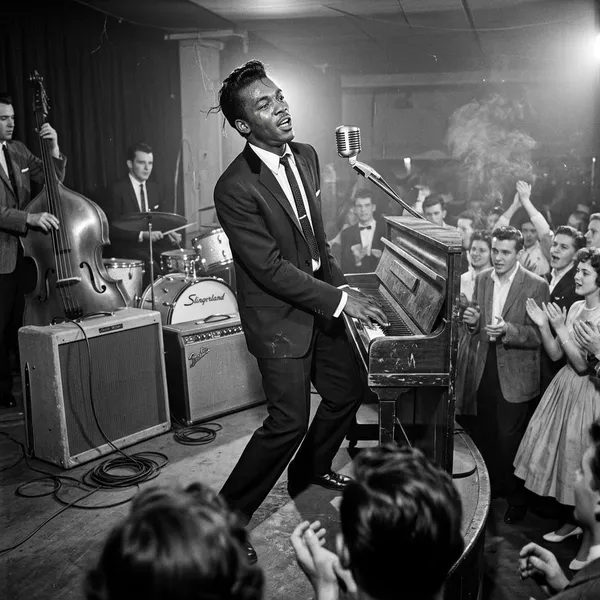
The 1950s pioneers matter because they built much of the vocabulary later classic rock players inherited. Before piano became associated with singer-songwriters and arena ballads, it was already pushing rock and roll with boogie patterns, gospel feeling, blues phrasing, and a physical attack that could compete with any guitar.
Jerry Lee Lewis and his explosive playing
Jerry Lee Lewis made the piano sound reckless without losing control. "Great Balls of Fire" and "Whole Lotta Shakin' Goin' On" are built on pounding rhythm, flashy right-hand gestures, and the sense that the keyboard might burst out of the room.
Little Richard and his driving boogie style
Little Richard's piano matched the urgency of his voice. The boogie patterns, triplet feel, and gospel-rooted accents in songs such as "Good Golly Miss Molly" and "Lucille" make the records feel like they are accelerating from the first bars.
Fats Domino and his New Orleans groove
Fats Domino showed that rock piano did not have to sound frantic to be powerful. His New Orleans groove on "Blueberry Hill" feels relaxed, but the timing is precise and the swing is deep.
- Use him as a contrast: he is warm where Jerry Lee Lewis is explosive.
- Listen for touch: the charm comes from feel, not from overplaying.
Ray Charles and his gospel-blues sound
Ray Charles gave modern keyboard playing a deeper emotional vocabulary. His piano often responds to the vocal with gospel-like timing and blues color, making the performance feel like a conversation rather than a fixed arrangement.
That matters for classic rock because later singers and bands borrowed this idea constantly. A well-placed chord, pause, or fill can carry as much feeling as a dramatic solo.
Johnnie Johnson and his rhythmic piano lines
Johnnie Johnson is a reminder that influence is not always tied to fame. As a key musical partner in Chuck Berry's world, he helped shape the rhythmic feel behind early rock guitar classics.
Classic rock band and session pianists
Some of the most important piano parts in classic rock came from musicians who were not always the face on the album cover. Band and session pianists often made a song feel complete by adding a hook, a lift into the chorus, a stronger intro, or a warmer harmonic layer.
This is the section to focus on if you already know the big singer-songwriters and want to hear how piano works inside a full rock arrangement. The main question changes from "Who is the star?" to "What job is the keyboard doing?"
Nicky Hopkins and his melodic session work
Nicky Hopkins had the rare ability to add elegance without weakening a rock track. His work with artists such as The Rolling Stones, The Kinks, and The Who shows how a session pianist can make a recording more memorable through melodic detail rather than volume.
"She's a Rainbow" is the cleanest example for many listeners. The piano line is so closely tied to the song's character that it feels less like an added part and more like the song's spine.
Billy Preston and his gospel-rock energy
Billy Preston brought lift, bounce, and gospel-rooted brightness to rock sessions. On "Get Back," his keyboard part gives the track a looseness that feels joyful without becoming messy.
- Best listening clue: notice how he adds energy without filling every gap.
- Why it works: the groove stays open, so the whole band sounds lighter.
Roy Bittan and his cinematic piano parts
Roy Bittan helped give Bruce Springsteen's classic recordings their wide-screen feeling. His piano parts often create motion and emotional scale, especially in songs where personal stories need to feel larger than one room.
On tracks such as "Born to Run" and "Backstreets," he is not simply decorating the background. He shapes transitions, builds tension, and helps the chorus open up.
Rick Davies and his Wurlitzer sound
Rick Davies gave Supertramp a keyboard identity that was instantly recognizable, especially through the Wurlitzer electric piano. That tone can sound sharp, dry, punchy, and soulful at the same time, which helped it cut through 1970s rock arrangements.
If acoustic piano often feels broad and ringing, Davies' Wurlitzer parts feel tighter and more biting. "Bloody Well Right" is a strong place to hear how instrument choice becomes part of a band's signature.
Billy Powell and his Southern rock piano
Billy Powell made piano matter inside Lynyrd Skynyrd, a band many listeners first associate with guitars. His part in "Free Bird" gives the opening section shape and emotional lift before the song grows into its famous guitar-driven ending.
Chuck Leavell and his blues-based playing
Chuck Leavell's value comes from adaptability. With the Allman Brothers Band, the Rolling Stones, and many others, he has shown how blues-based piano can support a groove, take a solo, or guide a live band without making the arrangement feel crowded.
"Jessica" is a useful reference because the piano is lively and central, yet still locked into the band's flow. For anyone studying classic rock musicianship, Leavell is a model of taste as much as technique.
Classic rock piano styles they shaped
The names matter, but the styles make the history easier to hear. Once you recognize the main piano approaches in classic rock, songs start to sort themselves naturally: some are built for drive, some for soul, some for storytelling, and some for arrangement support.
Boogie-woogie drive
Boogie-woogie drive is the engine room of early rock piano. A strong left hand creates motion while the right hand adds riffs, accents, and blues figures. Jerry Lee Lewis and Little Richard are the obvious reference points, but the feel echoes through later rock whenever the piano seems to shove the whole track forward.
Gospel and blues phrasing
Gospel and blues phrasing is less about speed and more about expression. The player uses chord color, timing, call-and-response fills, and dynamic touch to make the piano feel vocal.
Ray Charles and Billy Preston show why this matters. Their parts do not just support the singer; they answer, push, and deepen the performance.
Piano-led storytelling
Piano-led storytelling works because the instrument can feel intimate in a verse and expansive in a chorus. Billy Joel, Carole King, Elton John, and Leon Russell all used that range differently, but the result is similar: the keyboard helps set the emotional scene before the lyric does all the work.
- For lyric-focused listeners: start with Billy Joel or Carole King.
- For big emotional build: move to Elton John.
- For a rougher roots feel: spend time with Leon Russell.
Full-band session playing
Full-band session playing is about knowing what not to play as much as what to add. Nicky Hopkins, Roy Bittan, Chuck Leavell, Billy Preston, and others understood how to fill the middle space between guitar, bass, drums, and vocal.
Essential classic rock piano songs
The most useful way to hear these players is to compare a few songs with different jobs for the piano. Do not only ask which track has the most impressive playing. Ask whether the keyboard is driving the beat, setting the mood, carrying the story, or giving the arrangement its character.
If you are making a short starter playlist, these six songs cover the main paths: raw rock and roll, boogie drive, New Orleans warmth, arena-scale emotion, barroom storytelling, and restrained confession.
Great Balls of Fire by Jerry Lee Lewis
"Great Balls of Fire" is one of the clearest examples of piano as rock and roll combustion. The part is fast, physical, and theatrical, but the groove never falls apart. It is essential because the keyboard supplies the danger as much as the vocal does.
Good Golly Miss Molly by Little Richard
"Good Golly Miss Molly" captures Little Richard's driving boogie style at full force. The piano pounds ahead with urgency, turning a straightforward structure into something explosive through attack, timing, and attitude.
Blueberry Hill by Fats Domino
"Blueberry Hill" belongs on the list because it proves that classic rock's piano roots were not only about speed. Fats Domino's relaxed touch, New Orleans feel, and melodic warmth show a softer route into rock history.
Tiny Dancer by Elton John
"Tiny Dancer" is piano as emotional architecture. The opening feels intimate, but the part leaves enough room for the arrangement to grow into something much larger.
For someone new to Elton John, this is a better first lesson than simply looking for his loudest playing. It shows how a piano part can guide a song's emotional expansion.
Piano Man by Billy Joel
"Piano Man" is the obvious Billy Joel choice because the keyboard does so much narrative work. It sets the room, supports the melody, and makes the characters feel believable before the chorus becomes communal.
A Song for You by Leon Russell
"A Song for You" shows how restrained piano can still feel powerful. Leon Russell uses space, chord weight, and phrasing rather than speed, which makes the song a useful counterpoint to the more explosive early rock examples.
Conclusion
The strongest way to appreciate classic rock piano is to listen for function before fame: who drives the rhythm, who tells the story, who adds soul, and who quietly makes the band sound complete. Start with the pioneers for energy, move to the solo stars for personality, and then pay attention to the session players who often explain why a familiar recording feels so finished.