
If you want classic rock piano songs that are worth learning, start with the ones people recognize in the first few seconds: a strong intro, a clear groove, or a chorus that works even without a full band. Some are beginner-friendly chord songs, while others need better timing, touch, or stamina. The smartest choice is not always the hardest song; it is the one that fits your level, your voice, and the setting where you plan to play it.
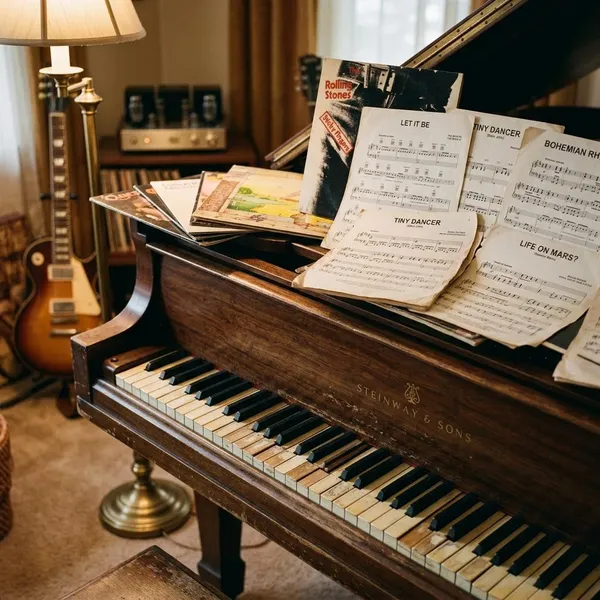
Essential classic rock piano songs
These are the piano-led rock songs most listeners know immediately. If you are building a practice list, a small live set, or just a better rock playlist, this group gives you the foundation: famous intros, strong melodies, and arrangements that still make sense when stripped down to piano.
Bohemian Rhapsody by Queen
"Bohemian Rhapsody" is dramatic before the guitars ever arrive. The opening piano part sets the whole mood: intimate, tense, and theatrical. It is not the easiest song here, but even a simplified version can sound impressive if you shape the phrases instead of just playing the chords.
Piano Man by Billy Joel
"Piano Man" is one of the safest classic rock piano songs for singers because the story, rhythm, and chorus all support each other. Beginners can start with basic chords, while stronger players can add the rolling accompaniment and barroom feel that make the song come alive.
Tiny Dancer by Elton John
"Tiny Dancer" is less about flash and more about control. The piano part has to support the vocal without sounding stiff, so it is a good pick if you want to work on touch, balance, and gentle movement between chords.
It works especially well for home playing or piano-vocal performance. If you are playing for a room that wants a big sing-along right away, "Piano Man" or "Don't Stop Believin'" will usually land faster.
Let It Be by The Beatles
"Let It Be" is probably the best first classic rock piano song for many beginners. The chords are clear, the tempo is comfortable, and a simple version still sounds complete. Once the basic progression feels steady, you can add inversions, fills, and a fuller left hand.
Don't Stop Believin' by Journey
The intro to "Don't Stop Believin'" is the hook. If you can play that repeating pattern cleanly and evenly, listeners know the song before the first lyric. The challenge is consistency rather than complicated harmony, which makes it a great practice piece for timing.
For live use, this is one of the strongest choices on the list. It works for casual sing-alongs, small gigs, and group settings where a familiar opening matters more than a perfectly detailed arrangement.
Classic rock piano ballads
Ballads are where piano can carry the emotional weight without needing much decoration. The priority is tone: steady tempo, clean pedal use, and enough space for the melody to breathe. These songs are useful when you want something expressive rather than purely energetic.
November Rain by Guns N' Roses
"November Rain" gives you a big emotional payoff from a fairly direct piano idea. The opening chords are instantly recognizable, but they only work if you let them ring naturally and build the intensity gradually.
This is a good choice for an intermediate player who wants something cinematic. For a shorter performance, you can focus on the intro and main vocal sections instead of trying to recreate the full studio scale.
Desperado by Eagles
"Desperado" is a lesson in restraint. The chords are not the main difficulty; the hard part is keeping the accompaniment warm and supportive. If you overplay it, the song loses the plainspoken quality that makes it effective.
Beth by Kiss
"Beth" is a softer choice than many people expect from Kiss, which is exactly why it stands out. It is manageable for many early intermediate players and works well when you want a gentle piano-vocal song that does not need a heavy arrangement.
Life on Mars by David Bowie
"Life on Mars" has richer harmonic movement than many classic rock ballads, so it suits players who are ready for something less predictable. A simplified arrangement can still capture the drama, but the song rewards careful listening and confident phrasing.
Upbeat classic rock piano songs
Upbeat piano rock is mostly about groove. These songs are useful when you want to build stamina, sharpen your left hand, or play something that gets a quick reaction. They do not all require advanced theory, but they do punish weak rhythm.
Great Balls of Fire by Jerry Lee Lewis
"Great Balls of Fire" is pure rock-and-roll energy at the piano. A simple version can work if the accents are sharp and the rhythm is confident; advanced players can add boogie patterns, slides, and more showmanship.
Bennie and the Jets by Elton John
"Bennie and the Jets" is not fast in the obvious way, but its feel is tricky. The piano hits need to sit back with attitude. If you play it too squarely, the song loses its swagger, so this is a useful pick for learning groove and space.
Old Time Rock and Roll by Bob Seger
"Old Time Rock and Roll" is a dependable crowd-pleaser because the piano part is direct and the structure is easy to follow. It is a smart option for casual players who want something upbeat without getting buried in difficult changes.
For a party or informal sing-along, this can work better than a more complex song. The mistake to avoid is playing it politely; it needs a firm pulse and a little bar-band confidence.
Crocodile Rock by Elton John
"Crocodile Rock" is bright, bouncy, and good for building rhythmic stamina. The repeated figures need to stay light rather than heavy, especially if you are playing the whole song instead of just the main hook.
Roll with the Changes by REO Speedwagon
"Roll with the Changes" has a bold piano drive that pushes the track forward from the start. It is a good bridge between basic chord playing and fuller rock accompaniment because the rhythm is clear, the energy is high, and the intro carries a lot of the song's identity.
Classic rock keyboard songs that work on piano
Some classic rock songs were built around electric piano, organ, Rhodes, Wurlitzer, or synth rather than acoustic piano. They still belong in a piano player's repertoire when the riff, chord movement, or atmosphere survives the change of instrument. The goal is not to copy the studio tone perfectly; it is to keep the part listeners remember.
Riders on the Storm by The Doors
"Riders on the Storm" depends on mood more than volume. On piano, the rolling motion can sound haunting if you keep the touch soft and the pedal controlled. Heavy playing will flatten the atmosphere quickly.
The Logical Song by Supertramp
"The Logical Song" transfers well to piano because the rhythmic keyboard part gives the track its movement. It is a practical choice if you want something more coordinated than a basic ballad but not as physically demanding as old-school rock and roll.
Bloody Well Right by Supertramp
"Bloody Well Right" has a gritty keyboard attitude, and that attitude can still come through on piano if the accents are strong. Focus on the riff and the left-hand support before worrying about extra fills.
This is a good pick when you want something bluesier and less obvious than the usual piano ballads. In a small live setting, the groove matters more than matching the original keyboard sound.
Come Sail Away by Styx
"Come Sail Away" starts with a piano-led section that can stand on its own. That makes it flexible: you can play a short, intimate version at home or build toward a bigger arrangement if you are playing with others.
Changes by David Bowie
"Changes" is lively, clever, and rhythmically alert. The chord movement itself is part of the hook, so a piano version can sound convincing without a huge arrangement. Keep it light; if it becomes too heavy, the song loses its wit.
How to choose a classic rock piano song
Pick by purpose first. A song for private practice can be slightly above your level because nobody is waiting for a polished result. A song for singing with friends should be simpler, more recognizable, and comfortable to keep steady from start to finish.
Match it to your skill level
Beginners should start with songs where the chord changes are easy to hear and repeat, such as "Let It Be" or a simplified "Piano Man." Intermediate players can move toward "November Rain," "Tiny Dancer," or "Come Sail Away." Save "Bohemian Rhapsody" and "Life on Mars" for when you can handle bigger shifts in dynamics, timing, and harmony.
- Good first check: can you change chords without losing the beat?
- Good second check: does the song still sound clear without the full band?
- Warning sign: you can play the notes slowly, but the song has no recognizable pulse.
Choose chords or full arrangements
A chord-based version is usually enough for singing, learning structure, or playing casually at home. A fuller arrangement matters when the piano part is the song's signature, as with "Don't Stop Believin'," "Great Balls of Fire," or the opening of "November Rain."
Start with a familiar intro
A famous intro gives you quick payoff and helps listeners connect immediately. "Don't Stop Believin'," "Come Sail Away," "Piano Man," and "November Rain" are strong choices because the opening does so much work before the vocal begins.
Pick a song you enjoy singing
If you plan to sing, the best song is the one you can perform comfortably, not the one with the most impressive piano part. "Let It Be," "Beth," "Desperado," and "Bridge Over Troubled Water" can all work well in piano-vocal form, but only if the key and range suit your voice.
- For quiet solo practice: choose a ballad with room for phrasing.
- For a family gathering or small party: choose a chorus people know quickly.
- For a short live set: mix one ballad, one anthem, and one upbeat rocker.
- For steady progress: learn the intro, chorus, and basic chords before adding fills.
Conclusion
The best choice is the song you can make sound confident, not just the most famous name on the list. Start with a recognizable intro or a clean chord version, then build the arrangement only where it adds something. If a song fits your hands, your voice, and the room you are playing for, it will usually feel more convincing than a harder piece played halfway.