
Classic rock record labels matter because they explain more than who released an album. They can point to a band's creative support, the market a record was made for, and whether a copy is an early pressing, a regional issue, or a later reissue. If you are trying to make sense of a favorite album or judge a record in a shop, start with the label name, country, catalog number, and fine print before assuming two copies are the same.

Major labels and their rock identities
The best-known labels of the classic rock era developed recognizable personalities. Some were trusted for blues-based power, some for serious songwriters, and others for riskier artists who needed room to sound unusual.
Atlantic and blues-rooted hard rock
Atlantic Records carried a strong rhythm and blues background into the rock era, which made it a natural home for music built on groove, volume, and feel. Led Zeppelin is the obvious example: Atlantic treated the band like an album act, not just a source of singles, and that suited the way hard rock fans listened in the late 1960s and 1970s.
The label's reach also touched progressive rock and heavier rock through artists such as Yes and AC/DC in key parts of their careers. For a casual listener, Atlantic often signals big, physical rock with serious musicianship; for a collector, it is also a label where country, pressing era, and design details can change the story of a copy.
Columbia and songwriter-led rock
Columbia's classic rock identity leaned toward scale, strong songwriting, and long-term career building. Artists such as Bruce Springsteen show how the label could support a voice that needed time, radio work, and repeated albums to become truly massive.
Elektra and artist-driven experimentation
Elektra Records became important because it made room for artists who did not fit a safe commercial mold. The Doors suited that identity perfectly: literary, dark, theatrical, and harder to reduce to a simple pop formula.
That does not mean every Elektra rock release sounds the same. The common thread is artistic personality. When checking an Elektra copy, especially from the classic rock period, the label often tells you that the artist's image and sound were part of the selling point, not an afterthought.
Decca and the British rock boom
Decca was central to the British rock explosion, especially in the UK market. The confusing part for newer collectors is that related US releases may appear under London Records or another arrangement, even when the music is tied to the same artist and era.
- Check the country first if a Decca-related album looks "wrong."
- Compare the sleeve and center label before judging originality.
- Treat UK and US copies as separate release histories, not duplicates.
Warner Bros. and album-oriented rock
Warner Bros. became closely tied to album-oriented rock, where the full LP mattered more than one obvious single. That approach fit FM radio, longer listening sessions, and buyers who wanted a record to feel like a complete work.
How record labels shaped classic rock
Labels did not create the music by themselves, but they shaped the conditions around it. Budgets, producers, radio promotion, distribution, artwork, and roster decisions all affected which albums reached listeners and how those albums were understood.
Funding ambitious studio albums
Many classic rock records depended on expensive studio time, repeated takes, overdubs, better rooms, and sometimes orchestration or experimental production. A label willing to keep paying for that process could give a band space to turn strong material into something more lasting.
Connecting artists with producers
One practical role labels played was matching artists with producers, engineers, studios, and arrangers. The right producer could make a band sound sharper, heavier, cleaner, stranger, or more radio-ready without stripping away its identity.
For listeners comparing albums by the same artist, producer changes are worth noticing alongside label changes. A new label or production team can explain why one record feels raw and another feels polished, even before the songwriting is considered.
Building distinct artist rosters
A roster worked like a public statement of taste. When a label repeatedly backed blues-heavy bands, serious songwriters, progressive groups, or theatrical artists, fans learned what that logo might promise.
- Atlantic: power, groove, and album-scale rock.
- Columbia: strong songwriting with mainstream reach.
- Elektra: distinctive artists with less predictable styles.
- Vertigo: visually memorable progressive and hard rock associations.
- Track and Apple: smaller identities with strong cultural pull.
Promoting songs to radio
Radio promotion was one of the main ways labels turned rock songs into standards. AM stations often favored shorter, immediate tracks, while FM and album-oriented rock formats could support deeper cuts, longer songs, and moodier material.
Distributing albums worldwide
A record could not become a global favorite if fans could not buy it. Labels handled or arranged pressing, shipping, retail placement, and international release timing, often through local partners.
This is especially important when you see different labels on different countries' copies. A British band might have one label at home and another abroad because the overseas partner had better local reach. For buyers, that means a US copy and a UK copy may both be legitimate while still belonging to different release lines.
Developing lasting visual identities
Classic rock labels were visual brands as much as business names. Center labels, sleeve logos, ads, and imprint designs helped make records feel part of a world before the needle even touched the vinyl.
Vertigo's swirl label is the cleanest example: it became collectible partly because the design itself is tied to a particular era of progressive and hard rock. Apple Records did something similar with a simple image that became instantly recognizable. These designs help collectors date records, but they also explain why some labels still feel emotionally connected to the music.
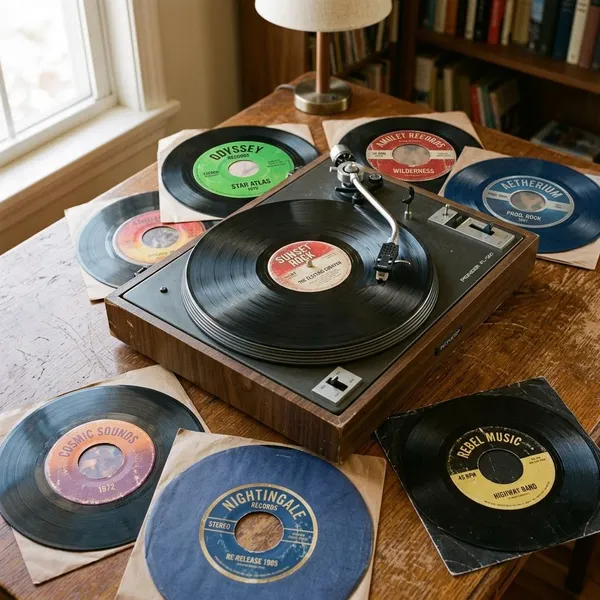
Why albums can show different record labels
Different labels on the same classic rock album are not automatically a warning sign. The reason may be a UK-versus-US release, a licensed distributor, an imprint under a parent company, a later reissue, or a catalog ownership change.
Separate UK and US releases
Many classic rock albums had separate UK and US label arrangements. That is why the same artist can appear on Decca in one country and London in another, or on a familiar UK label while the American copy carries different branding.
For everyday listening, this may not matter much. For buying an expensive copy, it matters a lot: track listings, sleeve details, mastering, pressing plant information, and first-pressing status can all differ by territory.
Imprints under larger companies
An imprint is the public-facing label name, while a larger company may handle manufacturing, distribution, contracts, or rights. Apple Records is a useful example because the imprint has a huge cultural identity, but the business structure behind many releases involved larger industry machinery.
Different regional distributors
Regional distributors could change how an album appeared in a particular market. Even when the main label stayed the same, a local partner might use a different catalog number, pressing credit, price code, or sleeve variation.
- Check the country on the label and sleeve.
- Match the catalog number to that territory.
- Read manufacturing and distribution credits.
- Use runout marks to confirm the pressing, not just the logo.
Later reissues and remasters
A later reissue may use a label design or company name that did not appear on the first release. Remasters, anniversary editions, budget lines, and deluxe reissues often update branding while keeping the album itself official.
Catalog ownership changes
Classic rock catalogs have moved through mergers, sales, licensing deals, and corporate reorganizations. A modern pressing or streaming listing can therefore show a company that had little visible role in the album's first release.
When the label name seems out of place, do not assume it is fake. Treat it as a clue to the album's later business history, then verify the edition through the catalog number, date, rights text, and known release listings.
Why record labels matter to collectors
For collectors, the label is evidence. It helps answer practical questions: when was this copy made, where was it sold, which release line does it belong to, and does the seller's description match the record?
The first checks should be simple and consistent: label name, country, catalog number, label design, sleeve credits, and runout information. One clue is useful, but several matching clues are much stronger.
Original pressings show release history
An original pressing shows how an album first entered the market. That can include the period label design, early sleeve text, original inserts, initial mastering choices, or artwork details that later editions changed.
Original does not automatically mean best sounding or best condition. A later copy may play more quietly and cost less. The reason collectors still chase originals is that they document the first commercial moment of the record.
Label designs help date a record
Label designs changed over time through logo updates, rim text, typography, color, and legal wording. Those changes can help narrow a pressing date when the sleeve alone is not enough.
Vertigo's swirl, Apple's label image, and shifting designs from Atlantic, Columbia, and Elektra are all useful dating clues. The common mistake is relying on design alone; labels sometimes reused older-looking artwork, so pair the design with the catalog number and runout details.
Catalog numbers identify editions
Catalog numbers are one of the quickest ways to separate similar copies. If two records have the same cover but different numbers, they may come from different countries, issue periods, price series, or reissue campaigns.
Use the number as a starting point, not the final verdict. A careful buyer checks whether the number on the sleeve, label, and runout information makes sense together.
Rare imprints can add collector interest
Smaller or culturally distinctive imprints can make a record more interesting because they connect it to a specific scene, artist circle, or period look. Track Records, Vertigo Records, and Apple Records all carry that kind of appeal.
- Track Records: strong late-1960s British rock associations.
- Apple Records: Beatles-linked identity, even beyond Beatles releases.
- Vertigo Records: progressive and hard rock appeal, helped by the swirl design.
Interest does not guarantee high value. A rare imprint helps most when the record is desirable, correctly identified, and in a condition collectors will actually want.

Conclusion
Classic rock labels are worth noticing because they connect the music to the real-world choices that shaped it: funding, producers, radio, distribution, artwork, and release history. If you are listening for context, the label can explain why an album fits a certain era or scene; if you are buying records, it gives you a practical way to separate an ordinary copy from one with stronger historical or collector interest.