
If you want a quick way into classic rock songs 1966, start with the records that changed how rock sounded rather than only the biggest chart names. The safest first stops are "Paint It, Black," "Good Vibrations," "Tomorrow Never Knows," "God Only Knows," and "Eight Miles High," because they show the year's darker mood, studio ambition, psychedelia, and folk-rock crossover almost immediately.
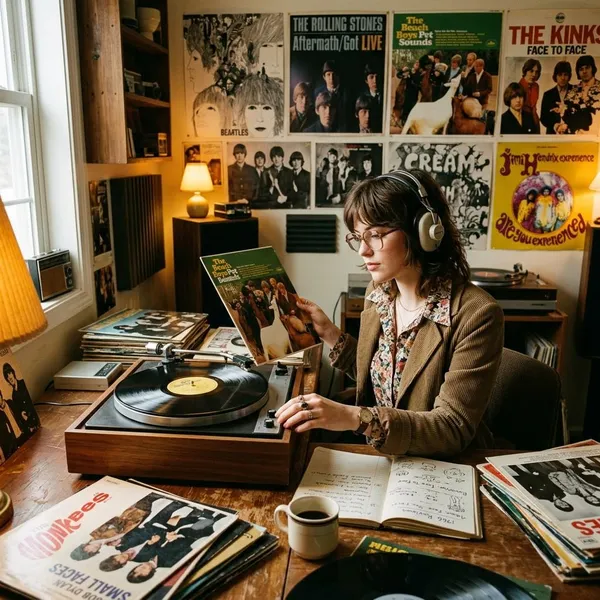
The 10 best classic rock songs from 1966
A good 1966 playlist should not sound like one narrow style. The year matters because polished pop, garage rock, folk rock, psychedelia, and darker British rock were all moving at once. If you are new to the era, use the songs below as the core, then decide whether you want to go deeper into albums, singles, or rougher garage records.
| Song | Best reason to play it first |
|---|---|
| "Paint It, Black" | Dark, urgent, and instantly recognizable. |
| "Good Vibrations" | The clearest hit-single example of studio ambition. |
| "Tomorrow Never Knows" | The boldest leap into psychedelic sound. |
| "God Only Knows" | Baroque pop at its most emotional and refined. |
| "Eight Miles High" | Folk rock stretching toward psychedelia. |
| "Visions of Johanna" | Rock-era songwriting becoming denser and more poetic. |
| "Sunshine Superman" | A lighter, pop-friendly route into psychedelia. |
| "Paperback Writer" | The Beatles turning a sharp single into something heavier and more character-driven. |
| "Psychotic Reaction" | Garage rock with raw force instead of polish. |
| "Substitute" | A punchy reminder that sharp, guitar-led British rock was still central to the year. |
Best 1966 rock songs by sound
The easiest way to make sense of 1966 is to sort the songs by sound. If you are building a quick playlist for a drive, lean on the direct tracks: "Paint It, Black," "Paperback Writer," and "Psychotic Reaction." If you are listening with headphones at home, start with "Good Vibrations," "God Only Knows," and "Tomorrow Never Knows," because the studio details matter more.
Psychedelic rock with Tomorrow Never Knows
"Tomorrow Never Knows" defines psychedelic rock in 1966 because it turns the recording itself into the experience. The song is less about a traditional verse-and-chorus payoff and more about repetition, texture, and altered perception.
Folk rock with Eight Miles High
"Eight Miles High" works as folk rock because the melodic shape and vocal feel still connect to the Byrds' earlier sound. It becomes something more adventurous through the guitar lines and drifting atmosphere.
Baroque pop with God Only Knows
"God Only Knows" is the baroque pop choice because the arrangement carries as much emotional weight as the lyric. The horns, strings, vocal layers, and chord movement give the song a chamber-pop richness without making it feel formal or distant.
If you usually prefer guitar-driven rock, this is the track that may change your mind. It shows that 1966's progress was not only about volume or distortion; it was also about arrangement, harmony, and emotional precision.
Experimental pop with Good Vibrations
"Good Vibrations" is experimental pop that still behaves like a hit. It jumps between sections, uses unusual textures, and feels assembled with real studio imagination, but the hook and vocal warmth keep it easy to love.
- For beginners: enjoy the chorus first, then notice the structure later.
- For repeat listening: follow how each section changes the song's temperature.
Harder rock with Paint It, Black
"Paint It, Black" points toward harder rock through mood and force rather than sheer volume. The track feels restless, dark, and tightly wound, which gives it more bite than many mainstream singles around it.
Garage rock with Psychotic Reaction
"Psychotic Reaction" is the rougher counterweight to the polished studio landmarks. It is not trying to be elegant; the appeal is the riff, the attitude, and the sense that the performance could spill over at any second.
This is the song to add when a 1966 playlist starts feeling too refined. It reminds you that the year's future-facing rock was not only happening in expensive studios.
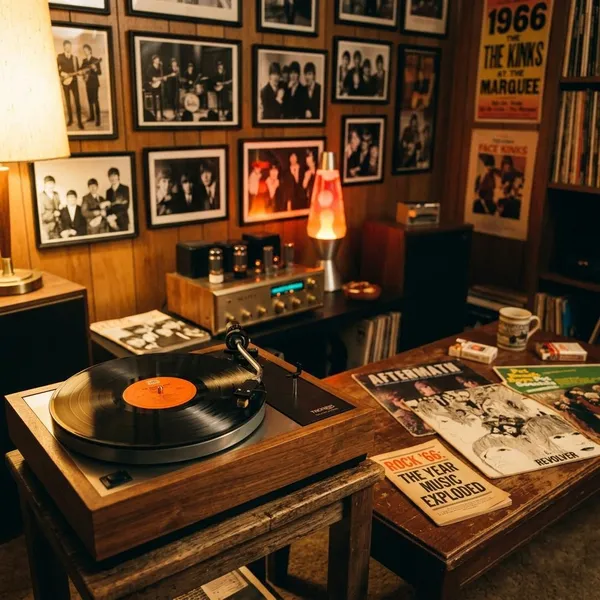
Why 1966 changed rock music
1966 changed rock because artists started treating records as designed experiences, not just performances captured on tape. The big shift was priority: sound, mood, sequencing, and lyrical ambition began to matter almost as much as the single itself.
More ambitious studio production
Studio production became a creative tool in 1966. Records like "Good Vibrations" and "Tomorrow Never Knows" used editing, layering, unusual instruments, and sound effects in ways that could not be copied easily onstage.
That matters for today's listener because these songs reward closer replay. If a track feels bigger the second or third time, the production is probably doing more than decorating the song.
A growing psychedelic sound
Psychedelia gave rock a new vocabulary: drones, loops, echo, fragmented structure, and dreamlike pacing. Not every psychedelic 1966 song sounds the same, which is the point. Some tracks are heavy and strange, while others are bright and radio-friendly.
- Dense version: "Tomorrow Never Knows."
- Folk-rock version: "Eight Miles High."
- Pop-friendly version: "Sunshine Superman."
Deeper and darker songwriting
Songwriting in 1966 became more willing to sit with grief, ambiguity, obsession, and surreal imagery. "Paint It, Black" makes darkness feel immediate, while "Visions of Johanna" lets meaning stay partly unresolved.
Stronger links between folk and rock
Folk gave rock more room for narrative, atmosphere, and poetic language; rock gave folk ideas a stronger rhythmic and electric frame. Dylan and the Byrds show two different sides of that exchange, one lyric-heavy and one more sound-driven.
Albums built as complete works
Albums mattered more in 1966 because major artists began shaping them as full listening experiences. Revolver, Pet Sounds, and Blonde on Blonde are not just containers for famous songs; they have their own pace, mood, and internal logic.
If you are only sampling singles, you will still hear the year's brilliance. If you want to understand why 1966 has such a strong reputation, the albums are where the bigger shift becomes clearer.
Landmark albums behind the songs
The songs are the best entry point, but the albums explain the scale of the change. A listener who wants a one-evening introduction should start with Revolver. Someone who cares more about harmony and emotional detail should choose Pet Sounds. If lyrics are the main attraction, go to Blonde on Blonde sooner.
Revolver by The Beatles
Revolver is probably the best 1966 rock album for beginners because it is adventurous without being hard to enter. It moves from compact pop to psychedelic experimentation, and it does so without losing momentum.
Start here if you want one album that explains the year quickly. "Tomorrow Never Knows" may be the wildest moment, but the record as a whole shows how flexible rock had become.
Pet Sounds by The Beach Boys
Pet Sounds is the album to choose when you want beauty, vulnerability, and studio detail rather than a harder rock attack. Its arrangements are rich, but the emotional center stays clear.
- Best listening setting: quiet room or headphones.
- Best first focus: vocal blend and orchestration.
- Why it lasts: the craft supports the feeling instead of replacing it.
Blonde on Blonde by Bob Dylan
Blonde on Blonde asks for more patience than the most immediate 1966 records, but it pays off if you like language, character, and atmosphere. Dylan lets songs sprawl, twist, and suggest more than they clearly state.
Do not start here if you only want quick hooks. Start here if you want to hear how far rock-era songwriting could stretch by the middle of the decade.
Aftermath by The Rolling Stones
Aftermath shows the Rolling Stones becoming more self-defined. The blues and rhythm-and-blues roots are still there, but the band sounds more confident, darker, and more pointed than before.
Fifth Dimension by The Byrds
Fifth Dimension is useful because it captures transition in motion. The Byrds still have the jangle and folk-rock identity that made them important, but the record reaches toward more psychedelic space.
Conclusion
The best way to approach 1966 is not to chase one "correct" classic rock canon, but to hear the year from a few angles: a dark hit, a psychedelic experiment, a baroque pop masterpiece, a folk-rock crossover, and a raw garage single. Start with the songs if you want quick impact, then move to Revolver, Pet Sounds, or Blonde on Blonde when you want the larger picture. That order makes the year's change feel obvious rather than academic.