
If you want the quickest way into classic rock with orchestra, start with songs where the orchestral part changes the whole mood rather than just adding background strings. "A Day in the Life," "Nights in White Satin," and "Kashmir" show three different doors into the style: surreal tension, romantic sweep, and heavy rock scale.

The best classic rock songs with orchestra
The strongest entry points are not all "symphonic" in the same way. Some use a real orchestral section, some lean on strings and brass, and some feel orchestral because the arrangement creates drama on a larger scale.
A Day in the Life by The Beatles
"A Day in the Life" is the essential first listen because the orchestra is impossible to treat as decoration. The rising orchestral swell turns the song from a strange ballad into something tense, dreamlike, and almost cinematic before that final piano chord lands.
Pay attention to the contrast: quiet storytelling, sudden rush, then release. That one shift explains why orchestration in rock can feel more powerful than simply making a song "prettier."
Nights in White Satin by The Moody Blues
For a softer and more romantic side of orchestral rock, "Nights in White Satin" is the safest starting point. The strings support the vocal rather than competing with it, so the song still feels intimate even when the arrangement opens up.
This is the track to play for someone who likes melody first and genre labels second. If it works for you, Days of Future Passed is the natural album to try next.
Kashmir by Led Zeppelin
"Kashmir" is the pick for listeners who worry that orchestra will make rock sound too polished. The riff and drums stay heavy, while the strings and brass make the track feel wider, drier, and more monumental.
- Best for: fans of heavy, hypnotic grooves.
- Listen for: how the arrangement adds scale without softening the band.
- Common mistake: expecting a delicate string ballad; this is orchestral weight, not orchestral sweetness.
Live and Let Die by Paul McCartney and Wings
"Live and Let Die" works because it changes shape so quickly. The orchestra helps those jumps feel theatrical instead of random, moving from restrained sections into explosive bursts with real purpose.
If you want one song that shows how orchestration can make a rock single feel like a movie scene, this is the most immediate choice.
Atom Heart Mother by Pink Floyd
"Atom Heart Mother" is not the best first track for everyone, but it is important. It stretches rock into a long-form suite with brass, choir, and shifting sections, so the reward comes from patience rather than instant hooks.
Save it for a focused listen rather than a casual playlist shuffle. It makes more sense when you are ready to hear orchestration as structure, not just extra color.
Burn Down the Mission by Elton John
"Burn Down the Mission" is a strong choice when you want songwriting at the center. The arrangement grows around Elton John's piano and vocal drama, giving the track lift without turning it into a prog experiment.
It is especially useful as a middle ground: richer than a plain rock recording, but still direct enough for everyday listening.
I'm Your Captain by Grand Funk Railroad
"I'm Your Captain (Closer to Home)" earns its orchestral feeling gradually. The song starts grounded, then opens into a broader ending that feels more emotional because the expansion is delayed.
This is a good later pick if you have already heard the obvious classics and want something that feels spacious without being difficult.

Essential orchestral rock albums
Albums matter here because orchestral rock is often about pacing. A single song can deliver one dramatic moment, but a full record shows whether the band can make that larger sound feel natural over time.
Days of Future Passed by The Moody Blues
Days of Future Passed is the most beginner-friendly album because the orchestral passages and songs feel connected by mood. It has enough ambition to show why the style matters, but enough melody to keep the experience approachable.
Start here if you want classic rock with orchestra to feel warm, emotional, and easy to follow. "Nights in White Satin" gives you the familiar anchor, while the rest of the album shows how orchestration can shape a full listening arc.
Eldorado by Electric Light Orchestra
Eldorado is the better pick if you want polish, hooks, and a more studio-crafted sound. Electric Light Orchestra made strings feel like part of the band's identity rather than a special effect added for one dramatic moment.
- Try this first if: you like melodic classic rock and clean production.
- Maybe wait if: you prefer raw live-band energy over layered arrangements.
Atom Heart Mother by Pink Floyd
Atom Heart Mother sits on the more demanding side of this list. It is worth hearing because it shows how far a rock band could push orchestral form, but it is not as instantly welcoming as Days of Future Passed or Eldorado.
How orchestra appears in classic rock
Not every orchestral-sounding rock song uses the same method. Before judging whether a track "counts," it helps to listen for what the arrangement is actually doing: real orchestra, added strings or brass, a live symphony setting, or keyboard textures that imitate orchestral scale.
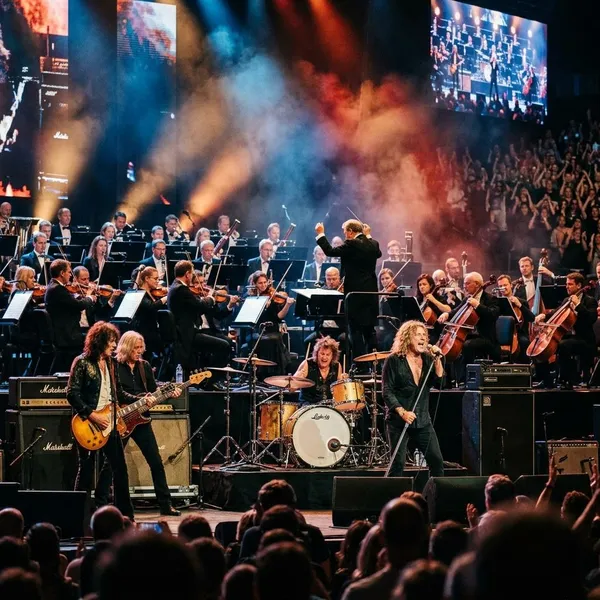
The most useful distinction is whether the orchestral sound is built into the original recording or added later in performance. Studio orchestration usually feels tighter and more intentional; live symphony versions can feel bigger, but they depend heavily on the arrangement.
Orchestra recorded for a studio song
This is the clearest version: orchestral musicians are part of the recording itself, and the arrangement is written into the song's drama. "A Day in the Life" is the easiest example to hear because the orchestral rise is one of the track's main events.
Use this as your first check when exploring the style. If removing the orchestra would make the song feel structurally weaker, not just less lush, the arrangement is doing real work.
Rock bands performing with a symphony
A rock band playing with a symphony can be thrilling, but it is not automatically better than the original recording. The best versions give the orchestra new harmonic weight, tension, or release instead of having it simply shadow the band.
This format is especially good for longtime fans who already know the songs. Familiar riffs and choruses become easier to re-hear when a large ensemble changes the scale around them.
Strings and brass added to a rock arrangement
A full orchestra is not always necessary. A few strings can add ache or warmth; brass can make a chorus feel sharper and more triumphant. Many classic rock tracks use this smaller approach because it gives drama without crowding the band.
- Good fit: concise songs that need extra emotional lift.
- Risk: too much arrangement can bury the vocal or rhythm section.
- Best clue: the added parts should sharpen the mood, not just fill empty space.
Mellotron and keyboards creating orchestral sounds
Some classic rock sounds orchestral even when no orchestra is present. Mellotron, organ, synthesizers, and layered keyboards could suggest strings, choirs, or brass while keeping the music inside a band setup.
That distinction matters if you are building a playlist. A real orchestra may give you sweep and depth; keyboard-based orchestral textures often give you atmosphere, mystery, and a slightly unreal quality that fits progressive rock especially well.
Conclusion
The best way into this sound is to match the music to your listening mood: choose "Nights in White Satin" or Days of Future Passed for melody, "Kashmir" for weight, "Live and Let Die" for drama, and Atom Heart Mother when you want something more demanding. Once you hear whether you prefer songs enhanced by orchestra or rock built around larger symphonic ideas, the next choices become much easier.