
If you want to understand classic southern rock bands without getting lost in endless greatest-hits playlists, start with the groups that show the main branches of the sound: jam-heavy blues, country-leaning storytelling, boogie grooves, soul, and harder guitar rock. The quickest path is to hear one signature song, then one full album, because this genre often makes more sense through band chemistry than isolated singles.
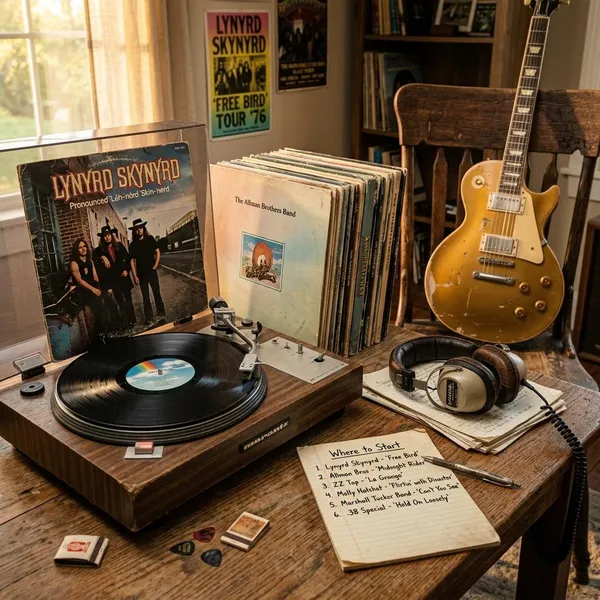
Essential classic Southern rock bands
The core Southern rock bands do not all sound alike. Some are built around long improvisations, some around tight riffs, some around fiddle or soul vocals, and some around big multi-guitar arrangements. If you are new to the genre, the first thing to decide is what you want more of: open-ended playing, memorable choruses, country storytelling, or harder rock energy.
The Allman Brothers Band
The Allman Brothers Band are the best place to hear Southern rock become its own language. Their sound joined electric blues, jazz-like improvisation, soul feeling, and country melody, with Duane Allman's slide guitar and Dickey Betts' lyrical lead lines setting the pattern for many bands that followed.
Lynyrd Skynyrd
Lynyrd Skynyrd gave the genre its most recognizable voice. Ronnie Van Zant's writing was direct without being flat, and the band's layered guitars made even simple songs feel larger than standard bar-band rock.
The Marshall Tucker Band
The Marshall Tucker Band are the softer, more open side of classic Southern rock. Flute, saxophone, country melodies, and relaxed rhythms give songs like "Can't You See" and "Heard It in a Love Song" a warmer feel than the heavier guitar bands.
ZZ Top
ZZ Top sit slightly apart from the jam-band side of Southern rock, but their Texas blues, boogie rhythm, dry humor, and guitar-led swagger make them essential. They prove that the style does not need three guitars or long solos to feel heavy.
- Best fit: listeners who like groove, tone, and concise songs.
- Start carefully: focus on the early albums before the later, more polished MTV-era sound.
- Listen for: how locked-in the bass and drums are behind Billy Gibbons' guitar.
The Outlaws
The Outlaws are the band to try when you want melody and guitar firepower at the same time. Their three-guitar approach, often described through the "Florida Guitar Army" nickname, gives songs width without turning them into pure showpieces.
"Green Grass and High Tides" is long, but it is not long by accident. It builds from songcraft into instrumental release, which makes it one of the clearest examples of Southern rock as both a vocal and guitar-driven form.
The Charlie Daniels Band
The Charlie Daniels Band brought fiddle, country storytelling, and rowdy stage energy into the Southern rock conversation. "The Devil Went Down to Georgia" is the famous entry point, but "Long Haired Country Boy" and "The South's Gonna Do It Again" show more of the band's roots-rock personality.
They are a good reminder that Southern rock was never only a guitar format. In Daniels' hands, the fiddle can play the role of a lead instrument, a rhythmic spark, and a storytelling device all at once.
Wet Willie
Wet Willie are the soul-and-groove pick. Jimmy Hall's vocals and saxophone help the band stand out from the darker, heavier acts, and "Keep On Smilin'" captures their relaxed confidence without sounding lightweight.
If you are making a playlist for someone who finds Southern rock too hard-edged, Wet Willie is one of the smartest additions. Their music keeps the regional feel but shifts the emphasis toward rhythm, warmth, and vocal character.
Where to start with each band
A practical listening route is better than a random shuffle. Start with the song that gives you the band's public identity, then play the recommended album to hear whether the deeper style actually fits your taste.

Lynyrd Skynyrd with Sweet Home Alabama and Pronounced
Start with "Sweet Home Alabama" because it gives you the hook, attitude, and guitar layering quickly. Then play Pronounced 'Lĕh-'nérd 'Skin-'nérd from front to back. "Simple Man," "Tuesday's Gone," and "Free Bird" show the emotional range that a single radio hit cannot cover.
For a first listen, pay attention to pacing. Skynyrd rarely sounds rushed, even when the guitars are moving. That control is a big reason their songs have lasted.
ZZ Top with La Grange and Tres Hombres
"La Grange" is the obvious first track because it explains the band in one riff: lean, bluesy, funny, and locked into a groove. After that, Tres Hombres is the right album because it keeps the early sound earthy and focused.
- If you like blues: listen closely to "Jesus Just Left Chicago."
- If you like barroom rock: "Beer Drinkers & Hell Raisers" will probably land faster.
- If you prefer long jams: ZZ Top may feel too compact, and that is the point.
The Outlaws with Green Grass and High Tides and Outlaws
Give "Green Grass and High Tides" enough time instead of sampling the first minute and moving on. The payoff is in the way the guitars stack, answer each other, and keep raising the energy without losing the song's shape.
The self-titled Outlaws album is the next step. It shows the band's harmony vocals and road-song momentum, so you can hear that they were not just built around one epic guitar showcase.
Wet Willie with Keep On Smilin' and Keep On Smilin'
Yes, the song and album share the same title, and both are the right starting point. "Keep On Smilin'" is easygoing, soulful, and more rhythm-led than many Southern rock staples.
This is a useful pick for a lighter listening situation: a relaxed weekend playlist, a mixed classic-rock set, or a first introduction for someone who likes soul more than hard rock. Wet Willie make the genre feel welcoming without stripping away its Southern character.
Molly Hatchet with Flirtin' with Disaster
Begin with "Flirtin' with Disaster" when you want the heavy branch of Southern rock immediately. It is fast, loud, and direct enough to tell you within seconds whether Molly Hatchet is your lane.
The album Flirtin' with Disaster is best approached as a full dose of that energy. Do not expect the looseness of the Allmans or the soul warmth of Wet Willie; the appeal is momentum, guitar weight, and rough-edged impact.
Blackfoot with Highway Song and Strikes
Blackfoot are not in the essential list above, but they belong on a starter path because they connect Southern rock to a harder late-70s rock sound. "Highway Song" is the first stop, with "Train, Train" close behind if you want the rootsier side.
- Start with one song, then one album. It prevents the genre from turning into a blur of similar guitar tones.
- Compare by feel, not just date. Try Allmans vs. Marshall Tucker for the open side, then Skynyrd vs. Molly Hatchet for the harder side.
- Add live recordings early. The Allmans, Skynyrd, and The Outlaws often make more sense onstage.
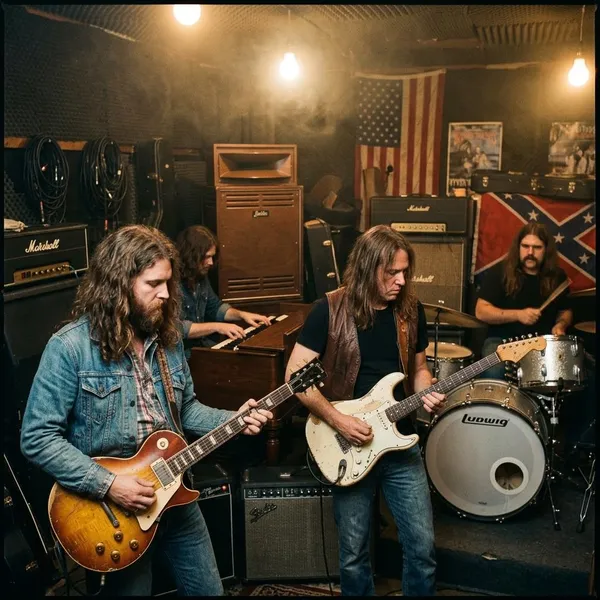
What shaped the classic Southern rock sound
The classic Southern rock sound came from older Southern musical traditions meeting the louder scale of 1970s rock. The important thing is not just where the bands came from, but how they used blues phrasing, country storytelling, soul vocals, and multi-guitar arrangements to make the songs feel rooted rather than generic.
Blues and soul influenced the vocals and guitar playing
Blues shaped the bends, slide guitar, call-and-response feel, and slow-building tension. Soul shaped the vocals: gritty, warm, conversational, and more concerned with timing than polish. That is why the best Southern rock performances often feel human even when the guitars are loud.
The Allman Brothers Band make the blues influence obvious, while Wet Willie makes the soul connection easier to hear. Skynyrd sits somewhere between those poles, using blues-rock muscle with vocals that still feel plainspoken and personal.
Country music shaped the stories and melodies
Country music gave Southern rock a direct way of telling stories. Roads, family, trouble, memory, pride, and loss appear often, but the stronger bands avoid sounding like slogans because the melodies carry a country-like plainness under the rock volume.
This is where The Marshall Tucker Band and The Charlie Daniels Band are especially helpful. If you come from country music, they may be the easiest entry points before moving into the heavier guitar bands.
Twin and triple guitars created the signature attack
Multiple lead-capable guitars are one of the genre's clearest fingerprints. Skynyrd used layered parts for drama and control; The Outlaws pushed the idea into a three-guitar front line; Molly Hatchet made it heavier and more forceful.
- Harmony lines make the songs feel wide and anthemic.
- Traded leads keep long sections moving.
- Layered rhythm parts add weight without always needing more speed.
Improvised sections made live performances central
Southern rock grew in front of crowds, not only in studios. Many songs work as frameworks that can stretch onstage through extended outros, guitar exchanges, and shifting dynamics.
Regional identity gave the songs a distinct voice
Southern rock's regional identity comes through in language, rhythm, subject matter, and attitude. Sometimes it is celebratory, sometimes conflicted, and sometimes it is simply a matter of place: roads, towns, weather, work, and local speech turning into rock songs.
That specificity is also what separates the stronger bands from weaker imitators. When the Southern details feel lived-in and tied to the music, the songs gain character; when they become costume or cliché, the sound gets thin fast.
Conclusion
The best way into classic Southern rock is to follow the branch that catches your ear first, then widen out from there: Allmans for improvisation, Skynyrd for songwriting and guitar layers, Marshall Tucker for country warmth, ZZ Top for boogie, Wet Willie for soul, and Molly Hatchet or Blackfoot for harder rock. Do not stop at the biggest hit, because this is a genre where albums and live performances often reveal the real personality of the band.