
Start with the songs that sound slightly too raw for oldies radio and too loose for punk: that is where garage rock classics make the most sense. The best first picks are short, riff-heavy, and a little unruly, with enough hook to remember after one play. If a track feels like a local band caught at full nerve rather than a studio act chasing perfection, you are probably in the right place.
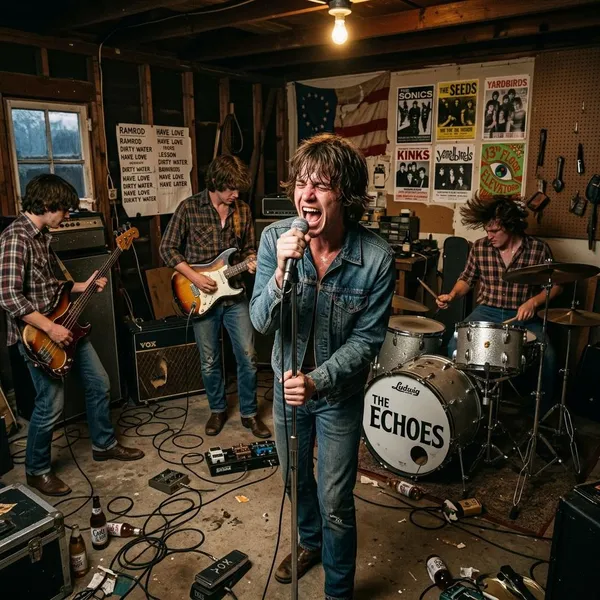
What makes a garage rock classic
A garage rock classic usually wins on feel before musicianship. The playing can be simple, the recording can be rough, and the singer may sound like they are pushing past their range, but the song still has a hook that sticks.
- Check the riff first: it should grab you quickly, not slowly unfold.
- Notice the roominess: buzzing amps, blunt drums, and imperfect vocals often add character.
- Keep the song length in mind: many essentials make their point in about two or three minutes.
Raw guitar sound
The guitar usually sounds sharp, fuzzy, trebly, or slightly overloaded. It does not need a complex part; it needs a tone with bite. A basic riff from The Sonics or The Troggs can hit harder than a cleaner, more technical rock part because the rough edge gives the song its attitude.
Simple driving rhythms
Garage rock rhythms tend to push straight ahead. Drums are blunt, bass parts are easy to follow, and the groove rarely asks for close analysis. That makes songs like Louie Louie and 96 Tears good entry points: the beat tells you what the song is doing before you know anything about the genre.
Rough energetic vocals
Garage singers often sound sneering, nasal, desperate, cocky, or half-shouted. That roughness is part of the appeal. The vocal should feel lived-in and urgent, not smoothed into a perfect rock performance.
Short direct songwriting
Most of the classics do not waste time. They build around a riff, a chant, an organ line, or one stubborn phrase, then get out before the energy drops. That is why the genre is easy to sample: ten songs can show more range than one long album-side jam.
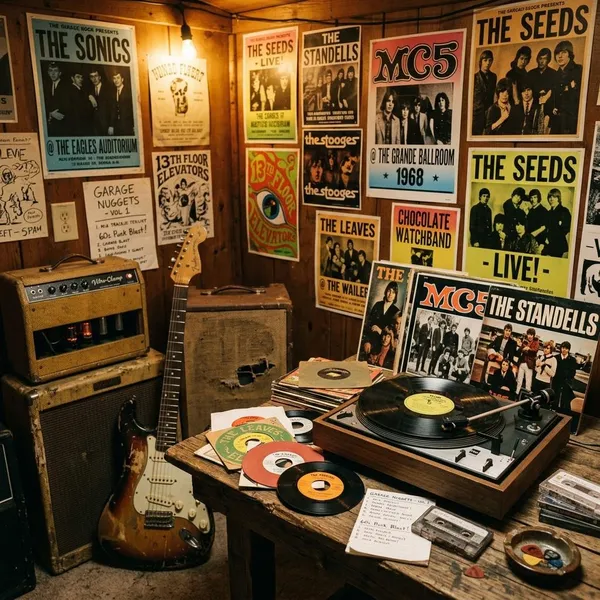
Essential garage rock classics
If you only want a starting set, begin with these seven songs. They do not cover every corner of the genre, but they give you the core flavors: party chaos, organ gloom, fuzz attack, hypnotic repetition, and rhythm-and-blues swagger.
- For instant recognition: Louie Louie and Wild Thing.
- For darker atmosphere: 96 Tears and Pushin' Too Hard.
- For maximum rawness: The Witch and Psychotic Reaction.
- For roots and swagger: Gloria.
Louie Louie by The Kingsmen
Louie Louie is the garage-rock "you can do this too" moment. The Kingsmen's version is loose, rowdy, and famously hard to understand, but that is exactly why it became so powerful. It made rock sound reachable rather than distant.
96 Tears by ? and the Mysterians
96 Tears proves garage rock is not only about guitar fuzz. The organ hook carries the song, while the vocal sounds wounded and slightly menacing. It is catchy, but not cheerful in a clean pop way.
This is the one to play for someone who thinks garage rock is just sloppy party music. It shows how minimal parts can create a strong mood without turning into full psychedelic rock.
Psychotic Reaction by Count Five
Psychotic Reaction feels like garage rock leaning toward punk before punk had a name. The riff is tense, the rhythm keeps pressing forward, and the breakdowns add drama without making the song complicated.
If your taste already runs toward punk or post-punk, start here or with The Sonics. The aggression will feel familiar, but the looseness keeps it rooted in the mid-1960s garage world.
Pushin' Too Hard by The Seeds
The power of Pushin' Too Hard is repetition. The Seeds do not need many changes because the groove, the organ, and Sky Saxon's irritated delivery keep tightening the mood. It is simple in structure but not bland in effect.
The Witch by The Sonics
The Witch is one of the fiercest early garage records. The vocal sounds wild, the drums hit hard, and the saxophone makes the whole track feel even more overheated. It can still surprise first-time listeners because it does not behave like a polite 1960s oldie.
Use this as the test for how raw you want your playlist to get. If it sounds exciting, move toward The Stooges, MC5, and modern fuzz-heavy garage. If it feels too abrasive, stay longer with The Kingsmen, Them, and ? and the Mysterians.
Wild Thing by The Troggs
Wild Thing is almost absurdly simple, which is the point. The riff is primitive, the rhythm is direct, and the song becomes memorable within seconds. It is a reminder that garage rock often works best when nothing gets over-explained.
Gloria by Them
Gloria sits close to rhythm and blues, but its swagger, repetition, and easy-to-grab chord pattern made it a garage-band staple. It is the kind of song local groups could learn quickly and make their own.
For a balanced starter playlist, place it near the end. It connects the raw garage sound back to older R&B roots while still pointing toward punky simplicity.
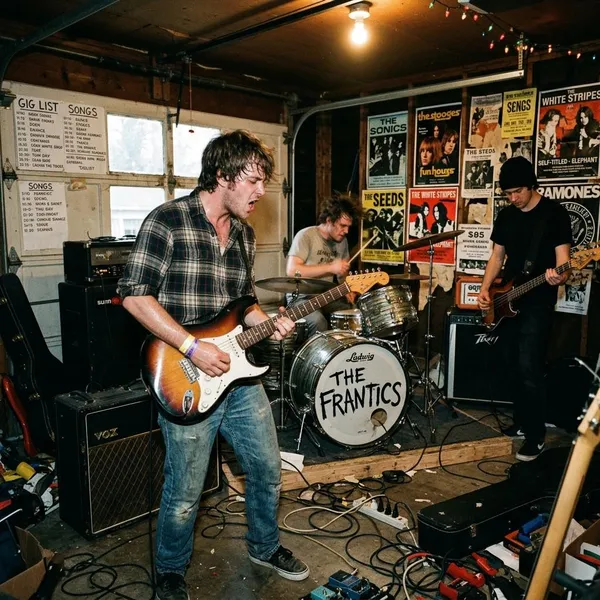
Garage rock bands that shaped the genre
Once the key songs make sense, the bands help you choose where to go next. Some groups are best for sheer attack, some for hypnotic hooks, and some for hearing how garage rock turned into psychedelia or proto-punk.
That matters because not every new listener wants the same path. A punk fan will probably connect with The Sonics and The Stooges faster. Someone coming from indie rock or 2000s revival bands may find The Kingsmen, The Seeds, and 13th Floor Elevators easier bridges.
The Sonics and their fierce early sound
The Sonics are the band to try when you want garage rock at its most violent and physical. Their recordings sound hot, loud, and almost overloaded, with vocals and drums that still feel ahead of their time.
They are not just important because they were heavy. Their songs stayed short and hooky, which kept the chaos usable. Start with The Witch, then try Have Love, Will Travel or Strychnine if you want more of that blown-out attack.
The Seeds and their hypnotic hooks
The Seeds made repetition feel strange rather than lazy. Their best songs sit on a narrow groove until the vocal attitude and organ lines become the hook.
The Kingsmen and their raw party energy
The Kingsmen matter because they turned imperfection into permission. Their version of Louie Louie made garage rock feel like something ordinary teenagers could attempt, not just something professionals could polish.
- Best for: the loose, communal, party-band side of the genre.
- Do not expect: the aggression of The Sonics or the weirdness of 13th Floor Elevators.
- Why they last: the performance feels alive even when it is messy.
13th Floor Elevators and their psychedelic edge
13th Floor Elevators are where the garage path starts opening into psychedelia. The songs still have urgency, but the atmosphere gets stranger and more unstable.
If you enjoy garage rock for quick hooks only, they may take a little longer to click. If you like the idea of a raw band pushing into acid-rock territory, they are essential.
The Stooges and MC5 as proto-punk links
The Stooges and MC5 are better understood as bridges than as pure garage bands. They took the roughness, repetition, and attitude of garage rock and made it heavier, harsher, and more confrontational.
How garage rock changed over time
Garage rock is easiest to understand as a chain rather than a single fixed sound. Early rock and roll gave young bands the basic tools, the mid-1960s created the classic singles, proto-punk made the music harder, and later revivals kept the attitude alive.
| If you already like... | Start with... | Then try... |
|---|---|---|
| Punk or grunge | The Sonics, Count Five | The Stooges, MC5 |
| Indie rock revival | The Kingsmen, The Seeds | The White Stripes, The Strokes, Ty Segall |
| Psych and organ-driven rock | ? and the Mysterians | 13th Floor Elevators, The Seeds |
Early 1960s rock and roll roots
Garage rock grew from young bands copying rock and roll, rhythm and blues, surf music, and beat-group records with limited gear. The roughness was often practical, not planned. They were learning fast, playing loud, and turning simple influences into local excitement.
Mid-1960s garage boom
The mid-1960s are the classic garage-rock moment. Local bands across the United States and beyond cut singles that mixed British Invasion influence, teen frustration, dance rhythms, and rough recording conditions.
Late-1960s proto-punk shift
By the late 1960s, some of the sound became louder, darker, and more confrontational. Psychedelia, heavier amplification, and a rougher cultural mood pushed garage energy toward proto-punk.
The important shift is attitude. Earlier garage often feels like a wild teen dance or local-band explosion; proto-punk starts to feel more like a threat. That is why The Stooges and MC5 sit so naturally after the rawest 1960s garage tracks.
Early-2000s garage revival
The early-2000s revival gave many younger listeners their first version of garage rock. Bands such as The White Stripes, The Strokes, The Hives, The Vines, and The Von Bondies brought back short songs, sharp riffs, and stripped-down arrangements, usually with cleaner modern production.
- Start modern if older recordings feel distant: try White Blood Cells or Is This It.
- Move back to the 1960s: listen for the same direct riffs and dry hooks in The Seeds, The Sonics, and The Kingsmen.
- Add proto-punk last: The Stooges and MC5 make more sense once the garage foundation is clear.
Modern lo-fi continuation
Garage rock still lives in indie, punk, psych, and lo-fi scenes. Modern acts may sound cleaner, noisier, heavier, or stranger than the 1960s bands, but the preference for immediacy over polish remains the link.

How garage rock differs from related styles
Garage rock overlaps with punk, psychedelic rock, surf rock, and mainstream rock, so genre labels can get blurry. The useful distinction is not a strict rulebook; it is the feeling of a band choosing urgency and character over polish.
Looser and less polished than punk
Punk usually tightens the attack. It is often faster, sharper, and more confrontational. Garage rock can be aggressive, but it tends to wobble more, swing more, and keep stronger ties to 1960s rock and rhythm and blues.
If punk feels like a clenched fist, garage often feels like a band barely holding the room together. That looseness is not a weakness; it is one of the reasons the records can feel so alive.
More direct than psychedelic rock
Garage and psychedelic rock often meet in the late 1960s, but they usually want different things. Psychedelic rock leans toward atmosphere, expansion, and altered texture. Garage rock normally stays closer to the riff, the beat, and the short hook.
A garage song can use organ, fuzz, echo, or strange vocals without becoming a long trip. Once the song starts drifting more than punching, you are probably moving toward psych.
Rougher and heavier than surf rock
Surf rock often has cleaner guitar lines, more instrumental precision, and a sleeker sense of motion. Garage rock is usually rougher around the edges and more vocal-driven, with more sneer, shout, or teenage frustration in the center.
Less refined than mainstream rock
Mainstream rock usually aims for broader appeal, cleaner production, and more consistent performance. Garage rock often leaves the seams showing. You hear the amp strain, the simple chord changes, and the pressure in the vocal.
That does not make it lesser. It just means the listening standard changes. Judge garage rock by urgency, hook, and attitude before judging it by polish.
Conclusion
The best way into garage rock is to start small and listen for impact: one riff, one rough vocal, one beat that refuses to sit still. Begin with the seven essentials, then choose your next path by taste—The Sonics if you want force, The Seeds if you want mood, The Kingsmen if you want looseness, and the revival bands if modern production helps you connect. Once the rough edges stop sounding like flaws, the whole genre opens up quickly.