
The best heavy metal classic rock bands to start with are the ones that show a clear step from heavy rock into metal: Black Sabbath for darkness, Deep Purple for speed, Led Zeppelin for blues-powered force, Judas Priest for the traditional metal sound, and Iron Maiden for melody and scale. If you already like classic rock, do not begin by arguing over labels; begin by matching the sound to what you already enjoy.
Foundational heavy bands of the 1970s
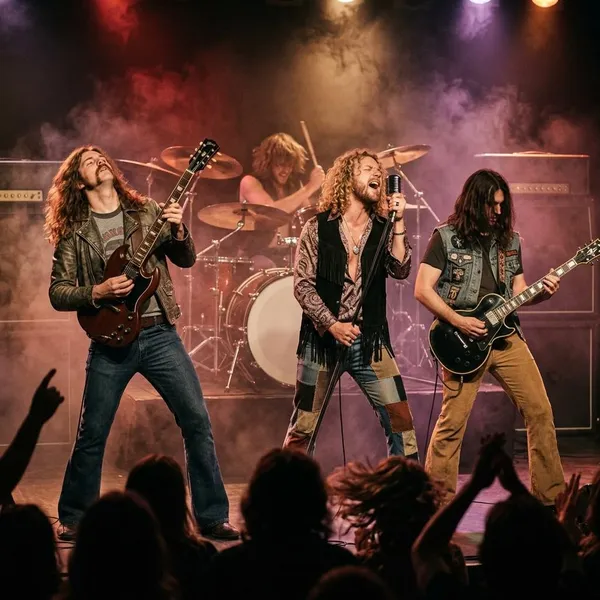
The 1970s are where heavy music stopped being just louder rock and started becoming something with its own weight, mood, and attack. The useful way to hear this era is not as one neat category, but as several paths forming at once.
If your taste leans toward bluesy classic rock, start with Led Zeppelin or Deep Purple before moving into Sabbath. If you want the heavier mood immediately, start with Black Sabbath and then use the others to hear how wide early heavy music already was.
Black Sabbath and the metal blueprint
Black Sabbath is the clearest starting point for understanding heavy metal. Tony Iommi's riffs made heaviness feel like the center of the song, not just an effect added to hard rock. Tracks such as "Iron Man," "War Pigs," and "Children of the Grave" still work because the riffs are simple, dark, and physically heavy.
The band's real breakthrough was atmosphere. Sabbath left space in the music, used slower tempos without losing force, and made dread part of the sound. That is why doom metal, stoner metal, and traditional metal all trace so much back to them.
Deep Purple and fast heavy rock
Deep Purple took another route: speed, precision, and instrumental firepower. "Highway Star" and "Smoke on the Water" show how hard rock could become sharper and more aggressive without losing its groove. Ritchie Blackmore's guitar and Jon Lord's organ gave the band a driving sound that feels closer to early metal than ordinary blues rock.
Led Zeppelin and blues-driven power
Led Zeppelin belongs in the conversation because their heaviest songs helped shape the vocabulary of metal. "Immigrant Song," "Black Dog," and "Whole Lotta Love" have the volume, swagger, and impact that later metal bands built on.
They are better understood as a bridge than as a pure metal band. Their catalog also includes folk, acoustic pieces, and deep blues roots, so a classic rock fan may find Zeppelin the easiest entry point before moving into darker or more metallic bands.
Thin Lizzy and twin-guitar melody
Thin Lizzy matters because they showed that heavy rock could be tough and melodic at the same time. Phil Lynott's songwriting gave the band personality, while the twin-guitar harmonies influenced later metal acts, especially Iron Maiden. If Sabbath teaches weight, Thin Lizzy teaches movement, hooks, and guitar lines that sing.
Classic heavy metal bands of the 1980s
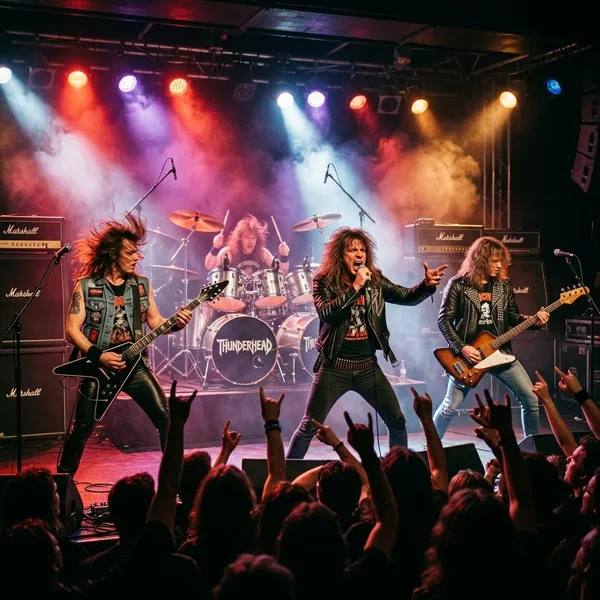
By the 1980s, heavy metal sounded less like a branch of hard rock and more like a defined style. The guitars became tighter, the vocals more dramatic, and the band identities easier to recognize.
Judas Priest and traditional metal
Judas Priest sharpened metal into a cleaner, more metallic form. The blues looseness faded, the twin guitars became more precise, and Rob Halford's vocals gave the music a commanding edge.
- Start with: "Breaking the Law," "Metal Gods," or "Electric Eye."
- Best fit for: listeners who want classic metal that is direct, tight, and easy to recognize.
- Common mistake: hearing only the big choruses and missing how disciplined the riffing is.
Iron Maiden and melodic epics
Iron Maiden made metal feel adventurous. Galloping bass, harmonized guitars, and story-driven songs gave them a bigger sense of motion than most hard rock bands. If you like melody, drama, and songs that feel like a journey, Maiden is one of the safest first choices.
Dio and dramatic heavy metal
Dio is ideal for listeners who love powerful vocals. Ronnie James Dio brought a theatrical style without making the songs feel bloated, and Holy Diver remains one of the easiest traditional metal albums to enjoy from front to back.
The fantasy imagery can seem large at first, but the songwriting is very grounded. "Rainbow in the Dark" and "Holy Diver" are good tests: if those work for you, Dio's classic period is worth exploring further.
Motörhead and raw speed
Motörhead is the choice when polished classic rock feels too clean. Lemmy's bass tone, the rough production, and the relentless pace made the band a bridge between hard rock, punk, and metal. Start with "Ace of Spades" and expect impact rather than refinement.
Scorpions and melodic hard rock
Scorpions sit comfortably between melodic hard rock and classic heavy metal. Their best-known songs have huge choruses, but the guitar work has enough bite to make them more than a radio-friendly rock band.
Accept and German metal power
Accept brought a more forceful European attack: compact riffs, chant-like hooks, and a tough vocal style from Udo Dirkschneider. Balls to the Wall is the obvious entry point, especially if you want something less ornate than Dio and less sprawling than Iron Maiden.
How these classic metal bands sound different
The quickest way to choose a band is to listen for what creates the heaviness. Some bands use slow pressure, some use speed, some use melody, and some rely on raw attitude.
| Sound you want | Best first band | What to notice |
|---|---|---|
| Dark and heavy | Black Sabbath | Slow riffs, space, ominous mood |
| Sharp and traditional | Judas Priest | Tight rhythm guitar and clean metal attack |
| Melodic and epic | Iron Maiden | Galloping rhythms and harmonized guitars |
| Rough and fast | Motörhead | Distorted bass, speed, punk-like urgency |
| Catchy but heavy | Scorpions | Big hooks with hard-rock power |
Slow and dark with Black Sabbath
Sabbath feels heavy because the riffs have room to breathe. The slower pace makes the guitar tone and atmosphere feel larger, which is why their music can sound heavier than faster bands. Choose Sabbath first if you want mood, darkness, and riffs that feel carved in stone.
Fast and sharp with Judas Priest
Priest sounds more polished and pointed. The guitars cut instead of looming, and even the simpler songs feel built for forward motion. This is the band to hear when you want the line between hard rock and traditional heavy metal to become clearer.
Melodic and epic with Iron Maiden
Maiden's heaviness comes from movement. The songs often build through rhythm changes, guitar harmonies, and vocal drama rather than staying on one crushing riff.
If you come from progressive rock or melodic classic rock, Maiden may click faster than Sabbath or Motörhead because the music rewards repeat listening without losing energy.
Raw and aggressive with Motörhead
Motörhead is not subtle, and that is the point. The band sounds like speed, volume, and attitude pushed into a simple shape. Pick them when you want something dirtier than classic hard rock but less technical than later extreme metal.
Catchy and anthemic with Scorpions
Scorpions make heaviness easy to live with. The choruses are immediate, the guitar work is polished, and the songs often feel built for large rooms rather than dark corners. They are a good choice when you want metal energy without constant intensity.
Essential classic heavy metal albums
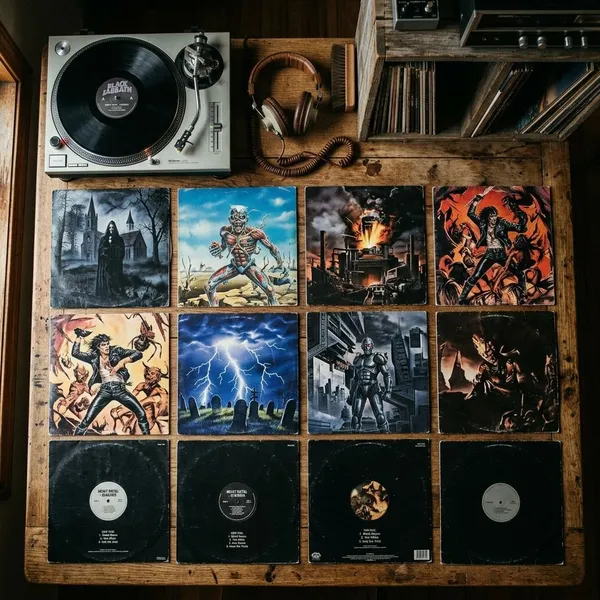
A good first album should match your taste, not just its historical reputation. If you like bluesy classic rock, begin with Machine Head or Blackout. If you want the metal blueprint, choose Paranoid. If you want a clean 1980s metal sound, go with British Steel or The Number of the Beast.
Paranoid by Black Sabbath
Paranoid is the strongest first Sabbath album because the major songs are immediate and the mood is unmistakable. "War Pigs," "Paranoid," and "Iron Man" explain the band's importance without needing much background.
Machine Head by Deep Purple
Machine Head captures Deep Purple's speed, groove, and instrumental force in one place. It is especially useful if you want to hear how hard rock pushed toward metal without fully leaving its rock roots behind.
British Steel by Judas Priest
British Steel is concise, catchy, and extremely clear in its metal identity. The songs are short enough for beginners, but the sound is sharp enough to show why Judas Priest became a traditional metal benchmark.
The Number of the Beast by Iron Maiden
The Number of the Beast is the best Maiden gateway for many listeners because it balances speed, melody, and drama. "Run to the Hills" gives you the hook; "Hallowed Be Thy Name" shows the scale.
Holy Diver by Dio
Holy Diver works well when vocals matter to you. The riffs are strong, but Ronnie James Dio's voice is the main reason the album feels so commanding. It is dramatic without being difficult to enter.
Ace of Spades by Motörhead
Ace of Spades is the album to play when you want speed and grit. It may not sound polished next to Priest or Scorpions, but its roughness is exactly why it influenced so much later metal and punk-adjacent hard music.
Blackout by Scorpions
Blackout is a strong pick for listeners who want big choruses with real guitar weight. It sits near the border of hard rock and heavy metal, which makes it a natural bridge from classic rock radio into heavier music.
Balls to the Wall by Accept
Balls to the Wall gives Accept's sound in a compact form: firm riffs, tough vocals, and a chant-like title track. Try it after Priest or Maiden if you want a more direct European metal feel.
Hard rock proto-metal and heavy metal differences
Hard rock, proto-metal, and heavy metal overlap, so the labels are best used as listening tools rather than strict borders. The simple check is this: does the song still swing like blues rock, does it point toward metal, or does it make heaviness the main purpose?
This matters most with bands such as Led Zeppelin, Deep Purple, and Scorpions, because different songs can land in different places. A band does not need one fixed label for every track to be important to metal history.
Hard rock keeps stronger blues roots
Hard rock usually keeps more blues swing in the rhythm and vocal phrasing. Led Zeppelin is the clearest example here: even their heavy songs often carry a loose, earthy feel underneath. If the groove feels flexible and blues-based, you are probably closer to hard rock.
Proto-metal points toward a heavier sound
Proto-metal is the transition zone. The riffs get heavier, the playing becomes more aggressive, and the volume feels more central, but the full metal identity is not always there yet. Deep Purple and certain Led Zeppelin tracks are useful examples because they show metal forming before the rules were settled.
Heavy metal makes weight and intensity central
Heavy metal treats heaviness as the main event. That may mean dark riffs, sharper rhythm guitar, dramatic vocals, or a stronger sense of power. Black Sabbath defined the early shape, while Judas Priest and Iron Maiden made the style more precise and recognizable.

Conclusion
The smartest way into classic metal is to follow the sound that already pulls you in: Sabbath for dark weight, Priest for sharp traditional metal, Maiden for melody and scale, Motörhead for raw speed, and Scorpions for a smoother rock-to-metal bridge. Once those differences are clear, the old label arguments matter less, and the music becomes much easier to explore with your own ears.