
Yes, Queen is classic rock, especially in the way most listeners, radio stations, and playlists use the label. The better answer is not that Queen fits one neat genre box, but that they are a central classic rock band whose songs also pull from hard rock, glam, prog, pop, funk, and opera-inspired rock.

Why Queen belongs in classic rock
Queen fits classic rock for three practical reasons: they broke through in the classic rock era, they had a strong guitar-led identity, and their songs became part of the long-term rock radio canon. If you are making a rock playlist, sorting a record collection, or answering the question in a music discussion, calling Queen classic rock is safe.
- Use "classic rock" for the band overall. It describes Queen's era, impact, and public reputation well.
- Use a narrower label for individual songs. "Stone Cold Crazy" leans hard rock and early metal; "Killer Queen" leans glam; "Another One Bites the Dust" leans funk-pop.
- Do not judge Queen only by the biggest hits. The catalog is much heavier and stranger than a few stadium anthems suggest.
The band rose to prominence during the 1970s
Queen's timing is one of the clearest reasons they are considered classic rock. Their debut album came out in 1973, and by the mid-to-late 1970s they were one of the major rock acts of the period, alongside the bands most people already place in the classic rock canon.
That matters because classic rock is not only a sound. It is also an era-based label. A band that made major guitar-driven records in the 1970s and stayed culturally relevant for decades fits the category even if its songs do not all sound alike.
Brian May's guitar shaped their signature sound
Brian May's guitar gives Queen a rock core even when the arrangement around it gets theatrical. His layered harmonies, bright sustain, and melodic solos made the band instantly recognizable, while riffs in songs like "Tie Your Mother Down," "Keep Yourself Alive," and "Hammer to Fall" connect directly to classic rock and hard rock.
Their biggest songs became rock radio staples
Classic rock radio is a big part of the answer. "Bohemian Rhapsody," "We Will Rock You," "We Are the Champions," and "Fat Bottomed Girls" have lived on rock stations, stadium speakers, films, and public playlists for decades.
Their concerts helped define arena rock
Queen's live shows strengthened their classic rock identity because the band knew how to make huge crowds feel involved. Stomp rhythms, handclaps, call-and-response moments, and big choruses turned songs into shared events rather than just performances.
If your idea of classic rock includes arena-scale confidence, Queen is almost impossible to leave out. Freddie Mercury's stage control and the band's Live Aid performance remain reference points for what a large rock show can feel like.
Their influence continues across generations
Queen still reaches listeners who were not alive when the records were released. Some people first hear the band through parents, others through films, sports events, streaming playlists, or short clips online. That cross-generational life is one reason Queen feels less like a "legacy act" and more like a permanent part of rock culture.
Queen's genres beyond classic rock
The catch is that "classic rock" does not explain the whole band. Queen used rock as a base, then stretched it with glam style, progressive structures, operatic vocals, pop hooks, and funk grooves. That is why two listeners can both be right: one hears a classic rock band, while another hears a band that refuses to stay inside classic rock.
Glam rock in Killer Queen
"Killer Queen" shows Queen's glam rock side through style, wit, polish, and theatrical character. It is not heavy in the same way as "Stone Cold Crazy," but it still has rock energy underneath the elegant vocal phrasing and sharp arrangement.
Progressive rock in The March of the Black Queen
"The March of the Black Queen" leans into progressive rock because it moves through changing sections, moods, vocal layers, and dramatic shifts instead of staying in a simple verse-chorus pattern. For listeners who only know the radio hits, it is one of the best early clues that Queen was more ambitious than a standard rock singles band.
Operatic rock in Bohemian Rhapsody
"Bohemian Rhapsody" is both a classic rock song and an operatic rock landmark. The ballad opening, stacked vocal middle section, and hard rock climax make it hard to classify narrowly, but its era, impact, and long radio life place it firmly inside classic rock culture.
Pop and funk in Another One Bites the Dust
"Another One Bites the Dust" is the Queen song most likely to make a strict genre debate messy. It is built around John Deacon's bass groove and uses space, repetition, and rhythm more than guitar weight.
If you are building a classic rock playlist for someone who wants riffs and big choruses, this may not be the first Queen track to choose. If you are explaining Queen's range, though, it is essential because it shows how far the band could move from its rock base without sounding anonymous.
Queen songs that sound most like classic rock
The most classic-rock-sounding Queen songs usually have loud guitars, direct momentum, strong drums, and choruses that work live. These are the best starting points if you want to hear Queen at their most rock-focused before moving into the theatrical or funkier material.
| Song | Why it fits classic rock |
|---|---|
| Keep Yourself Alive | Early guitar-driven Queen with urgency and bite |
| Stone Cold Crazy | Fast, heavy, and close to early metal |
| Tie Your Mother Down | Big riff, swagger, and live-stage energy |
| We Will Rock You | Arena rhythm and crowd participation |
| Fat Bottomed Girls | Heavy groove and late-1970s rock attitude |
| Hammer to Fall | 1980s Queen with a hard rock center |
| I Want It All | Late-period anthem with strong guitar drive |
Why Queen's genre is sometimes debated
Queen's genre is debated because people often use "classic rock" in two different ways. A radio listener usually means a major older rock act with lasting songs. A music fan analyzing a specific track may mean the exact style, structure, rhythm, and arrangement. Queen passes the first test easily, while the second test changes from song to song.
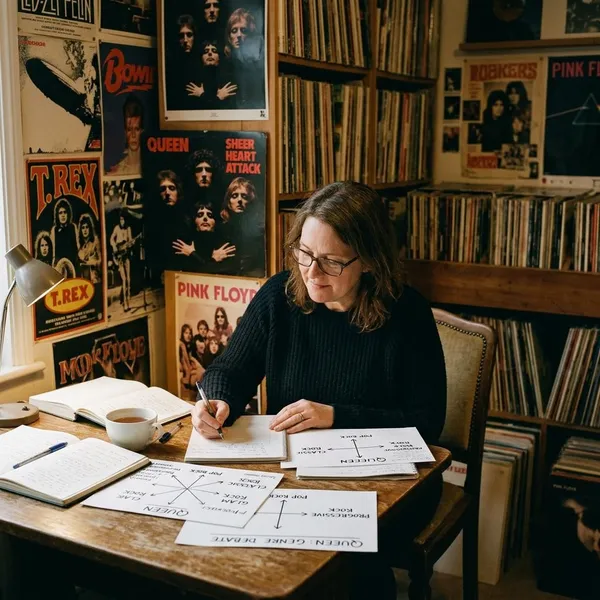
That distinction helps in real situations. If you are adding Queen to a classic rock night, the label works. If you are describing "Another One Bites the Dust" in a music class or review, calling it only classic rock misses the funk and pop elements that shape the song.
Their sound changed from song to song
Queen could move from heavy rock to music-hall playfulness, from operatic drama to funk groove, without making the change feel like a gimmick. That variety is exciting for listeners, but it makes one-word genre labels less useful.
Their albums crossed several rock styles
Queen albums often contain several versions of rock at once: hard rock riffs, glam polish, progressive structures, piano-led drama, and theatrical harmonies. The songs stay connected because of the band's recognizable voices, guitar textures, and sense of scale, not because every track follows the same genre rule.
That is why a deep-cut fan and a casual greatest-hits listener may describe Queen differently. Both may be hearing real parts of the band, just from different entry points.
Their biggest hits included pop and theatrical elements
Many of Queen's most famous songs are not straight-ahead rock in a narrow sense. "Bohemian Rhapsody" is theatrical, "Killer Queen" is stylish and glam-influenced, and "Radio Ga Ga" is much more synth-pop-oriented than early Queen.
Those elements can make Queen seem less like a standard hard rock band, but they do not remove the band from classic rock. They explain why Queen's version of classic rock is broader, more dramatic, and more pop-aware than many of their peers.
Classic rock is broader than a single musical genre
Classic rock includes hard rock, glam rock, blues rock, folk rock, progressive rock, and arena rock. It is better understood as a cultural and historical umbrella than as one strict sound. Queen fits under that umbrella because of their era, influence, and lasting presence.
Radio labels and musical genres serve different purposes
A radio label helps people know what kind of listening experience to expect. A musical genre label describes how a song is built. Queen is classic rock as a band in the radio and cultural sense, but individual songs may be better described as hard rock, glam rock, progressive rock, operatic rock, funk rock, or pop rock.
Conclusion
Queen is best understood as classic rock first, but not classic rock only. If you need the simple label for a playlist, radio category, or casual conversation, it fits; if you are talking about a specific song, check the arrangement before choosing a narrower genre. That flexibility is not a weakness in the label — it is the reason Queen still feels bigger than the category that contains them.