
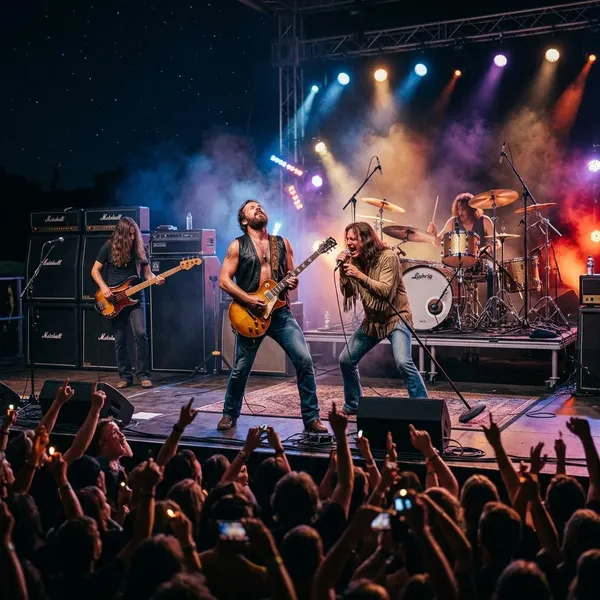
The best live classic rock recordings usually win for one clear reason: the song sounds more complete onstage than it does in the studio. Start with Cheap Trick, Kiss, Bob Seger, Peter Frampton, and the Allman Brothers if you want the easiest proof; each live version adds something the studio cut only hints at.
Best live classic rock songs that beat the studio versions
A live version is not automatically better because it is louder or longer. The strongest ones change the feel of the song: the tempo snaps into place, the vocal carries more weight, the crowd becomes part of the hook, or the band finds a shape that the studio recording never quite reached.
I Want You to Want Me — Cheap Trick at Budokan
Cheap Trick's studio version is a neat power-pop song; the At Budokan version is the one that feels alive. The pace is brighter, Robin Zander sounds sharper, and the Japanese crowd gives the chorus a lift that turns a catchy track into a signature moment.
This is a good first comparison for casual listeners because the difference is immediate. The live recording does not need a long jam or a dramatic rearrangement to win. It simply makes the song sound like it found its natural setting.
Rock and Roll All Nite — Alive!
"Rock and Roll All Nite" makes the most sense when it sounds communal. The studio cut has the chant, but the Alive! version gives it the room, noise, and swagger it needs to become a real crowd anthem.
For Kiss, that matters more than polish. The band's whole identity depends on spectacle and audience response, so the live version feels less like an alternate take and more like the proper version of the song.
Turn the Page — Live Bullet
Bob Seger's Live Bullet performance works because the setting matches the lyric. A song about road weariness, distance, and repetition sounds more convincing when it is sung in front of a crowd by someone who seems to be carrying that fatigue in his voice.
The saxophone also lands differently here. Instead of sounding like a studio color, it becomes part of the late-night atmosphere. If you care more about storytelling than volume, this is one of the most persuasive live upgrades in classic rock.
Do You Feel Like We Do — Frampton Comes Alive!
The studio version of "Do You Feel Like We Do" is not the version most people picture. The Frampton Comes Alive! recording stretches the song into a guitar showcase without losing its melodic pull, and the talk box becomes a genuine performance moment rather than a novelty.
It is best heard when you have time for the full build. Skipping around misses the point: the live take earns its length by moving through peaks, crowd reaction, guitar phrasing, and release.
Why these live versions sound better
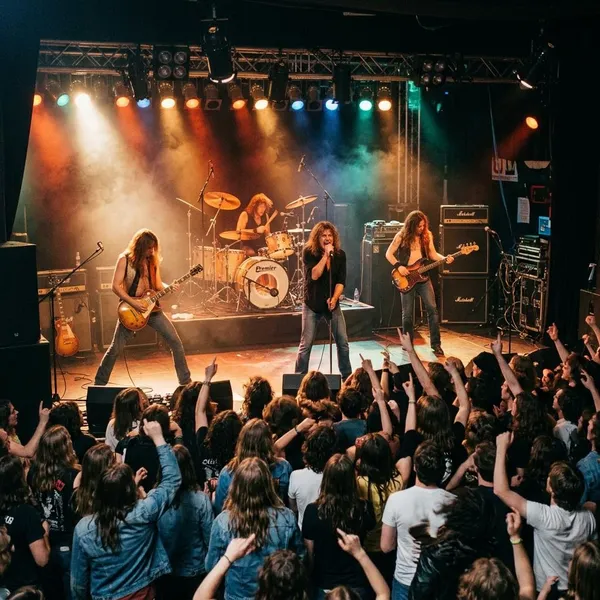
The useful way to judge a live version is to ask what changed. Did the singer find the lyric? Did the band tighten the groove? Did the crowd add drama? Did a solo become the emotional center of the song?
Not every live recording improves the studio cut. Some are messy, too long, or carried by applause more than performance. The best classic rock examples usually win because at least one major element becomes clearer onstage.
More powerful vocals
A singer often understands a song better after living with it on tour. The phrasing becomes more natural, the climaxes feel less cautious, and small imperfections can make the performance more believable.
Paul McCartney's "Maybe I'm Amazed" on Wings Over America is a good example. The vocal has more edge and urgency than the studio recording, which makes the tenderness of the song feel less polished and more exposed.
Bigger crowd energy
Crowd energy helps most when the song already invites participation. Big choruses, chants, dramatic pauses, and familiar endings all gain force when the room reacts at the right moments.
- Best fit: anthems like "Rock and Roll All Nite."
- Less useful: delicate songs where applause can break the mood.
- What to check: whether the crowd supports the performance or distracts from it.
Longer solos and jams
Longer does not mean better by itself. A live jam works when the added time creates movement: tension, response, variation, and a payoff that the studio cut did not have room to deliver.
That is why "Whipping Post," "Free Bird," and "Do You Feel Like We Do" hold up. Their live versions are not just expanded; they give the musicians space to make the song feel larger without losing the thread.
Stronger arrangements
Touring can reveal what a song needs. A band may speed up the tempo, toughen the guitar part, change the ending, or simplify a section that sounded too polite in the studio.
Cheap Trick's "I Want You to Want Me" is the cleanest example here. The Budokan version has more snap and a better sense of lift, so the hook lands harder without needing a complicated redesign.
More natural band chemistry
Some bands sound best when the musicians are reacting in real time. Listen for the rhythm section pushing a chorus, guitars answering each other, or a singer leaving just enough space for the band to breathe.
This is where groups like the Allman Brothers Band and Lynyrd Skynyrd shine. If the studio version feels tidy but the live version feels connected, chemistry is probably the reason.
Best live versions by listening style
The right starting point depends on what you enjoy. Someone building a party playlist should not begin with a long blues-rock jam, while a guitar-focused listener may find a short crowd anthem too simple.
Crowd anthem — Rock and Roll All Nite
Pick the Alive! version when you want instant arena energy. The chorus is simple, the crowd response is central, and the performance captures Kiss doing exactly what Kiss was built to do.
Extended jam — Whipping Post
Choose "Whipping Post" when you want a song that develops instead of simply repeats. It rewards patient listening, especially if you enjoy guitar interplay and shifting dynamics more than quick radio structure.
Guitar showcase — Do You Feel Like We Do
For a classic rock guitar moment that is still accessible, "Do You Feel Like We Do" is hard to beat. Frampton's tone, phrasing, and talk box section give the live version a personality the studio cut cannot match.
Emotional vocal — Maybe I'm Amazed
"Maybe I'm Amazed" from Wings Over America is the better pick if you want feeling over spectacle. The performance is polished, but McCartney's vocal has enough strain and urgency to make the song hit harder.
Storytelling performance — Turn the Page
"Turn the Page" is the live choice for late-night listening, road-trip mood, or anyone drawn to songs where the performance makes the lyric more believable. The live setting strengthens the loneliness rather than fighting it.
Epic finale — Free Bird
"Free Bird" from One More from the Road works best as a closer. The long build, audience anticipation, and extended guitar section make it feel like an event, not just a longer version of a familiar song.
Essential classic rock live albums
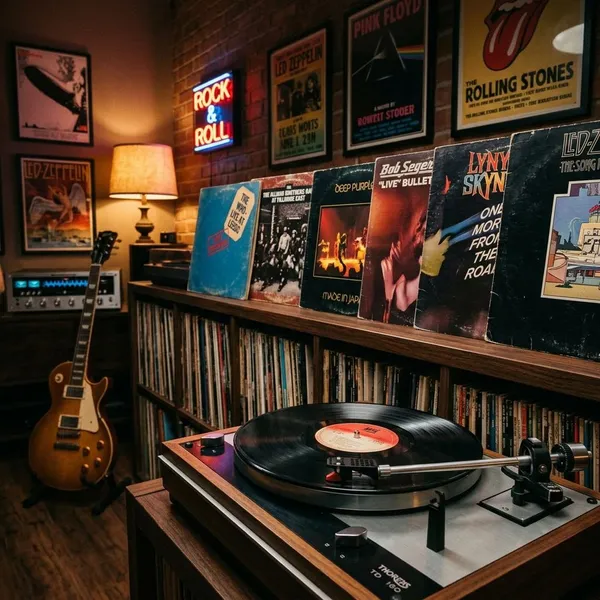
Single tracks are the quickest entry point, but full live albums show whether a band could sustain that energy across a set. The best records here do more than preserve famous songs; they show a stage identity that studio albums only partially captured.
If you are choosing one album first, match it to your listening mood: hooks, spectacle, storytelling, guitar, improvisation, polish, or Southern rock sprawl.
Cheap Trick at Budokan — Cheap Trick
Cheap Trick at Budokan is the easiest recommendation for listeners who want hooks with more bite. It is energetic, concise, and full of personality, with "I Want You to Want Me" as the obvious proof that the band's songs grew stronger in front of an audience.
Alive! — Kiss
Alive! is less about subtlety and more about impact. It turns Kiss into the larger-than-life band people remember: loud guitars, big choruses, crowd noise, and the feeling that the show is the point.
Start here if you want a live album that feels theatrical from the first few minutes. Skip it as a first pick if you prefer warm musicianship over arena spectacle.
Live Bullet — Bob Seger and the Silver Bullet Band
Live Bullet has grit without sounding careless. Seger's voice carries the record, but the band gives the songs enough weight and atmosphere to make the performances feel lived-in.
It is a strong choice for listeners who like road songs, working-band energy, and live records that feel human rather than flashy.
Frampton Comes Alive! — Peter Frampton
Frampton Comes Alive! may be the safest first classic rock live album for a beginner. It has famous songs, clear sound, strong guitar moments, and enough warmth to work even if you are not usually drawn to long live albums.
- Start here for: melody, guitar, and accessibility.
- Best-known live moment: "Do You Feel Like We Do."
- Good scenario: a first live-rock album for someone who wants more than just crowd noise.
Wings Over America — Wings
Wings Over America shows Paul McCartney in a polished but still emotionally active live setting. It works well for listeners who want strong vocals, familiar songwriting craft, and a cleaner concert-album feel.
One More from the Road — Lynyrd Skynyrd
One More from the Road is the Southern rock choice: multiple guitars, patient builds, and a band comfortable letting songs stretch. "Free Bird" is the famous centerpiece, but the album also shows how well Skynyrd handled dynamics across a full set.
Conclusion
The live version is worth choosing when it gives the song a stronger identity, not just a louder mix. For quick impact, start with Cheap Trick or Kiss; for musicianship, go to the Allmans or Frampton; for emotional storytelling, play Seger or McCartney. The studio cuts still matter, but these performances show why some classic rock songs only become definitive once a crowd and a stage are involved.