
The best long classic rock songs are not just long for the sake of it; they earn the extra minutes with a strong riff, a real build, a memorable solo, or an atmosphere that needs room to settle. If you are new to them, start with the seven-to-nine-minute classics before jumping into the full progressive rock suites and live jams.
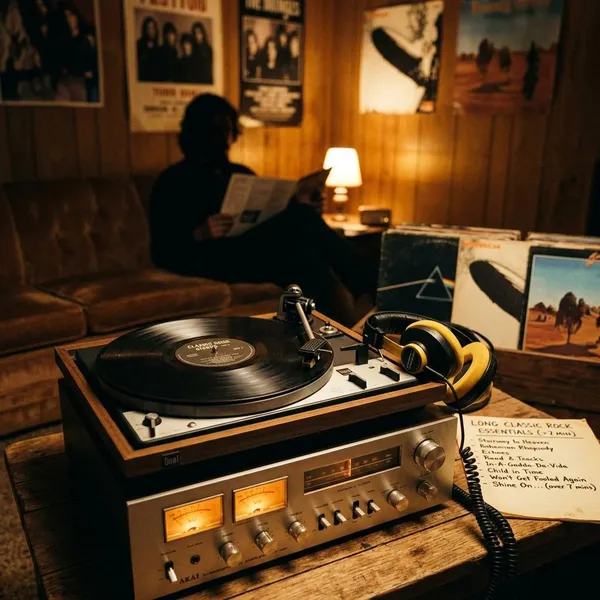
Best long classic rock songs over 7 minutes
These are the easiest entry points because they still feel like songs rather than full album-side journeys. Most have a clear hook, a familiar vocal line, or a dramatic ending, so they work well for a first playlist, a road trip, or anyone who wants classic rock depth without committing to a 20-minute suite.
Free Bird by Lynyrd Skynyrd
"Free Bird" is the obvious starting point because its shape is so easy to feel: slow farewell ballad first, then a guitar finale that keeps climbing. The ending works because the quiet opening gives it emotional weight. It is a good pick when you want a long song that still delivers a huge, unmistakable payoff.
Stairway to Heaven by Led Zeppelin
"Stairway to Heaven" is long, but it never feels difficult to follow. It moves from folk-like calm to full hard rock in a way that feels almost inevitable, which is why it became a gateway song for listeners who do not usually seek out extended rock.
If you are making a beginner-friendly long-song playlist, put this near the front. It teaches the basic appeal of the format: one idea can grow into something much bigger without losing its melody.
Kashmir by Led Zeppelin
"Kashmir" proves that a long rock song does not need constant section changes. Its power comes from the repeated riff, the heavy groove, and the orchestral scale. This is the one to choose when you want something hypnotic rather than solo-heavy.
Won't Get Fooled Again by The Who
The Who use the longer runtime to build pressure. The keyboard pulse, the band's controlled aggression, and Roger Daltrey's famous scream all land harder because the song takes its time getting there.
It is also a useful reminder that not every classic rock epic is progressive rock. Sometimes the extra space simply lets a direct, angry song become more explosive.
Riders on the Storm by The Doors
"Riders on the Storm" is a late-night long song: soft rain effects, electric piano, jazz-leaning drums, and a mood that feels better when it is not rushed. It is ideal for headphone listening or a quiet drive, but probably not the first choice if you want a big guitar climax.
Layla by Derek and the Dominos
"Layla" earns its length through contrast. The first half is urgent and riff-driven; the piano coda turns the same heartbreak into something more reflective. Skipping the long ending gives you the hit, but the full version gives you the emotional release.
Long classic rock songs over 10 minutes
Once a track passes 10 minutes, the listening decision changes. These songs usually need more attention, especially if they are built as suites, concept pieces, or improvisational jams. Save them for moments when you can let the whole thing play; cutting them off halfway often misses the point.
Echoes by Pink Floyd
"Echoes" is one of the best first choices for anyone ready to move beyond the seven-minute classics. It runs more than 20 minutes, but it has enough melody, atmosphere, and returning themes to feel like a journey rather than a test of patience.
The middle stretch gets stranger and darker, so it works best when you are listening actively. As background music, some of its detail disappears.
Close to the Edge by Yes
"Close to the Edge" is dense, bright, and restless. Yes pack the song with quick shifts, vocal harmonies, instrumental runs, and recurring themes, but the track keeps moving instead of turning into disconnected parts.
Choose this when you want the more technical side of long classic rock. If you prefer bluesy jams or simple riffs, it may be better after you have already warmed up with Pink Floyd or Rush.
2112 by Rush
"2112" is easy to follow because it gives the listener a story. The sections feel like chapters, and Rush's hard rock precision keeps the concept from becoming vague. It is one of the best long songs for listeners who like a clear narrative arc.
Supper's Ready by Genesis
"Supper's Ready" is theatrical and strange, with pastoral passages, surreal imagery, and big dramatic turns. It is not the neatest entry point, but it is one of the richest examples of early progressive rock ambition.
Thick as a Brick by Jethro Tull
"Thick as a Brick" is both playful and serious. Jethro Tull stretch folk, rock, flute-led passages, and satire into a long-form piece that feels more lively than its runtime suggests.
This is a good pick if you want something ambitious without the heavy mood of Pink Floyd or Genesis. It has complexity, but it also has wit.
In-A-Gadda-Da-Vida by Iron Butterfly
"In-A-Gadda-Da-Vida" is built around a simple, stubborn riff, which makes it easier to enter than many progressive epics. The organ, guitar, and drum break stretch the idea into a heavy psychedelic ritual.
Its importance is partly historical: it helped make very long rock tracks feel possible in a mainstream setting. It may not be the most refined song here, but it is one of the clearest bridges between garage psychedelia and heavier album rock.
Dogs by Pink Floyd
"Dogs" is cold, patient, and cynical. The long instrumental sections are not there for flash; they give the song's bitterness time to sink in. It is a better choice for focused listening than casual party play.
The End by The Doors
"The End" is hypnotic, dark, and unsettling. It is not a casual listen, and that is part of its reputation. The repetition creates a trance-like pull while Jim Morrison's vocal presence makes the track feel increasingly tense.
Child in Time by Deep Purple
"Child in Time" is built on dramatic contrast: restrained organ passages, Ian Gillan's soaring vocal peaks, and explosive hard rock sections. It is one of the strongest choices if you want intensity without jumping straight into a full progressive suite.
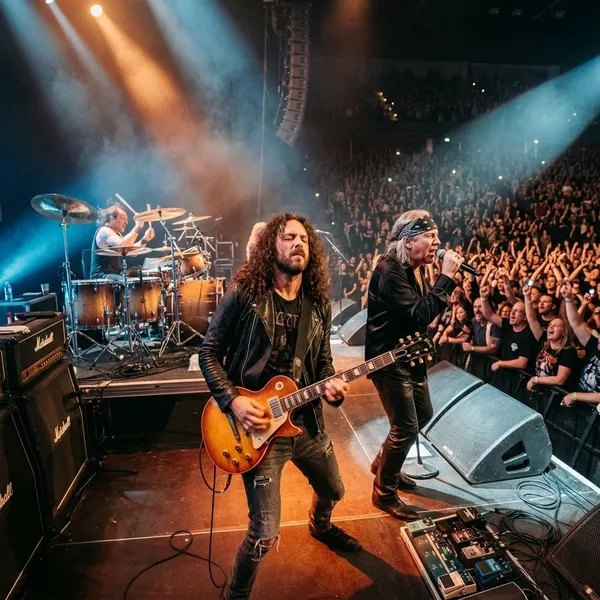
Best live versions of long classic rock songs
Live versions can be better, but they are not automatically better. A studio version may have tighter pacing, while a live version may bring more risk, improvisation, and band chemistry. The best way to compare them is to listen for purpose: does the extra time deepen the song, or does it only make it longer?
- For tight structure: start with the studio cut.
- For improvisation: choose the live version.
- For a social listening mood: live jams usually feel more immediate.
- For headphones and detail: studio epics often hold up better.
Whipping Post Live at Fillmore East
The Fillmore East version of "Whipping Post" is one of the great live rock performances because the band keeps pushing and answering itself. The Allman Brothers do not just extend the song; they make the tension feel physical.
In Memory of Elizabeth Reed Live at Fillmore East
"In Memory of Elizabeth Reed" shows the jazzier side of long classic rock. The Fillmore East version is not about a giant vocal moment; it is about instrumental conversation, changing dynamics, and musicians leaving space for each other.
Mountain Jam Live at Fillmore East
"Mountain Jam" is the choice for listeners who genuinely want a sprawling jam. It is loose and exploratory, but the band keeps returning to shared grooves so the performance does not fall apart into empty noodling.
If you are new to long live tracks, do not start here unless you already enjoy improvisation. It is more rewarding after "Whipping Post" or "In Memory of Elizabeth Reed."
Dazed and Confused from The Song Remains the Same
Led Zeppelin's live "Dazed and Confused" turns the studio song into something larger, heavier, and stranger. The bowed-guitar section, shifting dynamics, and extended improvisation make it feel almost theatrical.
This is not background music. Put it on when you want drama, volume, and the sense that a band is stretching a song to its limits.
No Quarter from The Song Remains the Same
"No Quarter" works live because it expands atmosphere instead of simply adding speed. John Paul Jones and Jimmy Page build a shadowy mood slowly, giving the performance a cinematic patience that suits the song.
Why long classic rock songs work
Long rock songs work when the length has a job. The job might be to build a solo, tell a story, create atmosphere, or let a band improvise. When none of those things are happening, a long runtime starts to feel like padding.
- New listener: start with "Stairway to Heaven," "Free Bird," or "Layla."
- Focused solo listening: try "Echoes," "Dogs," or "Close to the Edge."
- Guitar-heavy mood: go for "Voodoo Chile," "Child in Time," or "Whipping Post."
- Live jam mood: choose the Allman Brothers or Led Zeppelin concert versions.
Strong melodies hold the sections together
A long song needs something the listener can mentally return to: a riff, a vocal melody, a chord pattern, or a repeated mood. "Kashmir" has the riff, "Layla" has the hook and coda, and "Close to the Edge" uses recurring themes to keep its complexity from floating away.
Solos build toward a clear payoff
The best long solos have direction. "Free Bird" keeps rising, "Voodoo Chile" keeps exploring, and "Whipping Post" keeps tightening the emotional pressure. A long solo should feel like the song is moving forward, not like the band forgot to end it.
Tempo changes keep the music moving
Tempo and feel changes give the listener landmarks. "Stairway to Heaven" gradually accelerates in intensity, "2112" moves through story sections, and "Supper's Ready" keeps changing shape. Those shifts make a long track easier to follow on a first listen.
Extended runtimes create a deeper atmosphere
Some songs need time because the mood is the main event. "Riders on the Storm," "Echoes," "Dogs," and "No Quarter" would lose much of their effect if they were trimmed too tightly. Their length lets the listener settle into the sound world.

Conclusion
A good long classic rock playlist should not be built only by runtime. Start with songs that have clear payoffs, move into the 10-minute epics when you can listen without distraction, and save the longest live jams for moments when improvisation is what you actually want. The best choices feel long in the right way: patient, dramatic, and worth staying with.