
If you want a fast way into melodic rock classics, start with the records and songs where the chorus does the heavy lifting: Journey, Foreigner, Toto, Boston, REO Speedwagon, Survivor, Asia, and Night Ranger. The safest route is to hear a few signature songs first, then pick albums based on whether you prefer smooth AOR polish, arena-sized vocals, or a harder guitar edge.

Classic melodic rock albums
The best melodic rock albums are not just collections of big singles. They usually give you three things at once: a memorable lead voice, clean production, and songs that keep returning to a strong chorus without losing rock energy.
Escape by Journey
Escape is the most practical starting point because it shows nearly every side of melodic rock in one place. "Don't Stop Believin'" gives you the slow-build anthem, "Who's Crying Now" brings the moodier side, and "Open Arms" shows how far the genre could lean into ballad territory without losing its identity.
Steve Perry's vocal is the obvious center, but the album works because the band leaves room around him. Neal Schon's guitar and the keyboards add lift instead of clutter, which is exactly the balance many later melodic rock bands tried to copy.
4 by Foreigner
4 is the album to play when you want hooks with more bite. "Juke Box Hero" has the drama, "Urgent" has the groove, and "Waiting for a Girl Like You" proves Foreigner could soften the sound without turning bland.
Lou Gramm's voice keeps the record from feeling too polished. If Journey feels too romantic for your taste, 4 is often the better first stop because it keeps one foot closer to hard rock.
Toto IV by Toto
Toto IV is smoother and more detailed than many rock fans expect, but that is the point. Toto were studio-level musicians, and the album uses that precision to make "Rosanna," "Africa," and "I Won't Hold You Back" sound effortless rather than overplayed.
This is a good choice for listeners who care about arrangements. If you notice drum feel, keyboard texture, backing vocals, and small production details, Toto IV gives you more to revisit than a simple greatest-hits playlist.
Boston by Boston
Boston's debut is the cleanest example of melodic rock sounding huge without sounding messy. "More Than a Feeling" sets the tone immediately: stacked guitars, soaring vocals, and a chorus that feels built for both headphones and a car stereo.
The album is especially useful if you are coming from classic rock rather than pop. It has enough guitar presence to feel powerful, but the songs still revolve around melody first.
Hi Infidelity by REO Speedwagon
Hi Infidelity works best for listeners who connect with direct, emotional songwriting. "Keep On Loving You" and "Take It on the Run" are not subtle, but they are built with the kind of chorus-first confidence that defines the softer side of melodic rock.
Its strength is approachability. For a casual Sunday playlist or a first dive into radio-friendly rock, this album is easier to live with than heavier records, while still sounding like a real band.
Eye of the Tiger by Survivor
Eye of the Tiger is the harder-edged choice. The title track dominates its reputation, but the album also shows how melodic rock can lean on tight riffs, punchy rhythm, and a more determined vocal style.
Choose this one when you want momentum rather than softness. It makes more sense on a driving or workout playlist than as background dinner music, and that practical difference says a lot about Survivor's place in the genre.
Essential melodic rock songs
Songs are the quickest test of whether this style works for you. A good melodic rock track usually gives you an identifiable hook early, a lead vocal with character, and a chorus that feels bigger than the verse.
Don't Stop Believin' by Journey
"Don't Stop Believin'" is still the obvious first listen because it breaks one common rule of pop writing: it waits a long time before giving you the full chorus. That delay makes the payoff feel earned, and Steve Perry sells the build without over-singing it.
It is also a useful benchmark. If this song feels too grand or sentimental, try Foreigner or Boston next; if the emotional lift is exactly what you want, Journey's catalog is the right place to continue.
I Want to Know What Love Is by Foreigner
This is melodic rock at its most vulnerable. The arrangement grows slowly, Lou Gramm keeps the vocal grounded, and the backing choir makes the chorus feel communal rather than merely glossy.
It is not the track to use if you want to prove the genre can rock hard. It is the one to use when you want to understand why power ballads became such a major part of 1980s rock radio.
Hold the Line by Toto
"Hold the Line" is a better Toto entry point for rock listeners than "Africa." The piano figure is sharp, the rhythm section hits firmly, and Bobby Kimball's vocal gives the song urgency without roughening the edges.
More Than a Feeling by Boston
"More Than a Feeling" shows how production can become part of a song's emotional effect. The guitars are layered, the vocal line rises cleanly, and the chorus opens up without turning chaotic.
If you are building a small starter playlist, do not skip this one. It explains why Boston influenced so many later melodic rock and arena rock recordings: the sound is massive, but every part is easy to follow.
Keep On Loving You by REO Speedwagon
"Keep On Loving You" is the softer emotional doorway into the genre. The lyric is direct, the piano-led opening is simple, and the chorus turns personal tension into a radio-sized hook.
It works best for listeners who care more about feeling than guitar flash. That does not make it lightweight; it just shows the genre's pop instinct more clearly.
Sister Christian by Night Ranger
"Sister Christian" starts quietly and earns its size gradually. That slow climb is the point: piano, vocal, drums, and guitar all arrive in stages until the chorus feels like a release rather than a sudden volume jump.
Heat of the Moment by Asia
"Heat of the Moment" is the keyboard-rich side of melodic rock in one compact single. It has the scale of a bigger band, but the writing stays simple enough for the hook to land immediately.
For listeners who like Toto's polish but want more drama, this track is an easy bridge into Asia's debut album.
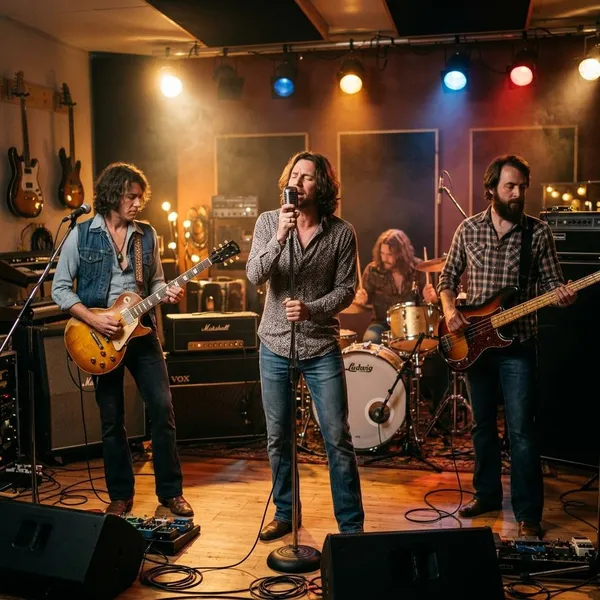
What gives melodic rock its sound
Melodic rock is easiest to recognize when you listen for priority, not volume. The vocal melody and chorus usually come first; guitar, keyboards, drums, and production are arranged to make that payoff stronger.
Memorable guitar and keyboard hooks
The opening hook often gives a melodic rock song its identity before the singer even arrives. It might be a guitar figure, a keyboard line, or a piano pattern, but it needs to be memorable rather than merely technical.
That is why "Hold the Line," "More Than a Feeling," and "Eye of the Tiger" all work in different settings. One is piano-driven, one is layered and expansive, and one is riff-focused, yet each gives the listener a clear musical handle right away.
Powerful lead vocals
A weak vocal can make melodic rock feel flat because the singer has to carry the emotional weight of the chorus. Steve Perry, Lou Gramm, Brad Delp, John Wetton, and Kevin Cronin do it differently, but each makes the melody feel personal rather than mechanical.
Layered backing harmonies
Backing harmonies are not just decoration in this style. They make choruses feel wider, help ballads avoid sounding thin, and give arena-sized tracks that "everyone can sing along" quality.
Polished production
Polish matters, but too much polish can drain the life out of a song. The better records keep the drums clear, the guitars bright, and the keyboards controlled while still leaving enough human force in the performance.
That distinction is important when exploring deeper cuts. A song can be cleanly produced and still feel alive; if it sounds like every edge has been sanded off, it may be AOR gloss without much rock tension.
Chorus-driven songwriting
Melodic rock usually treats the chorus as the main event. Verses build the situation, bridges create lift, and instrumental parts add color, but the song has to return to a hook strong enough to justify the trip.
- Good sign: the chorus feels bigger without becoming louder for no reason.
- Weak sign: the song has polished parts but no phrase you want to hear again.
- Beginner check: if you can hum the chorus after one listen, the song is doing its job.
A balance of energy and melody
The genre works in the middle. Too soft, and it becomes adult contemporary or pure pop-rock; too heavy, and the melody may stop leading the track. The best melodic rock keeps enough guitar and rhythm to feel like rock while making the vocal hook the center of gravity.
This is why different listeners can enter from different sides. Someone who loves smooth radio production may start with Toto or Asia, while a fan of tougher classic rock may prefer Boston, Survivor, or Night Ranger.
Melodic rock AOR and hard rock compared
The boundaries are flexible, but the emphasis changes. Melodic rock puts the hook first, AOR usually adds more radio polish, hard rock pushes riffs and weight forward, and glam metal adds a flashier visual and guitar-driven personality.
| Style | What usually leads | Good first example |
|---|---|---|
| Melodic rock | Chorus and lead vocal | Journey or Foreigner |
| AOR | Polished arrangement and radio flow | Toto or Asia |
| Hard rock | Riff, punch, and guitar weight | Survivor or heavier Night Ranger tracks |
| Glam metal | Image, solos, attitude, and big hooks | Dokken, Winger, or similar melodic metal acts |

Conclusion
The best way to approach melodic rock is not to memorize genre labels, but to follow the sound you respond to first. Start with Escape, 4, Toto IV, Boston's debut, or a short playlist of the essential singles, then move smoother, heavier, or more dramatic depending on what actually makes you replay the chorus.