
Neo classical rock is rock guitar music built around classical-style melody, drama, and technique. If you are new to it, start by listening for three things: fast but melodic lead guitar, minor-key classical patterns, and arrangements that feel more composed than loose blues-based rock. The best entry points are usually Yngwie Malmsteen's Rising Force if you want the pure style, or Ozzy Osbourne's Diary of a Madman if you want it inside memorable metal songs.
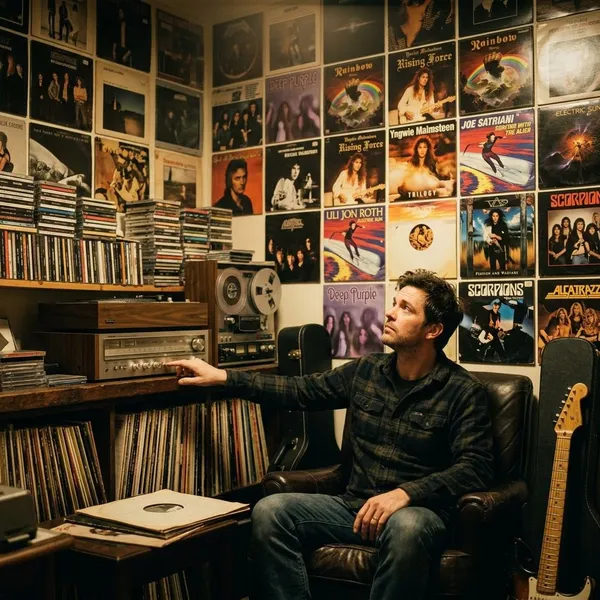
What is neoclassical rock
Neoclassical rock takes ideas from Western classical music and pushes them through electric guitars, rock drums, bass, keyboards, and heavier production. The result is not classical music with distortion added on top. It is rock written with a more formal sense of melody, tension, and movement.
Classical ideas played through rock
The classical side often shows up through sequencing, arpeggios, pedal tones, minor-key movement, and melodies that feel closer to violin or keyboard writing than standard rock licks. Bach, Vivaldi, Paganini, Mozart, and Beethoven are common reference points, but the music does not need to quote them directly.
Virtuoso guitar at the center
Guitar is usually the main voice. The player may use alternate picking, sweep picking, tapping, wide interval runs, and fast position shifts, but speed alone is not enough. Weak neoclassical rock can sound like a scale exercise; strong neoclassical rock still gives you a theme, a build-up, and a clear landing point.
- For casual listeners: follow the melody first, not the technique.
- For guitar players: notice whether the difficult passages serve the phrase or just fill space.
- For metal fans: pay attention to how the solo connects back to the riff or chorus.
Strong overlap with neoclassical metal
Neoclassical rock and neoclassical metal overlap so much that the same artist can sit under both labels. The practical difference is usually weight: neoclassical metal tends to use heavier rhythm guitars, faster drums, and a more aggressive overall sound, while neoclassical rock may feel closer to hard rock or instrumental guitar music.
What neoclassical rock sounds like
Neoclassical rock usually sounds dramatic, precise, and highly melodic. Compared with blues-based rock, it leans less on pentatonic licks and loose bends, and more on minor scales, arpeggiated chords, clean articulation, and written-sounding lead lines.
Fast melodic guitar leads
The lead guitar often behaves like a singer or violinist rather than a background soloist. Even when the notes move quickly, the phrase should still have direction. If you can remember the contour of the line after the solo ends, the player is doing more than showing technique.
Harmonic minor melodies
Harmonic minor is one of the easiest sounds to recognize in this style. It has a darker, more theatrical pull than a standard major or minor rock melody, which is why it fits dramatic riffs and fast lead passages so well.
You do not need theory knowledge to hear it. Listen for melodies that feel tense, slightly exotic, and formal at the same time. That sound is a major reason neoclassical rock can feel grand even when the band setup is just guitar, bass, drums, and keyboards.
Sweeping arpeggios and sequences
Sweep-picked arpeggios let the guitarist move through broken chords quickly, while sequences repeat a small pattern at different pitch levels. Together, they create the "ordered speed" that separates this style from random fast soloing.
- Arpeggios: make the harmony feel clear at high speed.
- Sequences: give fast lines a pattern the ear can follow.
- Clean picking: keeps the classical shape from turning into blur.
Dramatic riffs and arrangements
The rhythm parts matter more than beginners sometimes expect. A strong neoclassical track may use pedal-tone riffs, keyboard layers, harmony guitars, and carefully placed pauses so the lead guitar has something dramatic to answer.
Artists who shaped neoclassical rock
The style did not appear from one player overnight. It developed through guitarists who brought different strengths: classical color in hard rock, violin-like phrasing, metal structure, extreme technique, and more ambitious instrumental writing.
Ritchie Blackmore and the early foundation
Ritchie Blackmore helped make classical influence feel natural inside hard rock. With Deep Purple and Rainbow, he brought darker harmony, structured riffs, and melodies that pointed beyond blues-based guitar playing. He was not a shred guitarist in the later 1980s sense, but he opened the door for that style to make musical sense.
Uli Jon Roth and classical guitar phrasing
Uli Jon Roth expanded the expressive side of the sound. His playing often feels vocal, wide, and violin-like, with an emphasis on phrasing rather than pure attack. For listeners who find some shred too mechanical, Roth is a useful reminder that neoclassical guitar can be lyrical and atmospheric.
Randy Rhoads and the metal crossover
Randy Rhoads made classical ideas work inside heavy songs that a broad audience could remember. His Ozzy Osbourne work uses disciplined riffing, dramatic chord movement, and classically flavored solos without turning the songs into exercises.
That matters if you are coming from classic metal rather than instrumental guitar albums. Rhoads shows how the style can strengthen a song instead of pulling attention away from it.
Yngwie Malmsteen and the defining sound
Yngwie Malmsteen is the central name for the fully recognizable neoclassical rock and metal sound. His playing made harmonic minor runs, sweep-picked arpeggios, Baroque-style phrasing, and dramatic vibrato feel like a complete guitar identity.
If you only want one artist to understand the genre quickly, start here. The risk is that his influence is so strong that later players can sound like variations on his blueprint, so it helps to hear him first and then compare how others changed the formula.
Jason Becker and Tony MacAlpine as shred innovators
Jason Becker and Tony MacAlpine pushed the style past imitation. Becker brought dazzling technique with unusually memorable themes, while MacAlpine added a more keyboard-aware, composition-minded approach. Both are good next steps after Malmsteen because they keep the classical influence but give it a different personality.
- Choose Becker if you want emotional intensity and fearless guitar writing.
- Choose MacAlpine if you want polished instrumental structure and a broader classical feel.
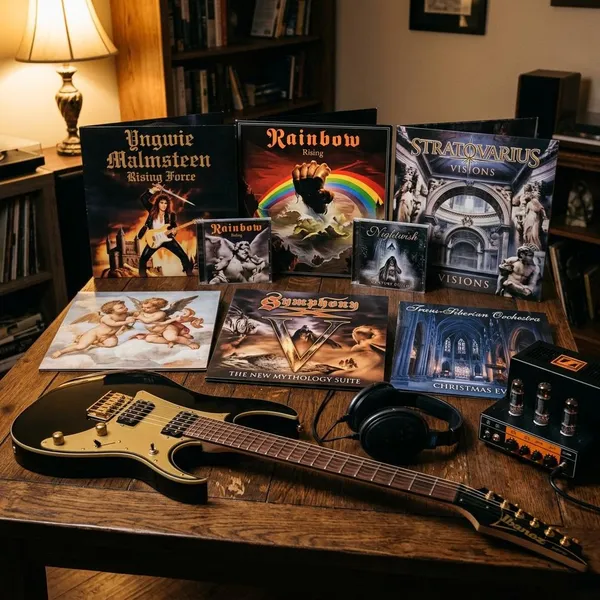
Essential neoclassical rock albums
The easiest way into neoclassical rock is not to chase every famous name at once. Start with a few albums that show different uses of the style: the pure guitar blueprint, the song-based metal crossover, the polished instrumental side, and the more expressive shred branch.
Rising Force by Yngwie Malmsteen
Rising Force is the cleanest starting point for the style in its classic 1980s form. The album puts the guitar language front and center: fast harmonic minor runs, sweeping arpeggios, dramatic phrasing, and a tone that makes every note feel sharp and deliberate.
It is the best first listen if you want to understand why people connect the genre so strongly with virtuoso guitar. Even when later albums become more varied or song-focused, this record remains the reference point.
Diary of a Madman by Ozzy Osbourne
Diary of a Madman is not a pure neoclassical shred album, and that is exactly why it belongs here. Randy Rhoads places classical ideas inside heavy songs with strong riffs, vocals, and atmosphere.
For someone who finds instrumental guitar records intimidating, this is the friendlier entry point. You get the classical influence without losing the shape of a traditional metal album.
Maximum Security by Tony MacAlpine
Maximum Security shows the more polished instrumental side of neoclassical rock. MacAlpine's guitar work is technical, but the album also benefits from keyboards, clear arrangement choices, and a sense of balance that keeps the music from becoming just a display of speed.
Perpetual Burn by Jason Becker
Perpetual Burn is the album to hear when you want the style to feel more personal and less like a fixed formula. Becker's playing is extremely advanced, yet the themes are vivid enough that the record still feels emotional rather than clinical.
It is a better second or third stop than a first stop for most listeners. Once you know the basic neoclassical vocabulary, the creativity in Becker's writing becomes much easier to appreciate.
Odyssey by Yngwie Malmsteen
Odyssey is useful because it shows how neoclassical guitar can work inside a more vocal-led hard rock format. The playing is still unmistakably Malmsteen, but the songs are easier to approach if you prefer hooks, choruses, and a broader album sound.
That makes it a practical choice for listeners deciding between instrumental showcases and traditional rock records. If Rising Force explains the pure language, Odyssey shows how that language can sit inside bigger songs.
Conclusion
The smartest way to approach neo classical rock is to listen for melody and structure before speed. Start with Rising Force for the defining guitar sound, choose Diary of a Madman if you want stronger songs first, and move to Becker or MacAlpine when you want the deeper instrumental side. Once you know which branch you enjoy, the line between rock, shred, and neoclassical metal becomes much less important.